Story
Neil Jenney: Visual Music
The following is based on an interview with the artist, Neil Jenney conducted by Jared Quinton on September 22, 2025. Jared is an independent curator and writer based in Connecticut. He was previously the Emily Hall Tremaine Associate Curator of Contemporary Art at the Wadsworth Atheneum Museum of Art Hartford, CT.
Jared Quinton: Neil, thanks for making time for me. This interview is for a project connected to Emily Hall Tremaine’s legacy. The Tremaine Foundation has built a digital archive that tries to reconstruct the story of Emily and Burton’s collection, including images of the works they owned, their homes in Manhattan and Connecticut, and a section called “Stories,” where curators and historians interview people who brushed up against their orbit in some way. It’s partly about Emily, but it’s also an excuse, hopefully a good one, to talk to you about your work and the formative years of your career.
Neil Jenney: Okay.
Jared: I came to you because I recently interviewed Richard Kalina for the Foundation and he mentioned you. He said he knew you, that you were neighbors. And I’m also aware that Emily owned Husband and Wife(1969). That painting is part of why I’m here.
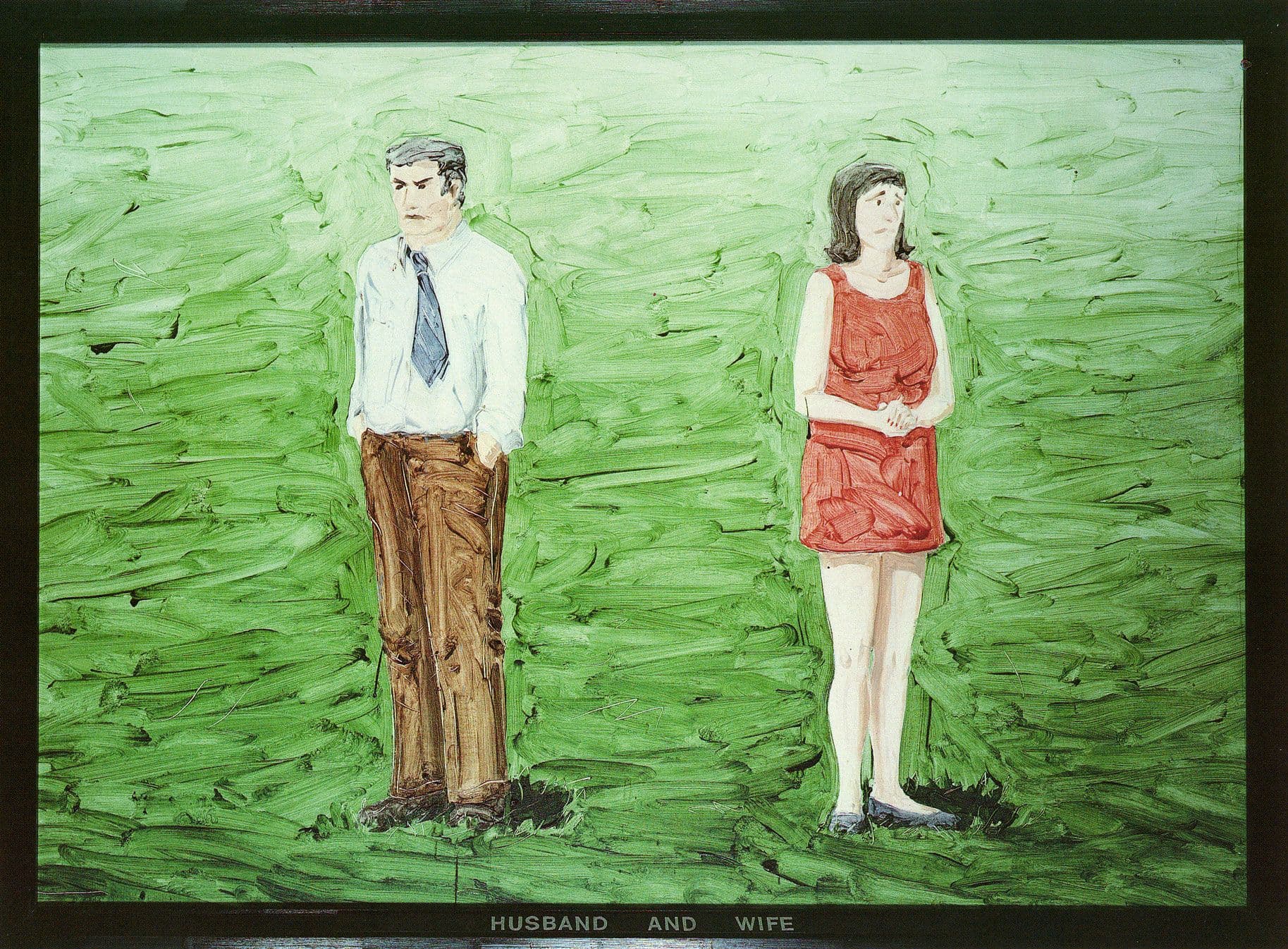
Neil Jenney, Husband and Wife, Year of Christie’s sale: 1988, ©1988 Christie’s Images Limited
Neil: Right. I sold her Husband and Wife. That’s about the extent of it. I only met her once.
Jared: Before we get to Emily, I want to back up. You’ve got deep roots in Central Connecticut and Western Massachusetts. I live in Bloomfield now, and I’m the contemporary curator at the Wadsworth Atheneum in Hartford. You were born in Torrington, right?
Neil: Torrington, yeah. But my father worked for the Torrington Company, which made machine knitting needles for making T-shirts and things. They bought a factory building in Westfield, Massachusetts, just over the border. So that’s where I grew up.
Jared: What do you remember of that early life?
Neil: I grew up across the road from a thousand chickens. And I picked tobacco. Shade-grown cigar wrapper tobacco.
Jared: Do you remember where you worked?
Neil: Hathaway and Stene was the first one. Big outfit, acres and acres. They’d rent fields, so you never really knew where you were going to be day to day. You had to be up at 4:45 in the morning, and you were in your row at 7 a.m. They’d pick up all the workers.
Jared: What was it like?
Neil: Hot and dirty. Real work. A lot of kids tried it, but only the poor kids stayed, because it was a real job.
Jared: You’ve talked elsewhere about being underfed as a kid.
Neil: Yeah. I was kind of a weak kid. I didn’t get enough to eat. When I was older, already in New York, I went back home and I said to my mother, “You know, Mom, I didn’t get enough to eat.” And she said, “Well, the Jenneys believed in underfeeding the kids.” I said, “Why?” She said, “So you could survive during hard times.”
My parents grew up in the Depression. My father was one of eight; my mother one of nine. They didn’t have shoes. My generation… kids went barefoot six months out of the year, because that’s what our parents did. They saved shoes for the winter, when snow was falling. It taught you to be careful with every step. Kids don’t learn that now.
Jared: When do you first remember art feeling like something important?
Neil: Every class has a kid that can draw pretty well. I was that kid. If I could see it, I could draw it, and it got attention. But the big moment was 1955. I was nine and a half. I got my first glimpse of what people called “modern art,” abstract art, at a neighbor’s house.
There was a kid from the neighborhood named Truman Eggleston. He’d been in the Korean War, then went to Mass Art on the GI Bill. Later he studied out in California, doing Abstract Expressionism. He’d come home in the summers and visit his parents, and I met him. I saw his abstract paintings and it changed my life.
Jared: What did he tell you?
Neil: I asked him, “What about this modern art stuff?” And he said to me, “What I do is called abstract expressionism.” And then he said, “It’s akin to music.” Suddenly, I was stunned, suddenly I understood it. He said, “All the terms that apply to music—balance, harmony, loud, soft—all apply to abstract art.” In the ‘50s people laughed at it, but I understood it as visual music. So I started doing it as a kid.
“What about this modern art stuff?” And he said to me, “What I do is called abstract expressionism.” And then he said, “It’s akin to music.” Suddenly, I was stunned, suddenly I understood it. He said, “All the terms that apply to music—balance, harmony, loud, soft—all apply to abstract art.”
Jared: And then you’re a teenager, early ‘60s, what’s happening?
Neil: When I was in high school, people would say, “What are you going to do when you grow up?” I’d say, “I like to draw.” They’d say, “Oh, be an artist,” and then, “Good artists starve.” So I thought, I don’t want to be an artist.
Then Kennedy gets assassinated in 1963, and suddenly Vietnam is coming on. I came from a family where you weren’t allowed to ask questions about World War II; everyone was traumatized and they didn’t want to think about it again. Vietnam felt like bullshit to me. And then they passed that law: if you got into a degree-granting institution, you could go to college and avoid the draft, at least for a while. So I needed to get into Mass Art.
Jared: How did you manage that?
Neil: Eggleston told me: “Just have lots of stuff. They love that.” So I went home, got lights, put them up in the cellar, painted landscapes, flowers, abstracts, anything. When it was time for the portfolio review, everyone else was walking up with a portfolio under their arm. I walked in carrying my work like a stack of doors, “Excuse me, excuse me.” The teachers were like, “Yeah, yeah, what’s in there?” I dragged it all out. I had enough good things. I got into Mass Art in ‘64.
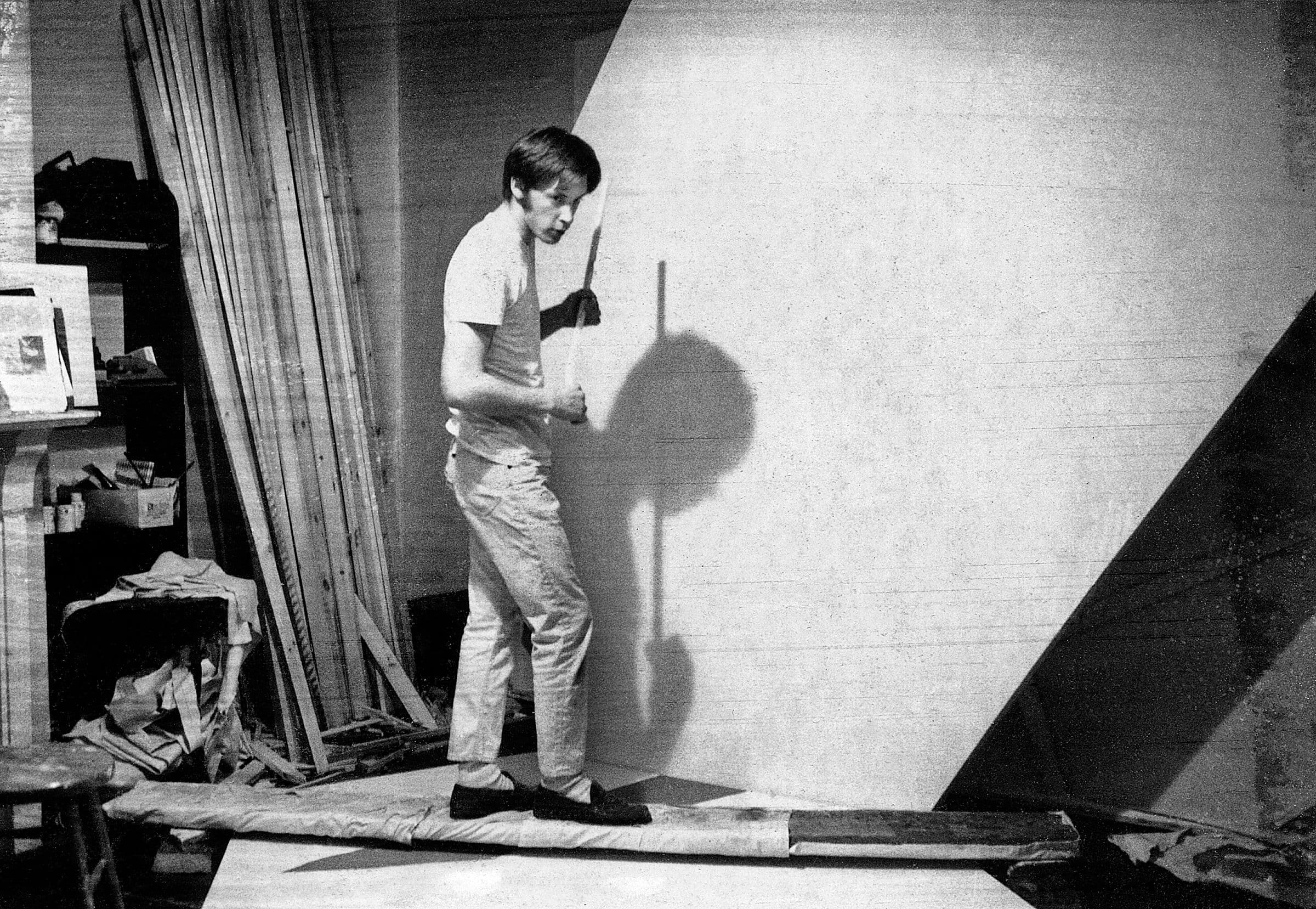
Neil Jenney in his apartment/painting studio in Boston, Massachusetts while a student at Massachusetts College of Art in 1966. Photo courtesy of Demian, (c) 2026, Demian, Sweet Corn Productions.
Jared: And financially?
Neil: My parents didn’t have money. I thought I’d work my way through. But Boston was packed with students—BU, BC, Simmons, Wheelock—every part-time job was taken. I did construction here and there, cleaned out garages, whatever. Still didn’t have enough.
Jared: And then the draft pressure returns.
Neil: They changed the rules: you had to have a C average to keep your deferment. I wasn’t getting a C average because I was spending all my time trying to make art fast, thinking I could get a show on Newbury Street and solve everything that way. So I got drafted.
Jared: You went for the physical in New Haven.
Neil: Yeah. I was terrified. Other kids were joking like they were going to be in a John Wayne movie. I knew it would be horrible.
At Mass Art, one of the only ways to make money was to be in hospital experiments. I did one at Brigham and Women’s: they injected me with radioactivity nine days in a row, blood samples. It paid $75. I had holes in my arms.
At the physical, I’m shaking. There’s that green line on the floor, you’re in your underwear, you move station to station. Finally, they take blood, and I’m thinking, maybe they’ll notice my arms. Then you sit in folding chairs waiting for your name. I was so freaked out I basically collapsed. They picked me up, brought me into a room, and the lieutenant wrote “trauma hysteria” on my papers. Twenty minutes in the door, out the door. I was out.
Jared: That’s… an unbelievable story.
Neil: Once I got on the bus back to Boston, I was running up and down the aisle. I couldn’t believe it.
From the Archives
From the Archives
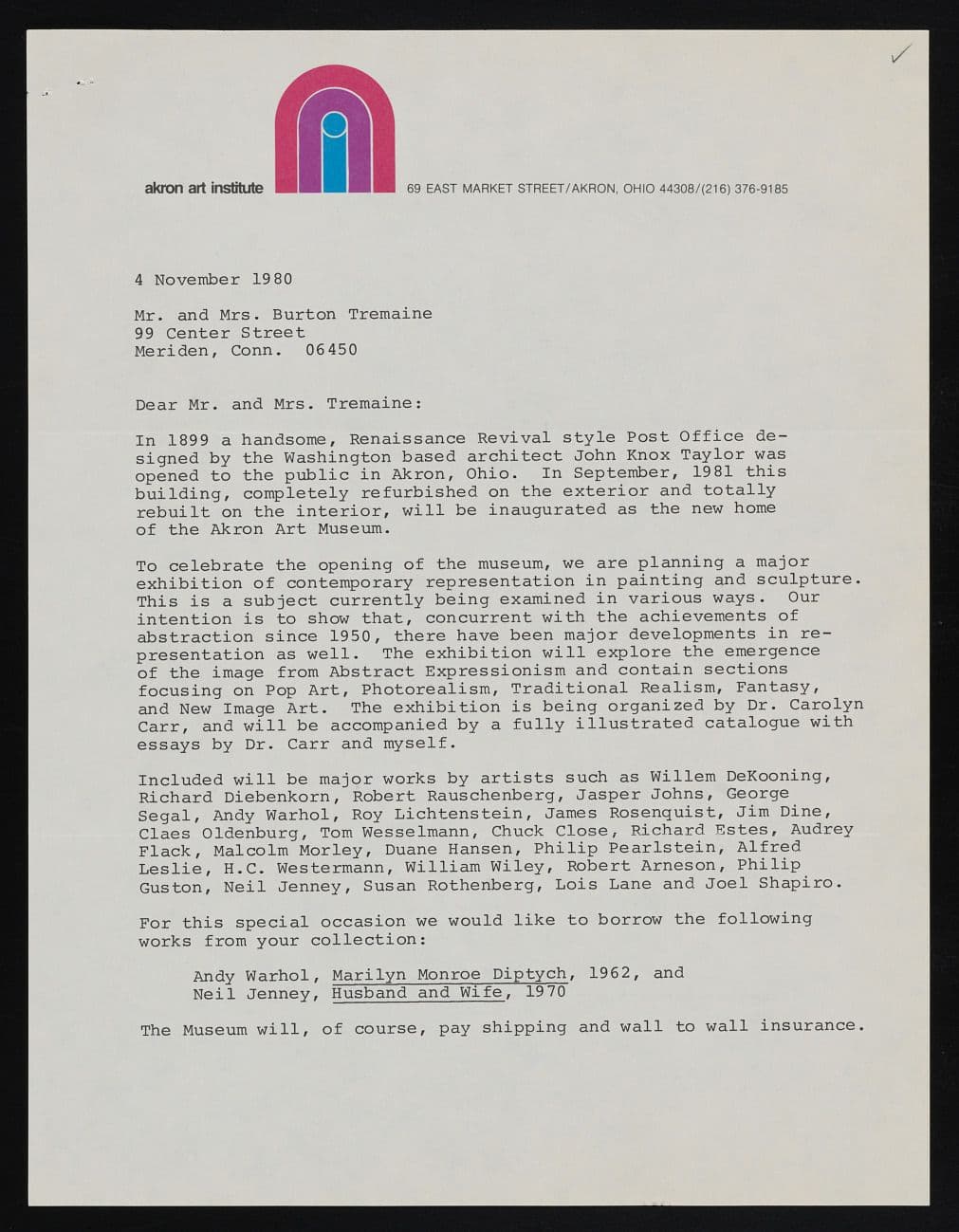
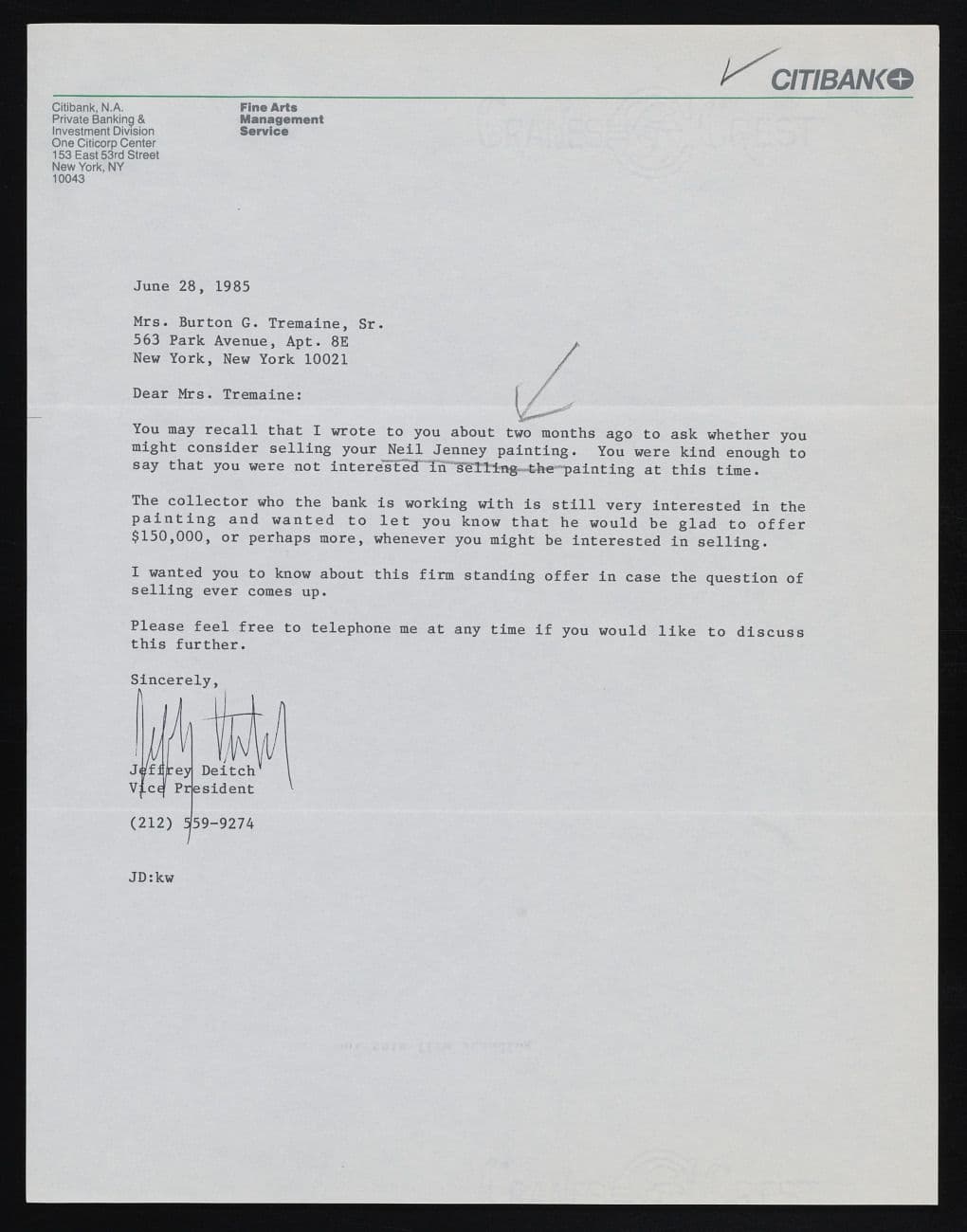
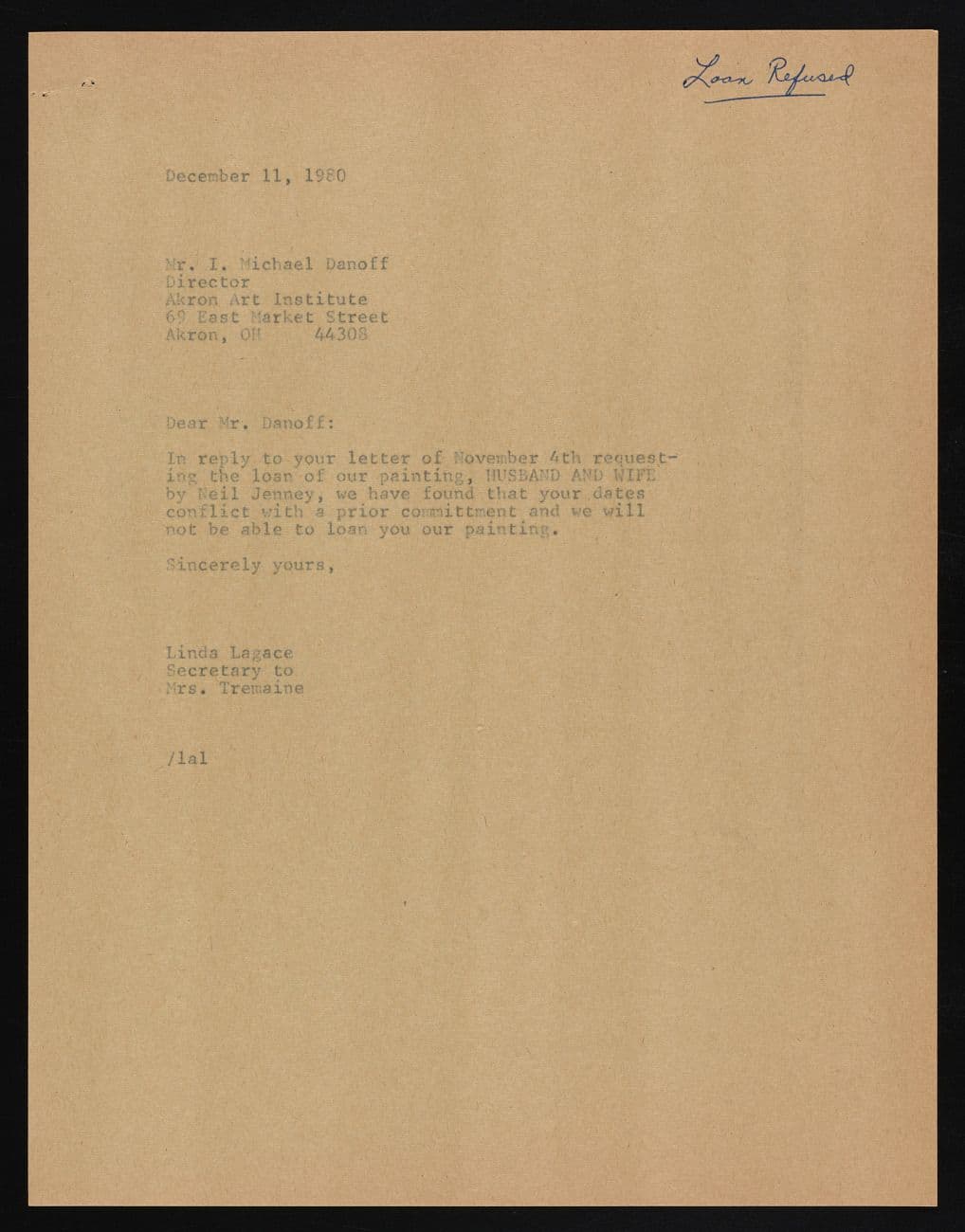
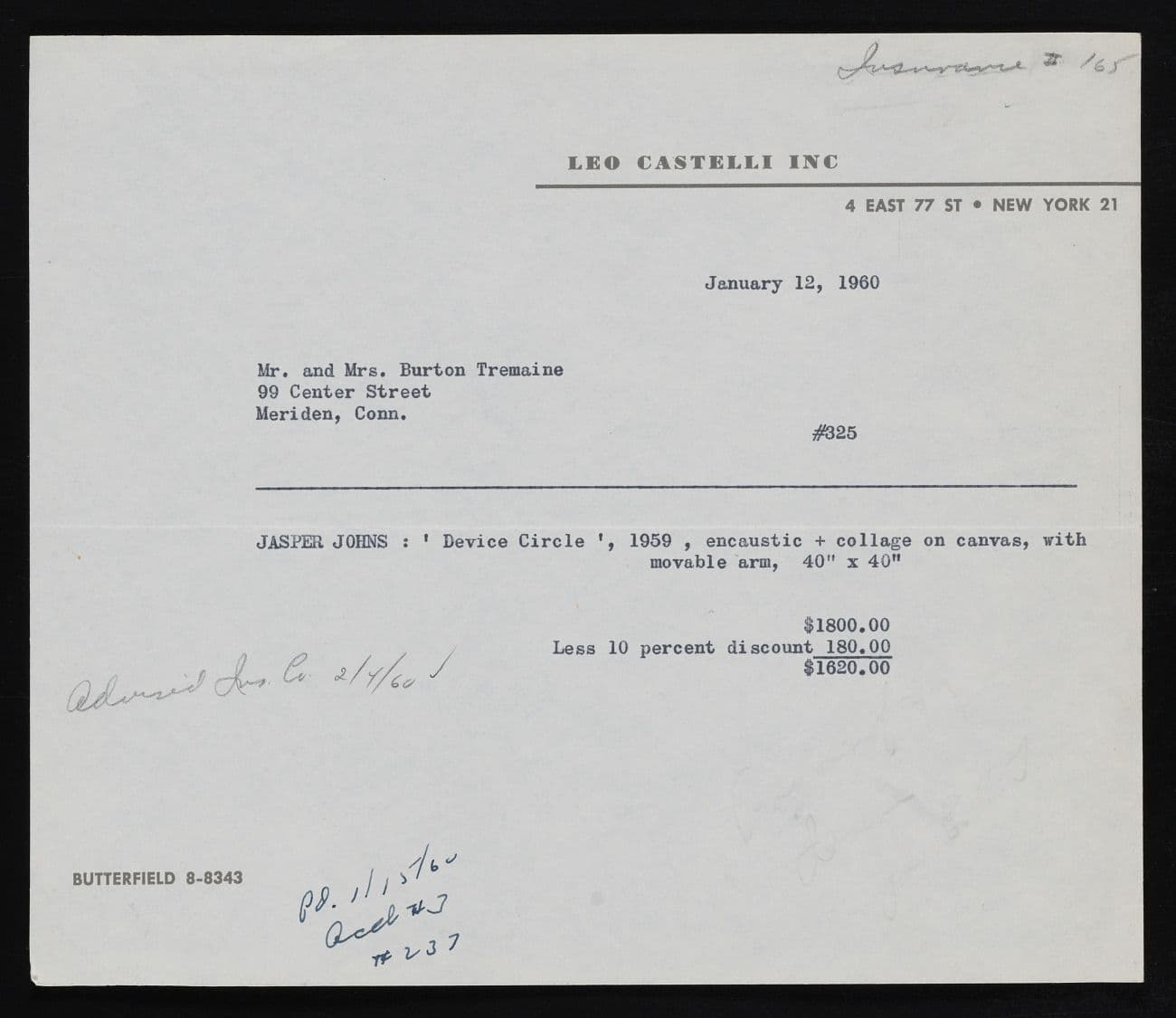
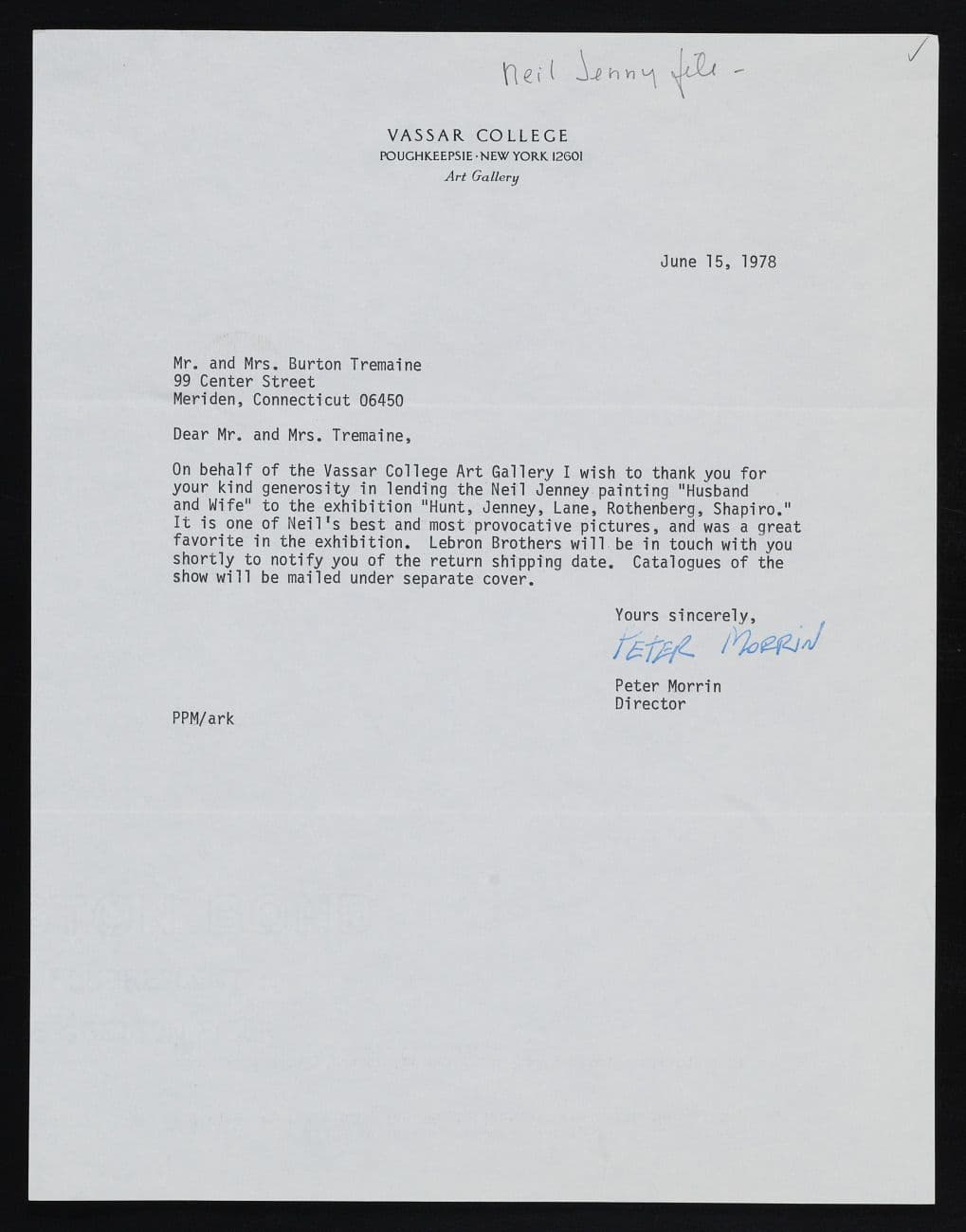
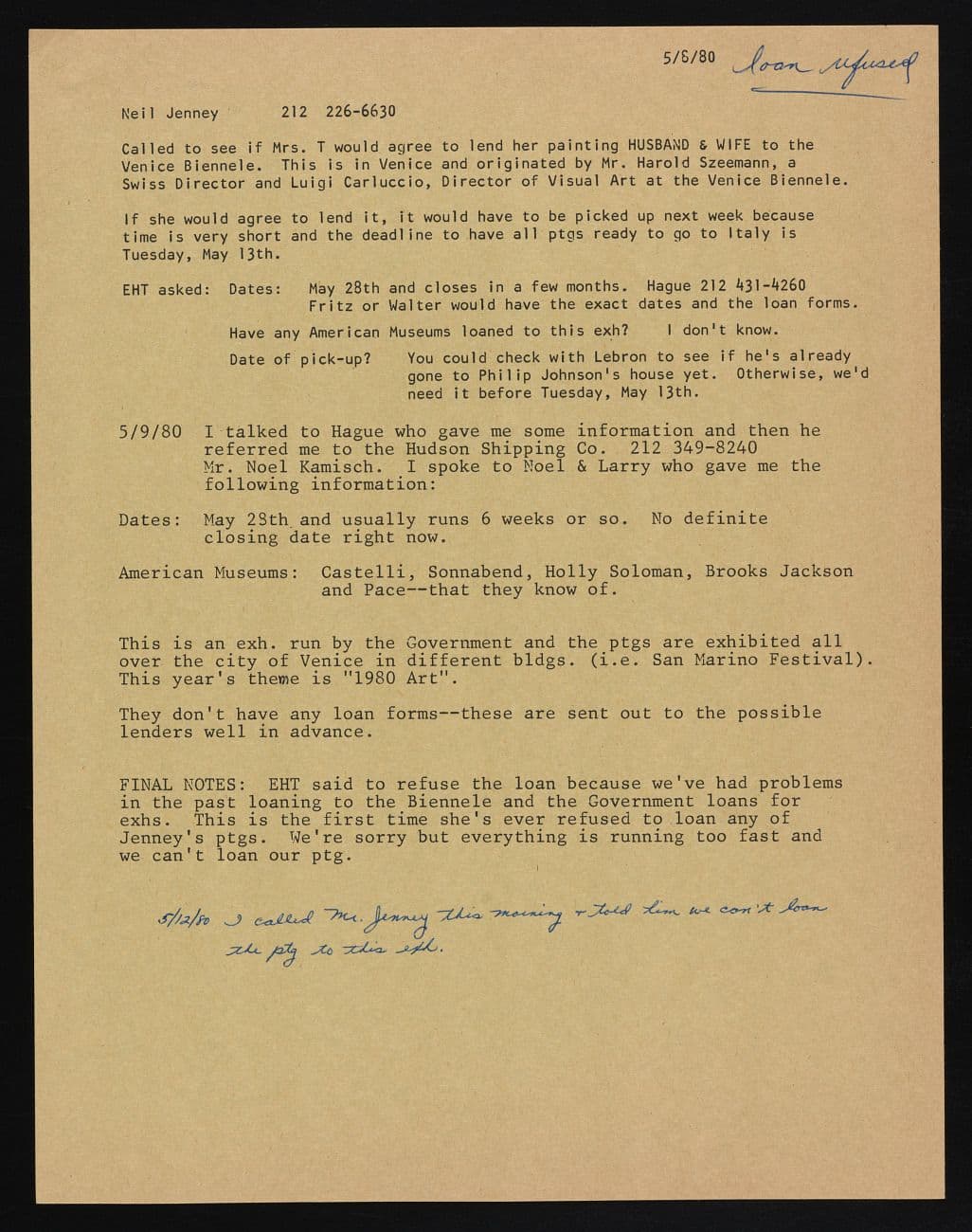
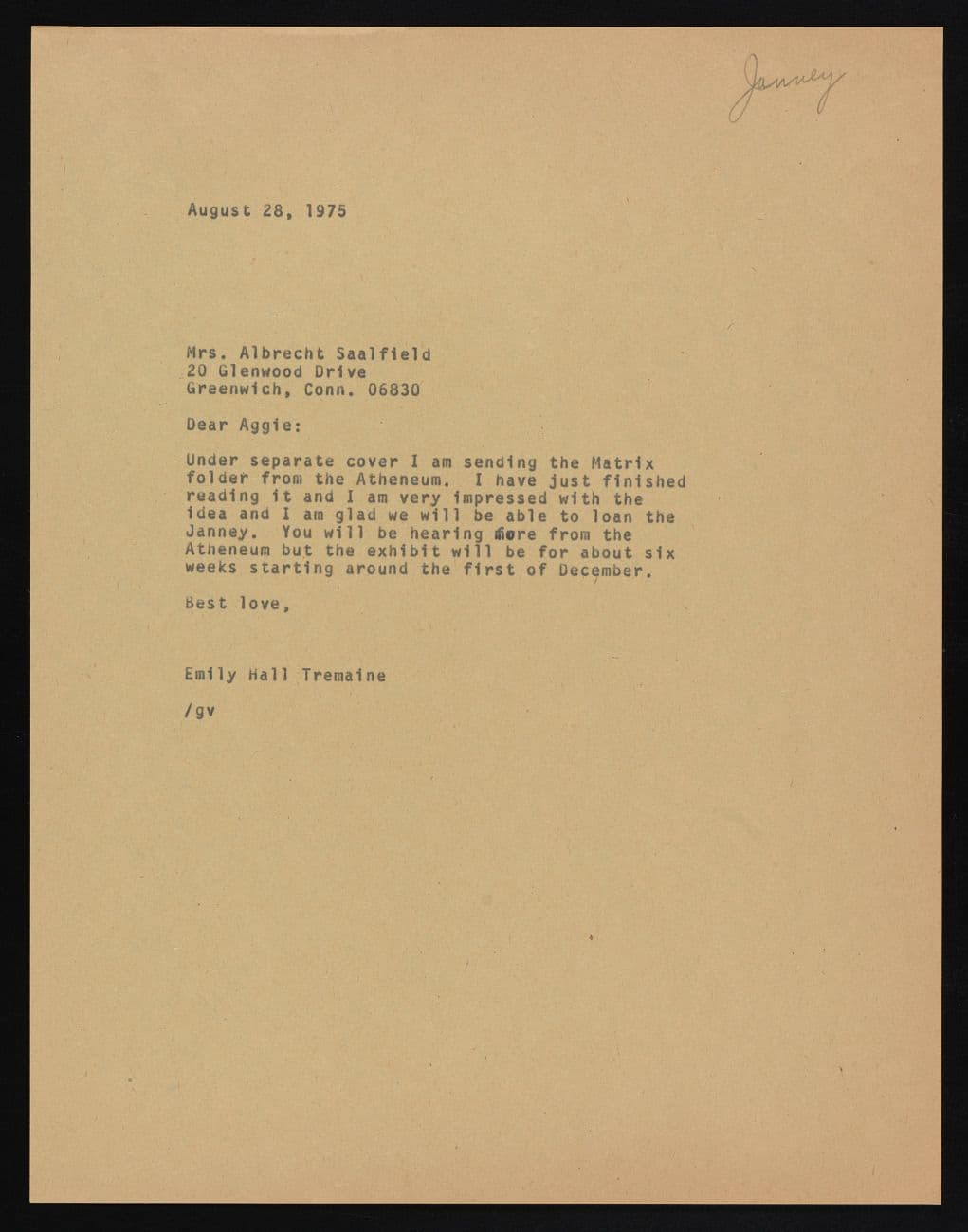
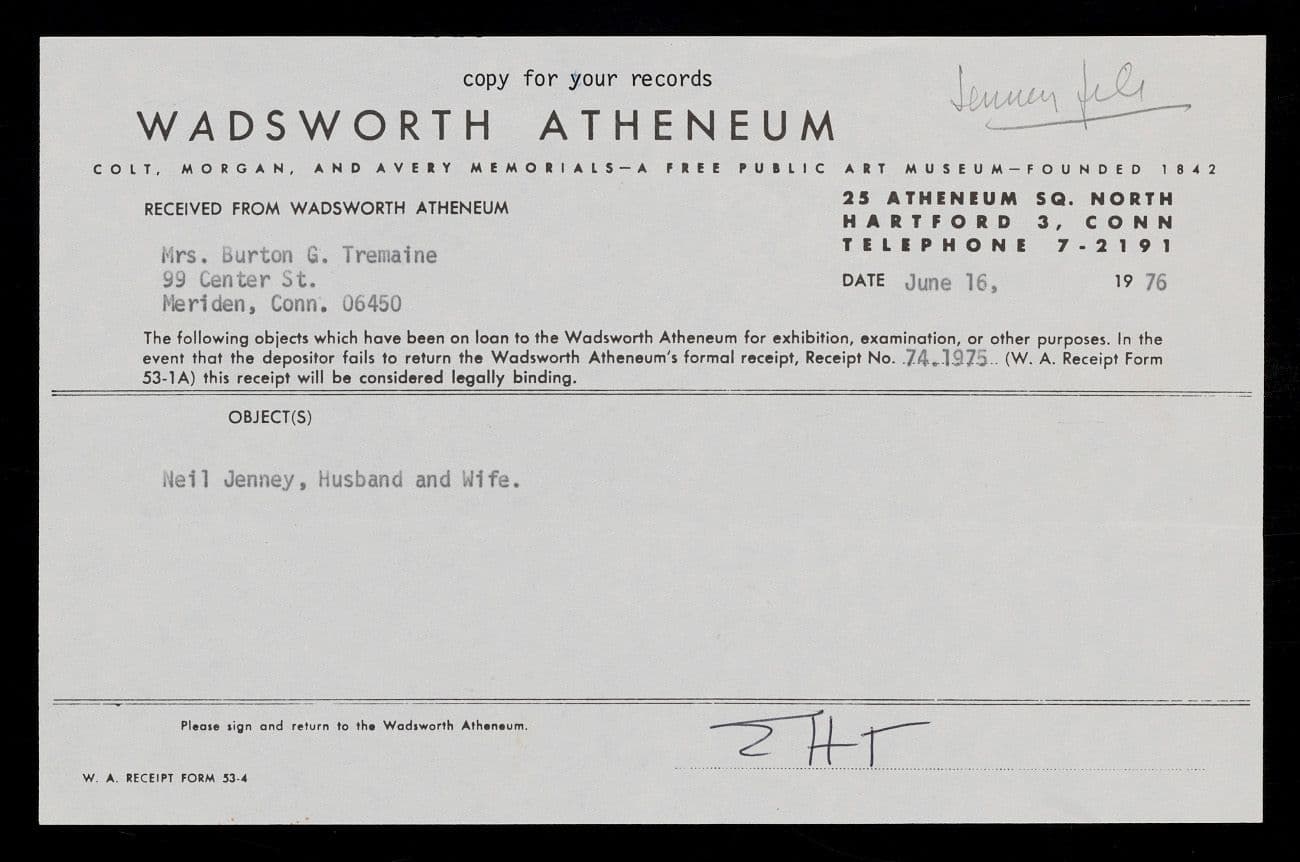
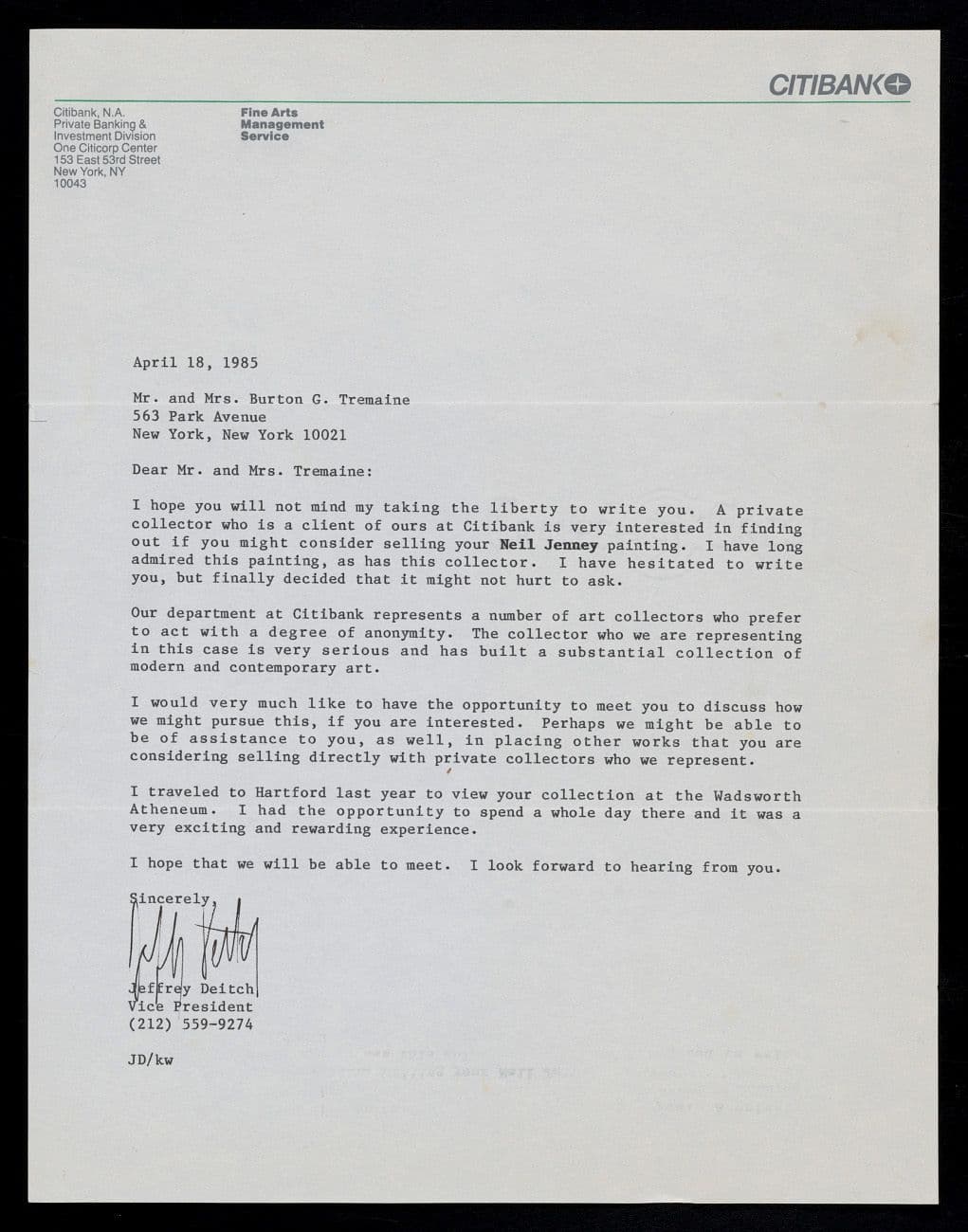
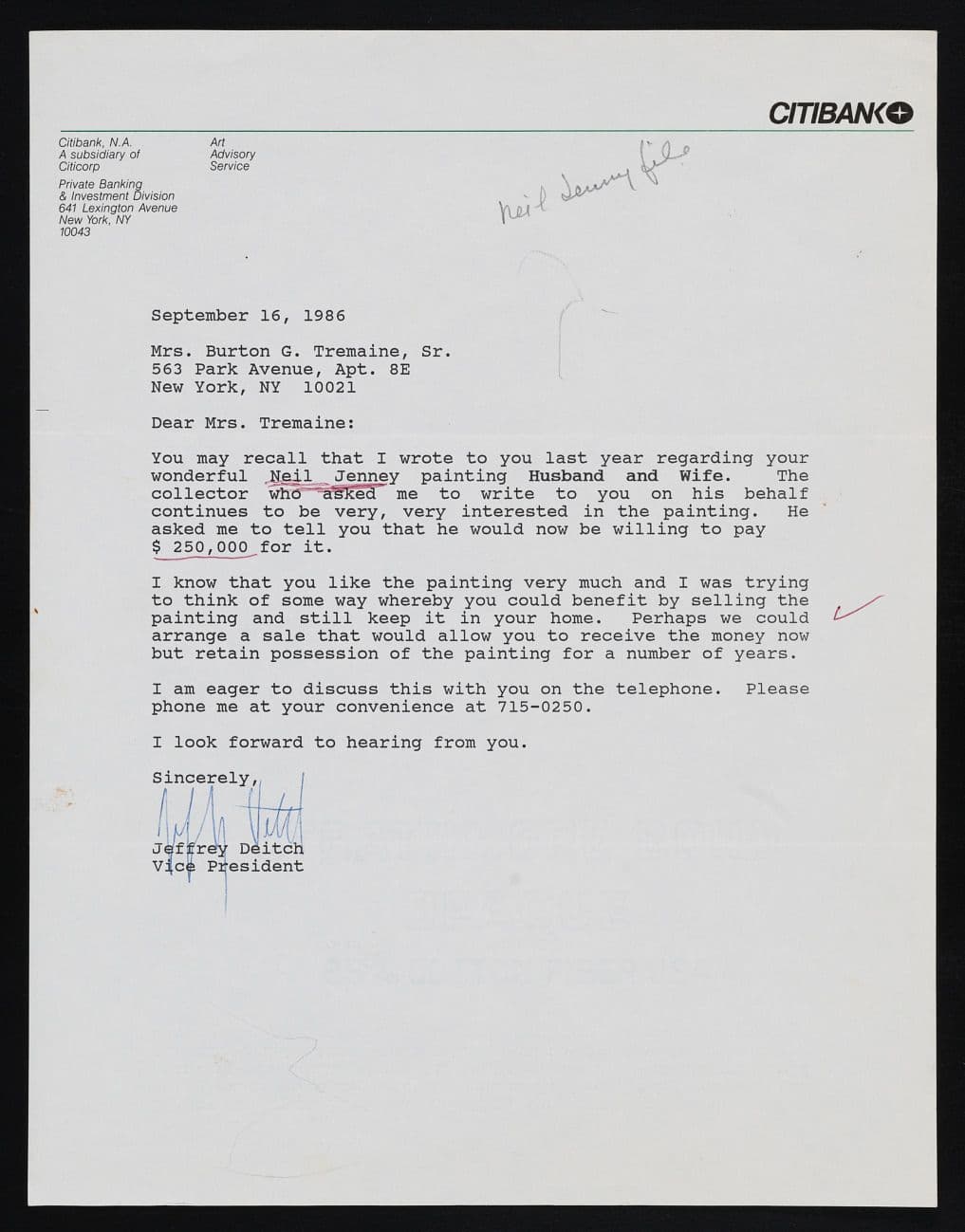
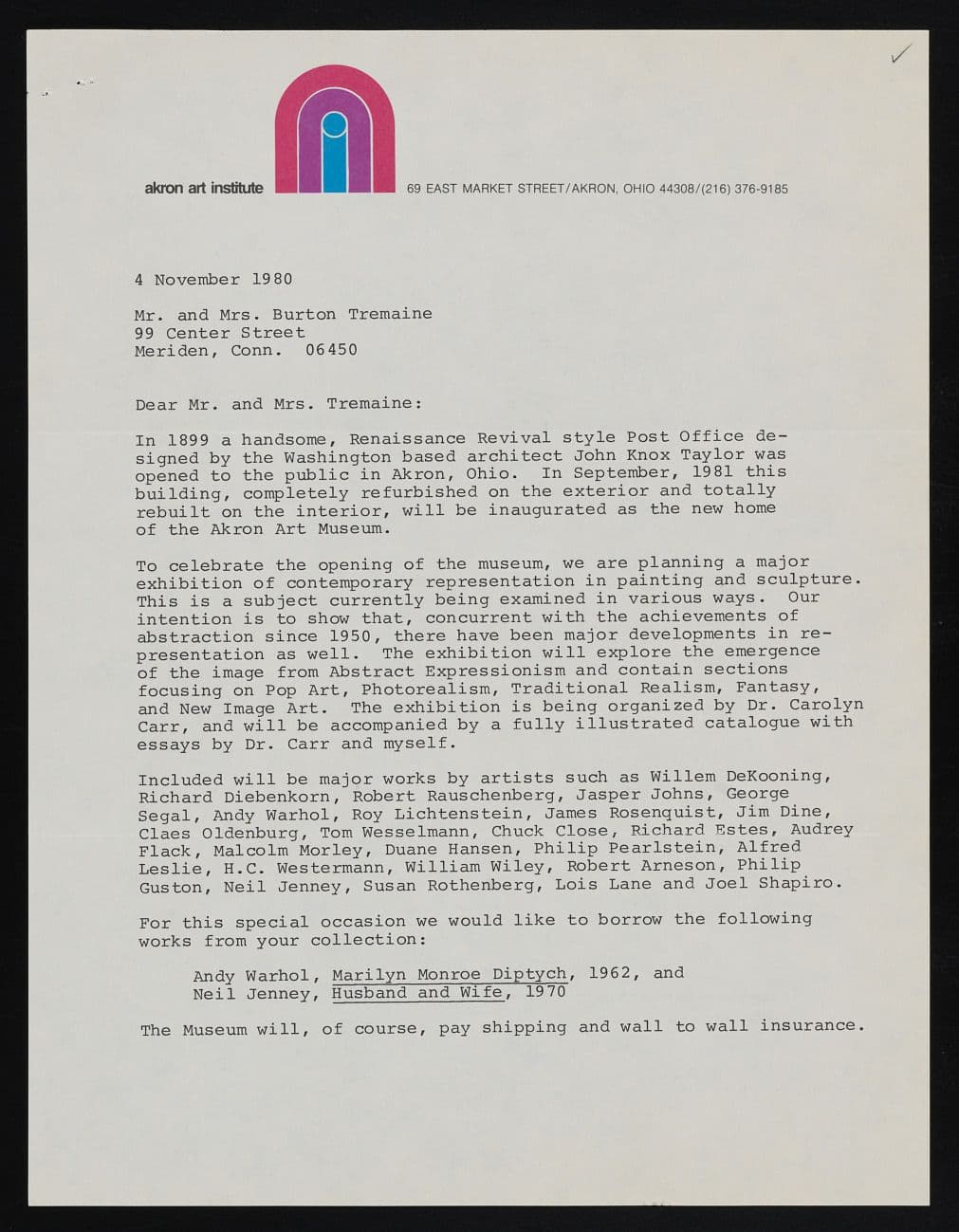
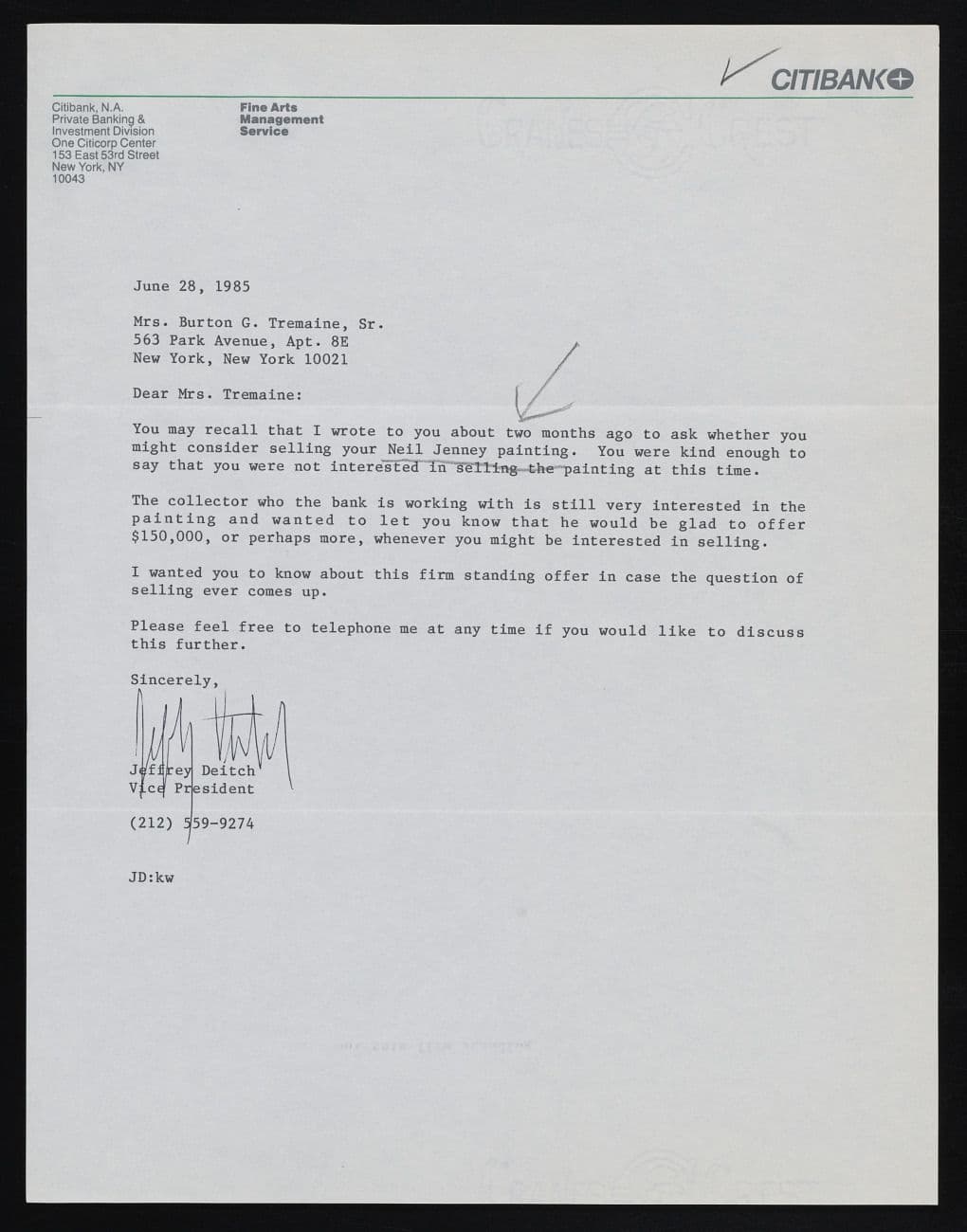
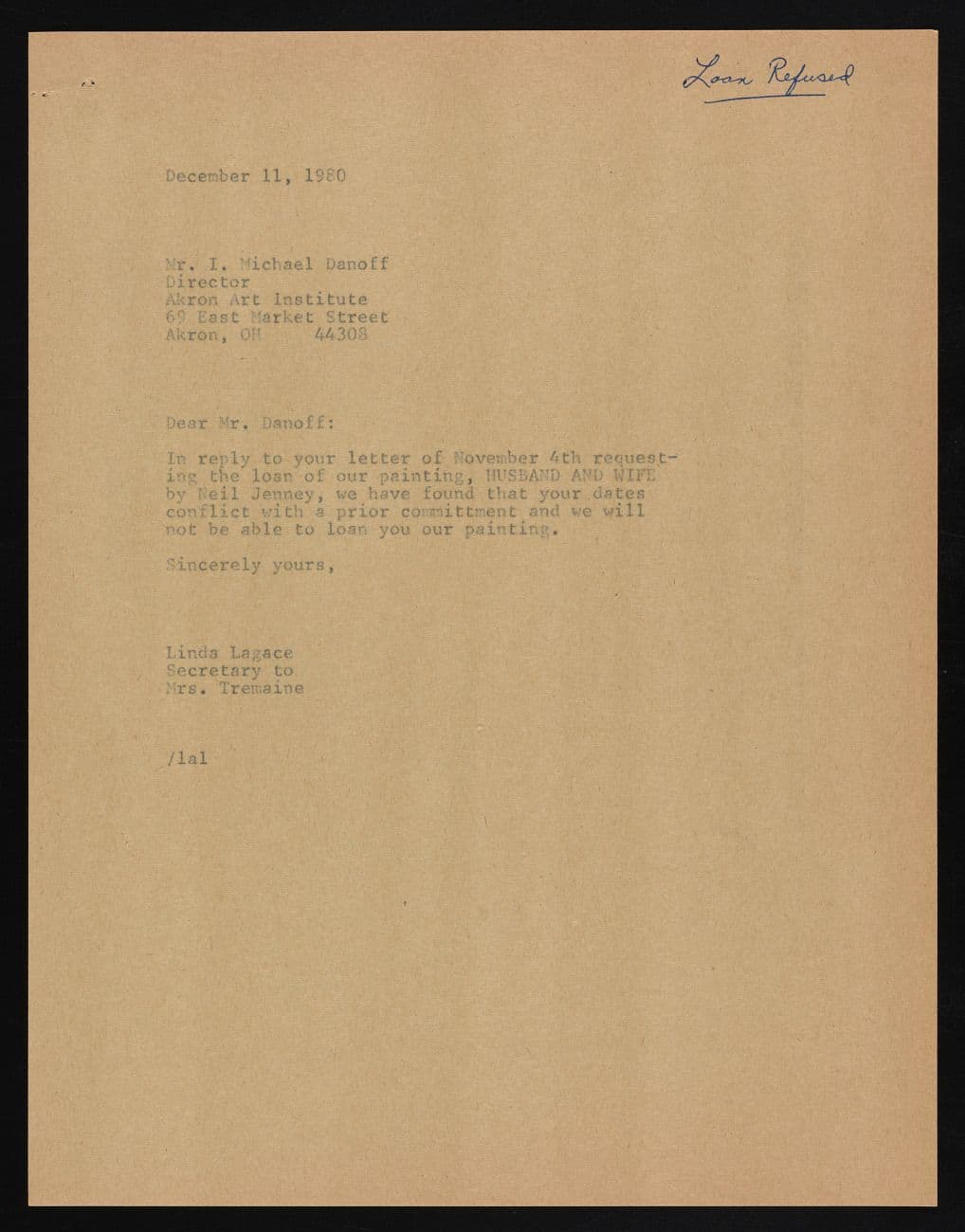
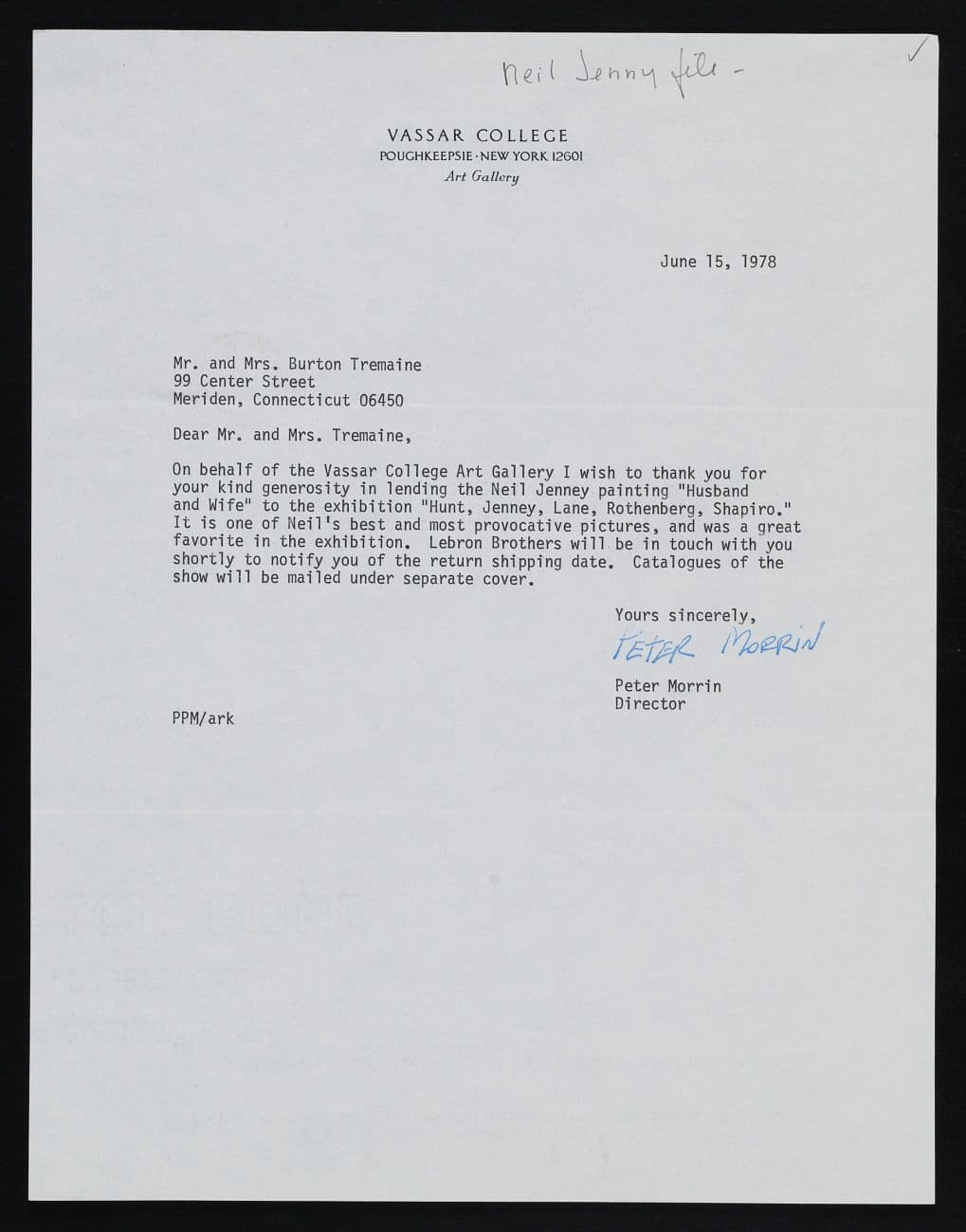
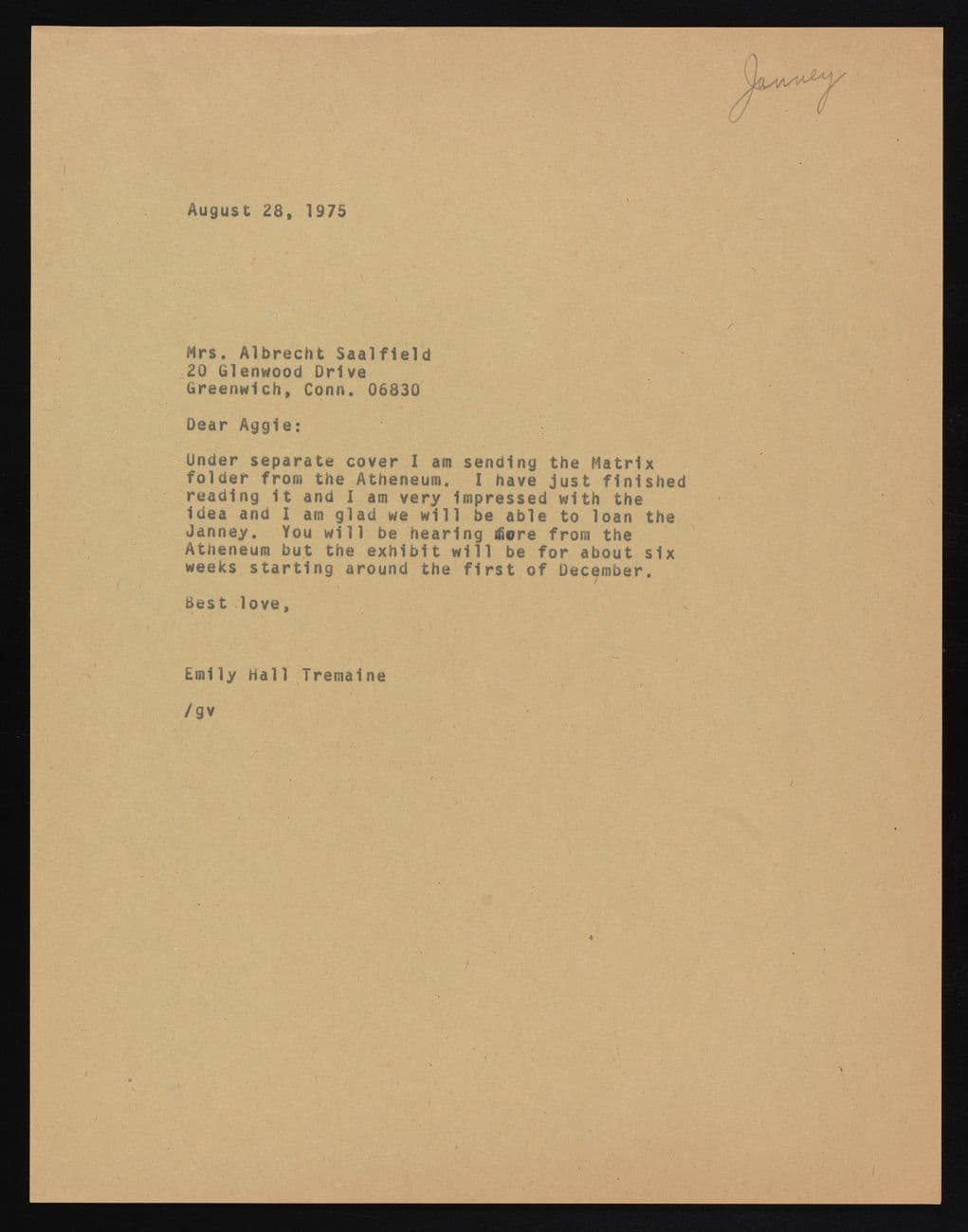
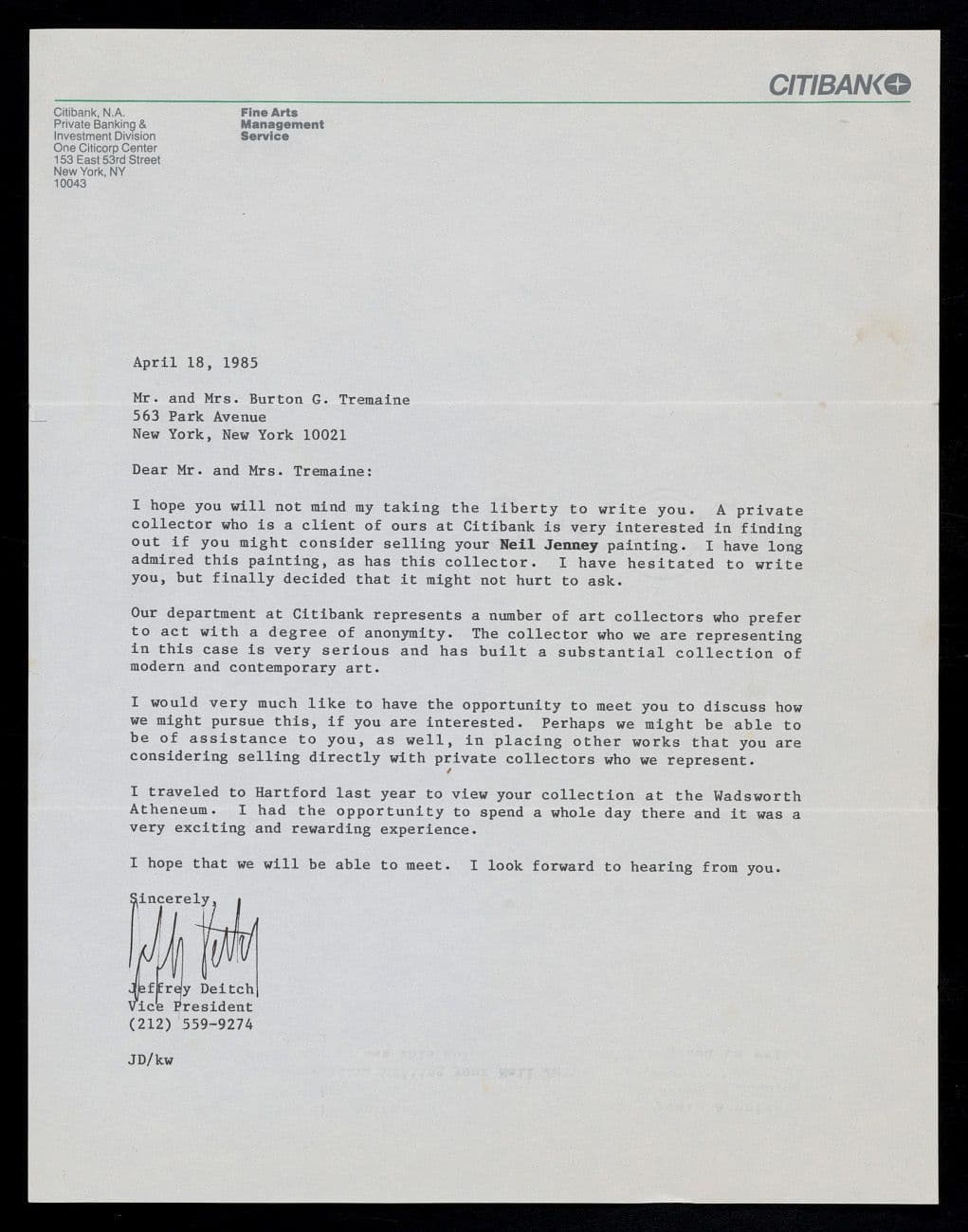
Jared: And then you get back to thinking about Newbury Street, Boston galleries?
Neil: In those days you showed slides. I went down to Newbury, showed slides at a few places: “No.” Took a while to realize: there was no art commerce in Boston. Nobody sold anything.
Finally, I walk into Sidney Janis. He looks at me and he says, “Listen, kid, I can’t do anything for you here. You’ve got to move to New York.” And I said, “Well, everybody says that.” He says, “Yeah, but nobody does it.” I said, “I’ll do it.” He says, “From what I see here, if you move to New York, you’ll make it.”
So I quit school. Drove a cab to try to save money. I wanted $600; ended up with about $400 and got fired. But I’d already visited New York with a girlfriend: she was a model, wanted to show her book. I discovered the Lower East Side, where rent was half of Boston. Boston was $65 a month for a room; Lower East Side was $35 a month, but you had to be home before dark.
I walk into Sidney Janis. He looks at me and he says, “Listen, kid, I can’t do anything for you here. You’ve got to move to New York.” And I said, “Well, everybody says that.” He says, “Yeah, but nobody does it.” I said, “I’ll do it.” He says, “From what I see here, if you move to New York, you’ll make it.”
Jared: You arrive in New York with very little.
Neil: I paid first and last month’s rent and had $209 left. I had plans for light pieces, but I realized there wasn’t enough power in the outlets. I needed metal fabrication, so I go down to the Bowery for the restaurant equipment guys, tin work. Nobody wanted the job; too small.
Finally someone says, “Go talk to Mr. Beerman.” He’s upstairs in this ancient building. He says, “Oh, I work for a lot of artists,” names people, and then says, “Paul Thek, did you see those boxes for the meat pieces?” I didn’t know Thek personally, but I knew his work. Beerman calls him from a payphone on the wall and hands me the receiver.
I talk to Paul for 20 minutes. He asks, “Do you know anything about casting?” I say, “A little.” He says he needs casts for legs and arms. He’s living nearby. So I did all the castings for that piece, the “dead hippie” in the pyramid [The Tomb, 1967].
Paul Thek Working on The Tomb Figure, 1967. Photograph by Peter Hujar. © 2026 The Peter Hujar Archive / Artists Rights Society (ARS), New York. Courtesy Fraenkel Gallery, San Francisco, and Ortuzar, New York.
Jared: You learn Thek’s process firsthand.
Neil: I learned the secrets, yeah. Later, when I finally had money—because of the Bad Paintings—I tried to buy the “dead hippie” piece. He didn’t have it anymore. But he had another piece in storage, damaged. I knew how to fix it. I bought it for $25,000. He was thrilled, he’d never had that kind of money.
A couple years later, I get a call: Paul’s in the hospital and wants to see me. He was blind. I held his hand, we talked. Then he died.
After that, Brookes Alexander called me trying to track down Thek’s work. I told him, “Oh yeah, that piece is right over here.” I said I planned to give it to MoMA. Fifteen minutes later, Kirk Varnedoe called: “I hear you’re giving us a Paul Thek.” I told him it was damaged and fragile. I said, “Don’t lend it. Move it like a punch bowl full of punch.” Eventually I gave it.
Jared: That moment—“the Bad Paintings”—feels like the hinge in the story. Can you take me back to how that began?
Neil: I came to New York in ‘66, really the first week of ‘67. I started doing sculpture, linear pieces, anti-minimal, painted with silicone rubber mixed with powdered pigment. I got Richard Bellamy as a dealer because of those sculptures. Bellamy loved sculpture; when I started painting he encouraged it.
I realized something practical: “Nobody’s got floor space. Everybody’s got wall space.” So I took a floor piece and put it on the wall. I started to sell.
Then I go to West Germany for a show in Cologne, because Ursula Werner offered it. I get there and discover: no dumpsters in Germany. They didn’t throw anything away. My whole material strategy was dumpster-based. Also: no stones in Cologne, everything had been used a thousand years ago to build castles and foundations. It was absurd.
When I came back to New York, I saw what Ivan Karp was showing: Photorealism, which felt like a second-generation Pop, storefronts, pickup trucks, movie stars, all that “veneration of the superficial.” I said to a friend, “It would be better if you had a good idea and did it terrible.” And then I thought: I’ll do that. Because the money was on the wall.
That’s where “Bad Painting” came from.
Jared: The phrase almost sounds like a joke, but it’s also a very serious strategy.
Neil: It was serious. The format carried over from sculpture: “this thing and that thing,” pairs, relationships, content. I wanted emotion, but also structure and symmetry.
Jared: Who was the first to buy a Bad Painting?
Neil: Ivan Karp. He got it right away.
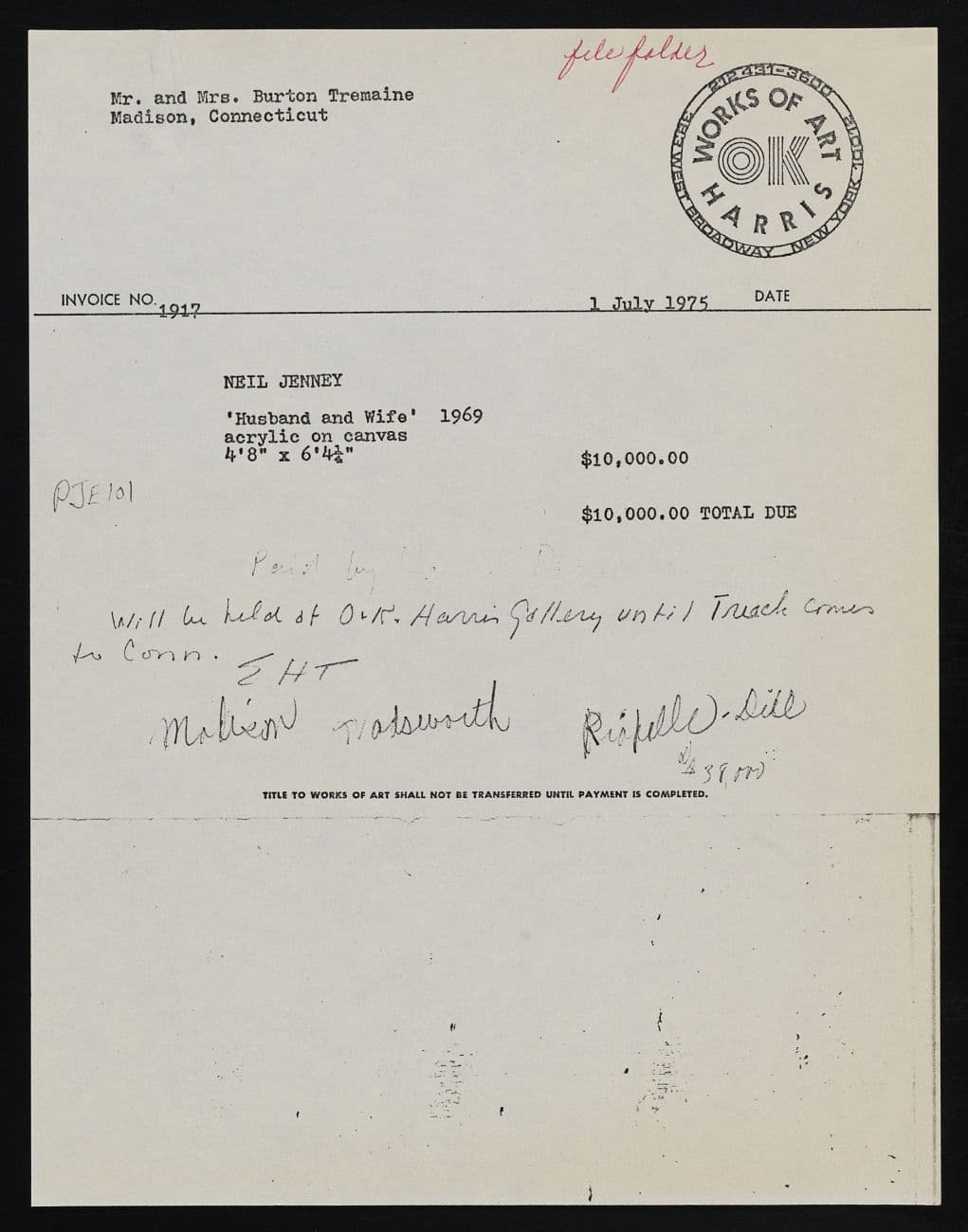
Receipt for purchase of Husband and Wife by Neil Jenney, Emily Hall Tremaine papers, circa 1890-2004, Archives of American Art, Smithsonian Institution.
Jared: And then, eventually, Husband and Wife—which is the Tremaine painting—where does it fall?
Neil: That’s a people-to-people painting. By late ‘69 I’m doing those, depicting emotional relationships. Husband and Wife is one of the best. It’s not a love painting. It’s a disagreement. Like she burned the steak. There’s tension, a kind of apprehension and disapproval. It’s clean, direct, and it lands.
Jared: Emily buys it later, around 1975, I think. Do you remember that visit?
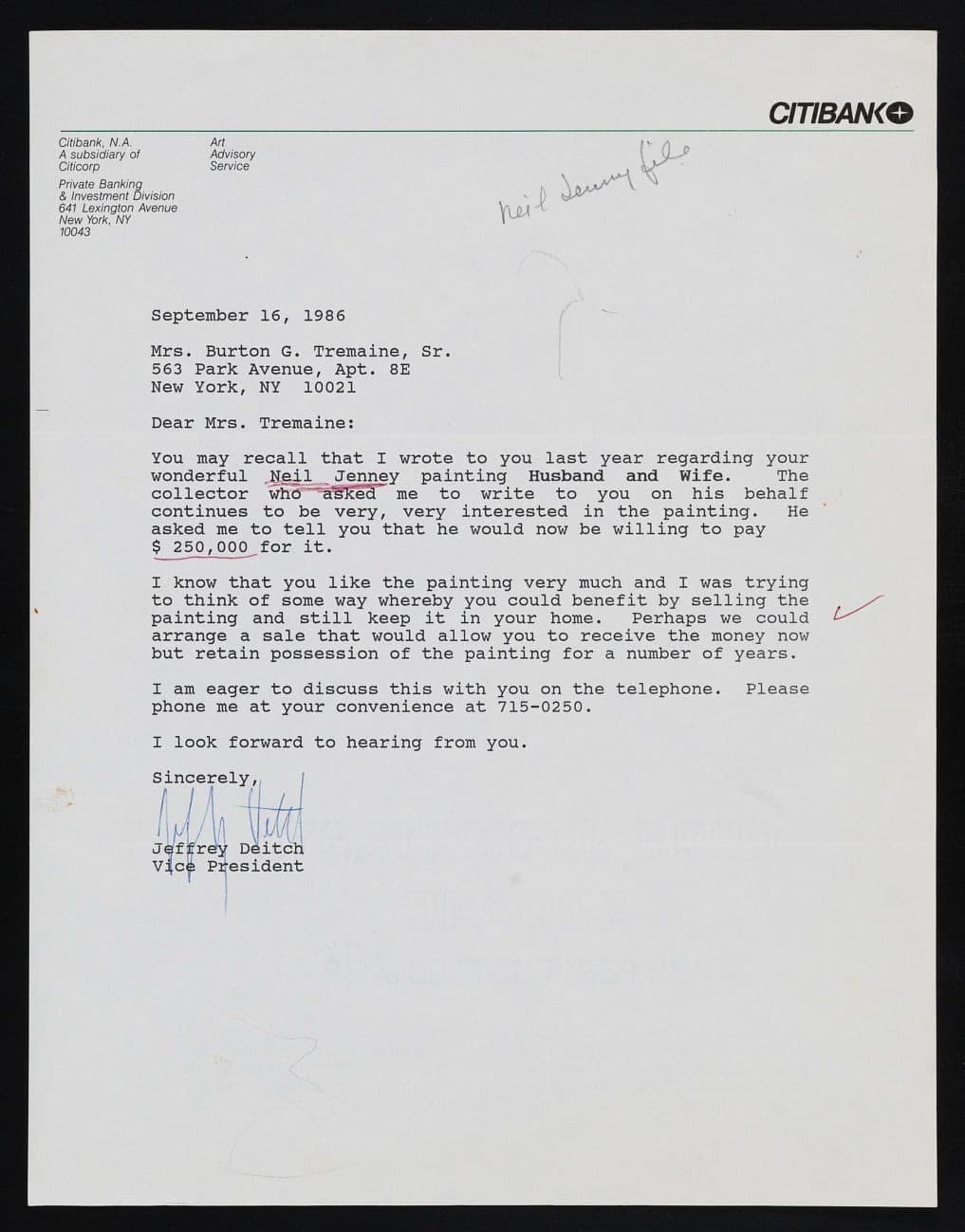
Neil: Emily came with Agnes—Agnes Saalfield [later Gund]. Agnes picked first. She wanted Cat and Dog (1970). Then Emily chose Husband and Wife. Emily paid $10,000 for it. Agnes paid $16,000 for Cat and Dog. That was the most money I ever made like that.
Neil Jenney, Cat and Dog. Photo: Rob McKeever, Courtesy Gagosian.
Jared: So: Emily is legendary, but her collection is mostly sold in the 1980s. Some of it goes to major museums: National Gallery in D.C., and the Wadsworth gets a significant portion too, which is why the institution is so intertwined with her story.
And there’s another link: 1975 is the year the Wadsworth founds MATRIX. Then in 1976 your MATRIX 14—your first solo museum show, as I understand it. Both Cat and Dog and Husband and Wife are included in the exhibition. Do you remember much about that?
Neil: Not really. Who was the curator?
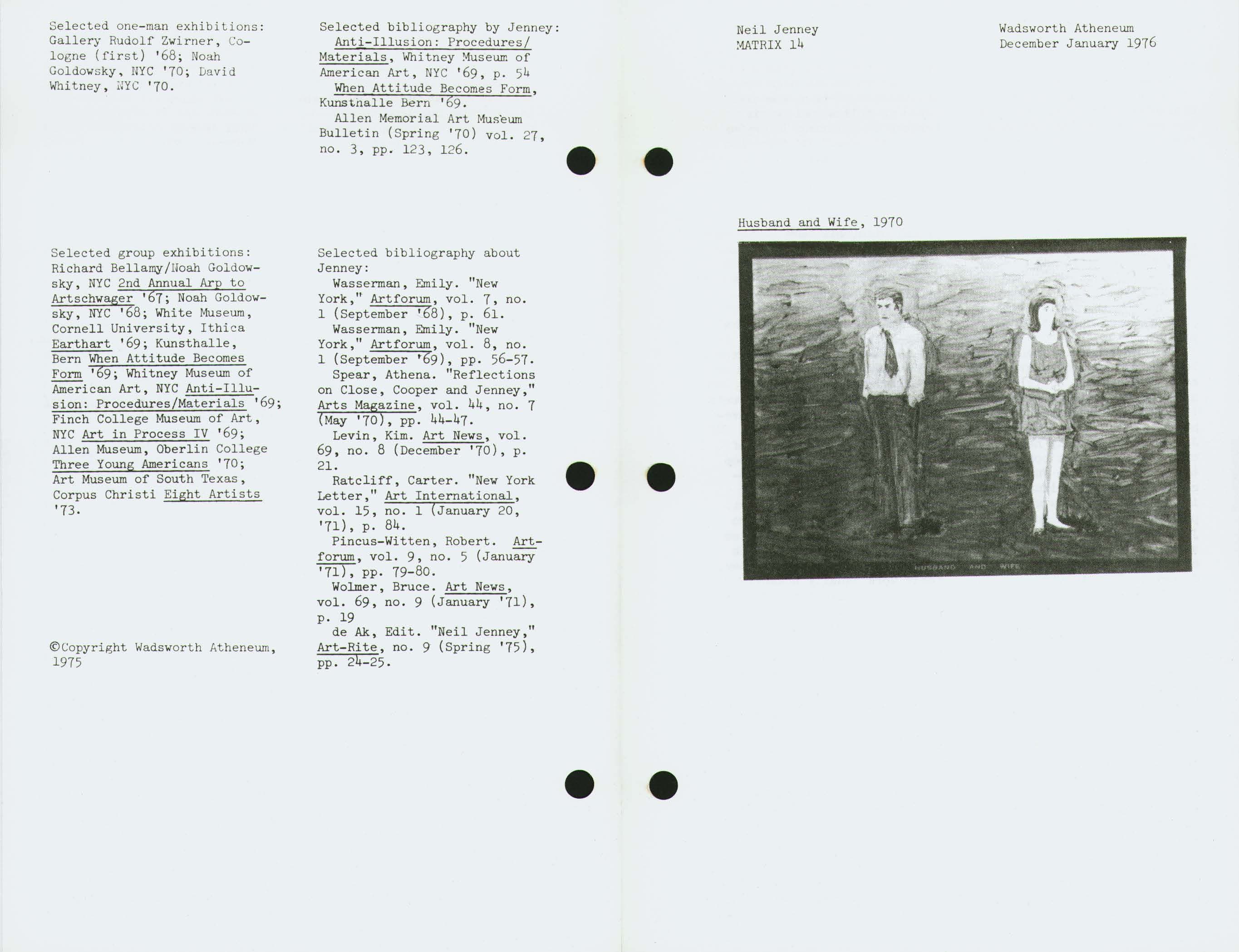
MATRIX 14 brochure, Wadsworth Atheneum, December-January 1976, courtesy of Jared Quinton.
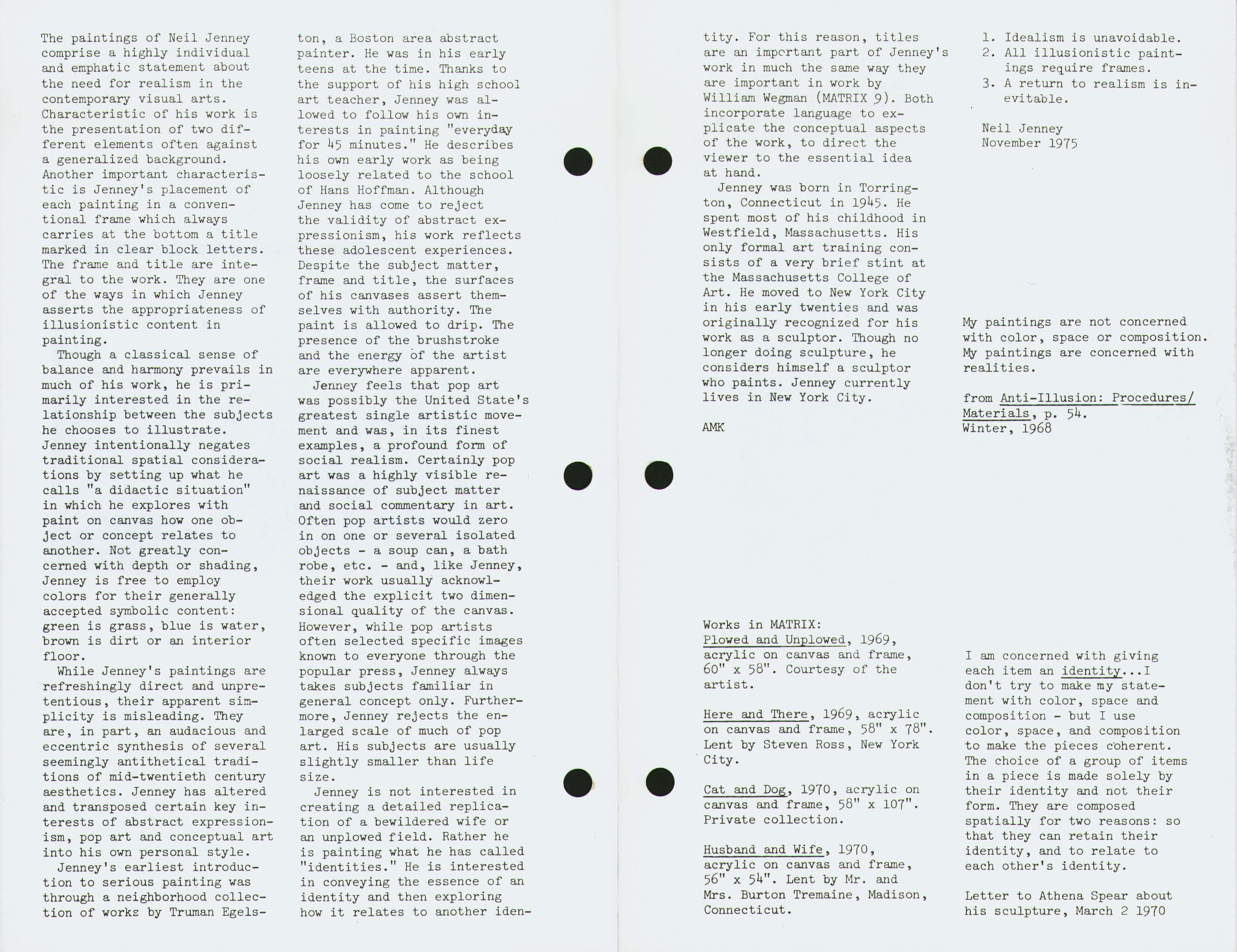
MATRIX 14 brochure, Wadsworth Atheneum, December-January 1976, courtesy of Jared Quinton.
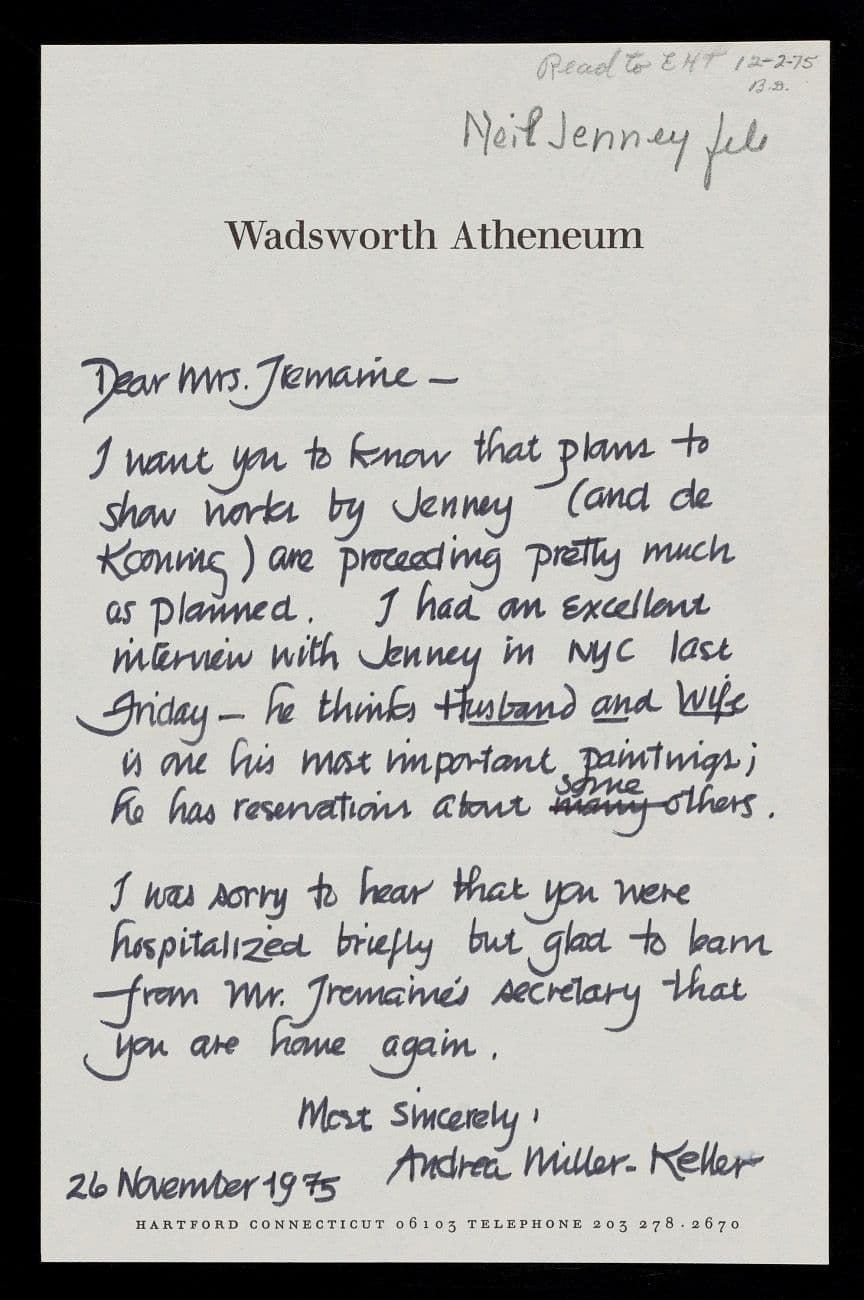
Letter from Andrea Miller-Keller, Wadsworth Atheneum, from Emily Hall Tremaine's artist file for Neil Jenney, Emily Hall Tremaine papers, circa 1890-2004, Archives of American Art, Smithsonian Institution.
Jared: Andrea Miller-Keller. In the files, there’s letters between you two, and correspondence where she sends a kind of dossier to Agnes, convincing her to lend to the show that her friend Emily was already supporting.
Neil: Yeah. I’ve loaned to museums, mini shows. I’m lending to the Morris Museum in New Jersey, and New Britain—New Britain’s close to me. If you’re interested, I’ll lend you.
Jared: I may take you up on that.
I also want to ask about what comes after “Bad Painting.” You develop “Good Painting,” and then later “New Good.” How do you define those shifts?
Neil: With Bad Painting, I had titles and no frames. I thought of it as pure, no decoration. When I switched to oil on wood—Good Painting—I started reading art history. The Greek idea is: painting is a window onto a scene. The frame is architectural; it presents the illusion. Suddenly I was back in the sculpture business, which is where I wanted to be.
I developed different frame styles, mantled frames, wide-side frames. I do all the frames myself.
Neil: Then COVID hits. The art world shuts down. There’s no socializing, no vaccine at first, and it feels like everything stops. A collector, Massimo, kept telling me for years, “You’ve got drawings you never did.” I always said, “No, I go forward.” During COVID, I said, “You know what? I will.” But I also wanted brushwork back: Bad Painting had brushstrokes; Good Painting is smoother. So “New Good” brings back brushstrokes, but more formalized.
So I have three styles: Bad, Good, and New Good.
Jared: Your recent landscapes also feel like they’re in dialogue with older landscape traditions. Working at the Wadsworth, we have one of the great Hudson River School collections, with great works by Thomas Cole, Frederic Church. Do you think about that lineage?
Neil: I believe in witnessing what you’re doing. I draw in the field, mix color in the field, but I don’t paint in the field. I don’t want to rush to a conclusion.
I’ll give you an example: I’m looking at water, and I realize it’s blurry in one area. That’s because the water is moving faster. Then I realize the reflection of the sky is in the blur, and leaves floating by have two shadows—one on the surface and one below. That’s witnessing. You can’t just dream that up.
Jared: And you’ve got titles that are often ironic, continental titles attached to modest scenes.
Neil: I like irony. “Modern Africa”... people say, “That’s not modern.” I say, “Yes it is. What do you think it looks like today?” Or “Europa”... people think Alps, grandeur. But maybe it’s a little nowhere scene. I like that juxtaposition.
Neil Jenney, Modern Africa #4, 2020–21
Oil on canvas, in artist’s painted wood frame
72 1/4 x 95 1/2 x 3 1/4 inches (183.5 x 242.6 x 8.3 cm)
(JENNE 2020.0003)
© Neil Jenney. Photo: Rob McKeever. Courtesy Gagosian.
Neil Jenney, Europa, 2014
Oil on wood, in artist's painted wood frame
28 x 64 x 3 3/8 inches (71.1 x 162.6 x 8.6 cm)
(JENNE 2014.0001)
© Neil Jenney. Photo: Maris Hutchinson. Courtesy Gagosian.
Neil Jenney, Liberty Contemplating the Nuclear Age, 2003
Charcoal on paper
50 1/2 x 35 inches (128.3 x 88.9 cm)
(JENNE 2003.0005)
© Neil Jenney. Photo: Rob McKeever. Courtesy Gagosian.
Jared: What are you working on right now?
Neil: A Liberty series, this is my third try. I didn’t like the marble handling in the first two. The one I’m working on now, the technology is much better.
Jared: And you make, what, about three paintings a year?
Neil: Three, maybe three and a half. I work all the time. I don’t have an assistant.
Jared: Before we close, I want to circle back to collectors from that era. Besides Emily and Agnes, who stands out?
Neil: The Sculls. Holly Solomon was a big supporter, she just got it. She sold a Girl and Doll (1969) to Steve Ross; he invented cable TV, Warner Communications. That was my biggest sale at the time.
And Larry Gagosian, he’s my biggest collector. He never sells anything. He refuses to be a dealer, basically. If I have a show, he tells everybody it’s for sale, but he just buys. Never introduced me to a collector, never sold anything. He’s got a galaxy in his head. But he thought of himself as the biggest dealer in the world, and—boom—manifestation.
Jared: You helped him early on.
Neil: Yeah. Annina Nosei, do you know that is? The Italian dealer who discovered Basquiat. She called me and said, “Neil, I want you to come meet my new partner, Larry Gagosian.” I gave Larry a couple Bad Paintings to flip. Little did I know he had a billionaire backing him.
Jared: And of course, Larry is also the dealer Emily chooses to help sell her collection in the 1980s. I believe he’s the one who sold Husband and Wife; the foundation is still trying to track down the current owner.
Neil, thank you for sharing so much with me. This has been generous.
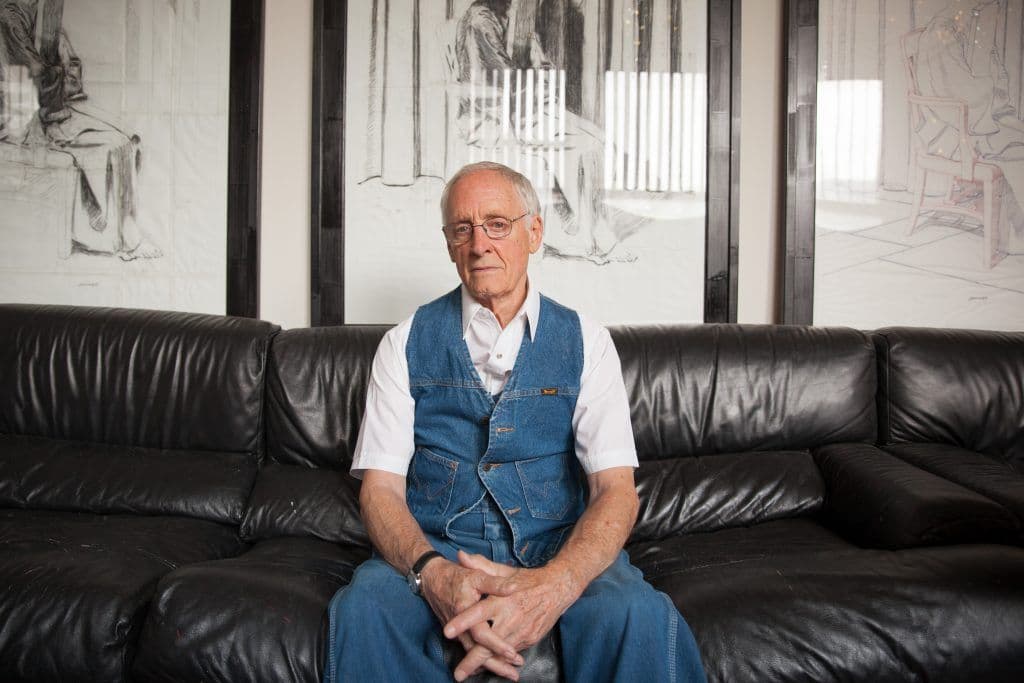
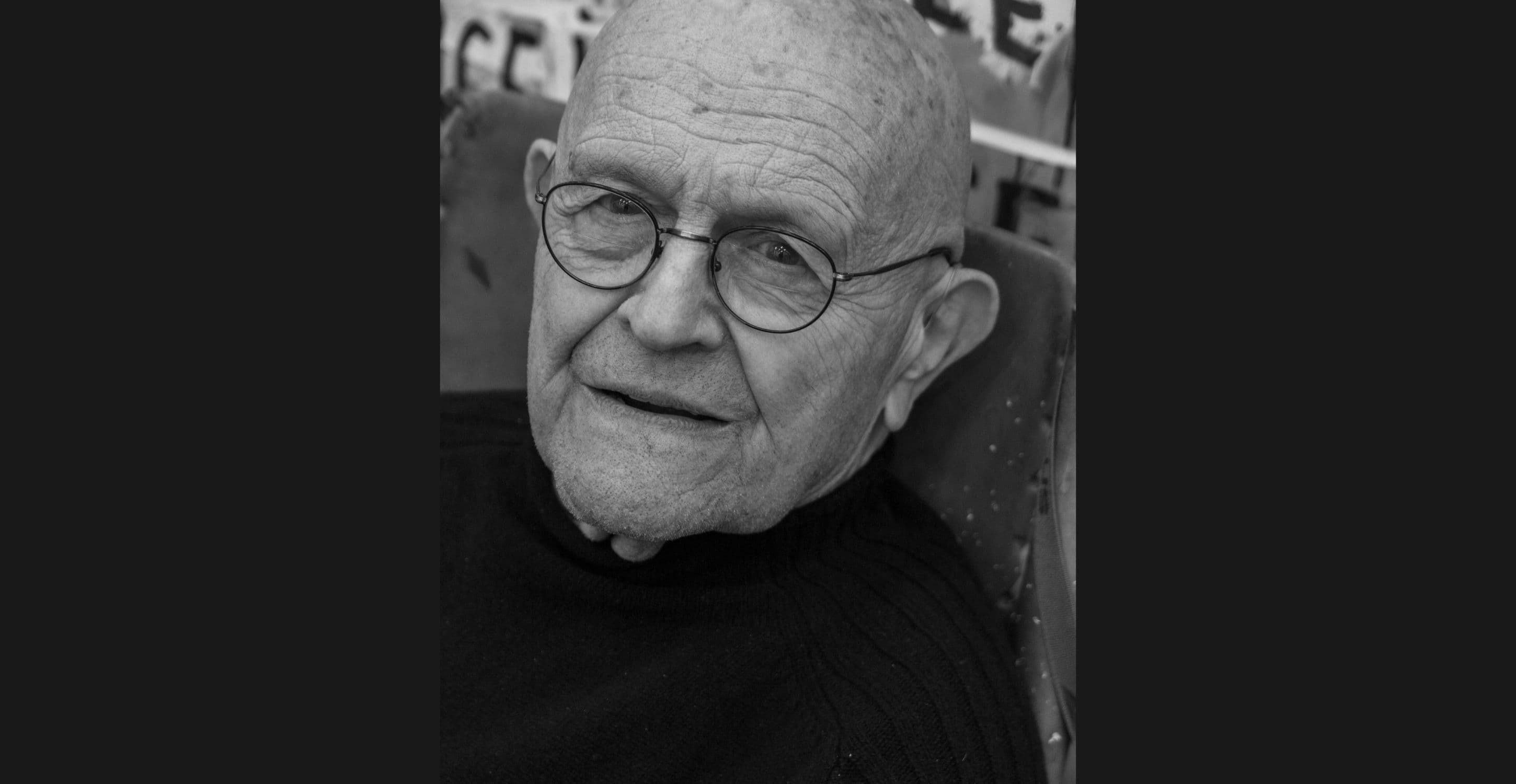
Jared Quinton is an independent curator and writer. He was previously the Emily Hall Tremaine Associate Curator of Contemporary Art at the Wadsworth Atheneum Museum of Art, Hartford, CT. Cover image: Portrait of Neil Jenney in his SoHo studio by Elvin Tavarez.
Explore More Stories

Creating Impact
The Emily Hall Tremaine Foundation
Established in 1987 by Emily Hall Tremaine, the foundation seeks and funds innovative projects that advance solutions to basic and enduring problems. With an overall emphasis on education, principally in the United States, it contributes in three major areas: the Arts, Environment, and Learning Differences.