Story
Object Lessons: Jim Dine’s Art
in the Tremaine Collection
Written by Kathleen L. Housley
[Interview with Jim Dine conducted by Kathleen L. Housley on May 1, 2026. Other references are from the Emily Hall Tremaine files in the Archives of American Art, the Smithsonian, and the book Emily Hall Tremaine: Collector on the Cusp by Kathleen L. Housley.]
Many art movements have come and gone since the 1950s. In his seventy-year career as an artist, Jim Dine (b. June 15, 1935) has been out-of-step with most of them—and he could not be happier about it. As Thoreau famously suggested in Walden, “If a man does not keep pace with his companions perhaps it is because he hears a different drummer.”
Dine arrived in New York City in 1958. In his pocket was a degree in fine arts from the University of Ohio that he considered worthless. What he brought with him that was far more valuable was his clear memory of the hardware store operated by his grandfather and father in Cincinnati which was crammed with wrenches, hammers, pliers, brushes and cans of paint. He was fascinated with the physicality of all types of tools, which to him, as a young boy, were beautiful in and of themselves. No matter the material he would eventually use to create art—from the lithographic stone to bronze—the presence of tools mattered. To Dine, a tool was not symbolic or allegorical. It was the thing itself. To this day, it remains the same for Dine: a push-pull between labor and function, the familiar and the strange, the extraordinary in the ordinary.
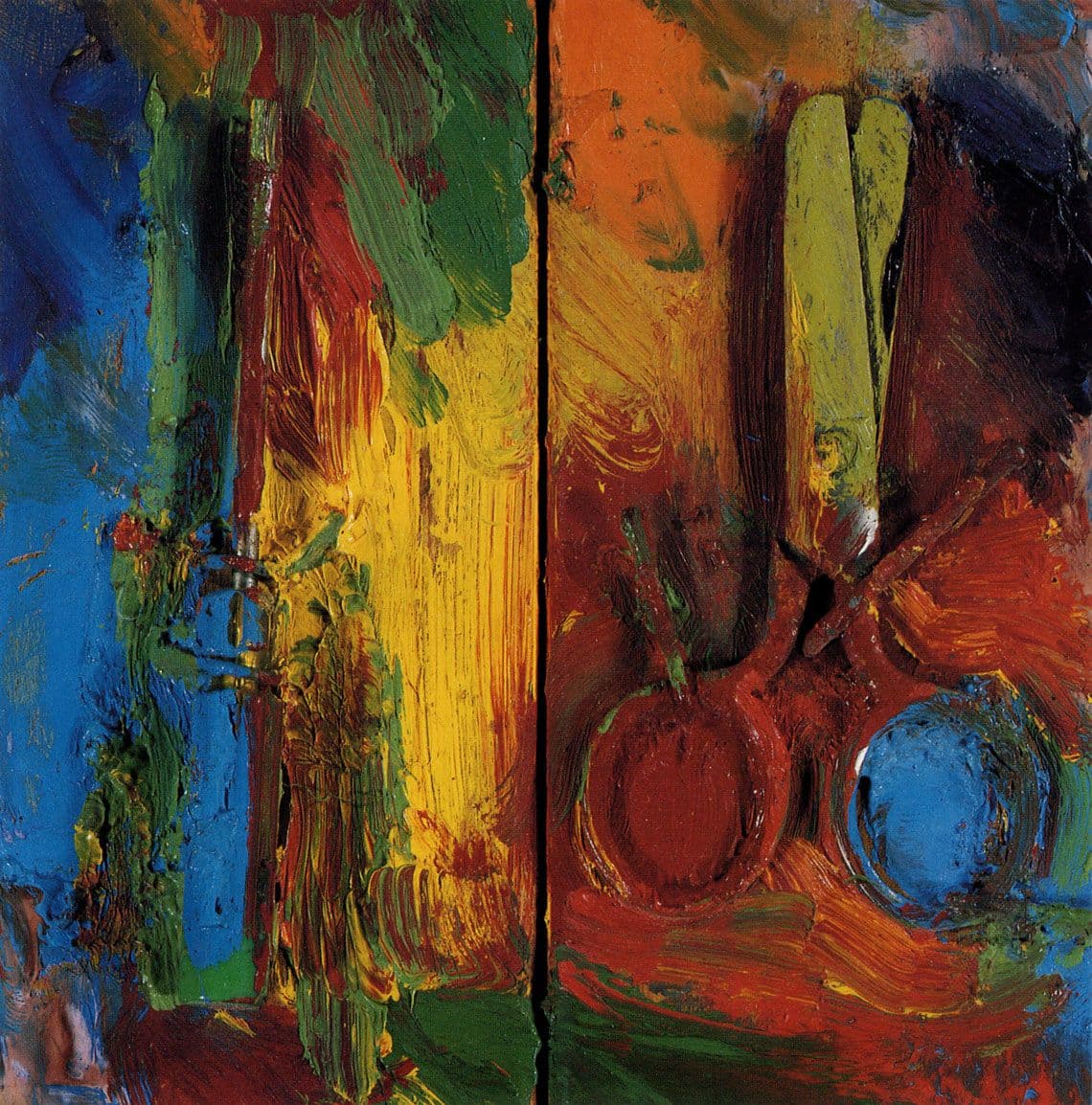
Jim Dine, A Little Scissors and a Little Screwdriver, Year of Christie’s sale: 1991, © 1991 Christie’s Images Limited, © Artists Rights Society (ARS), New York
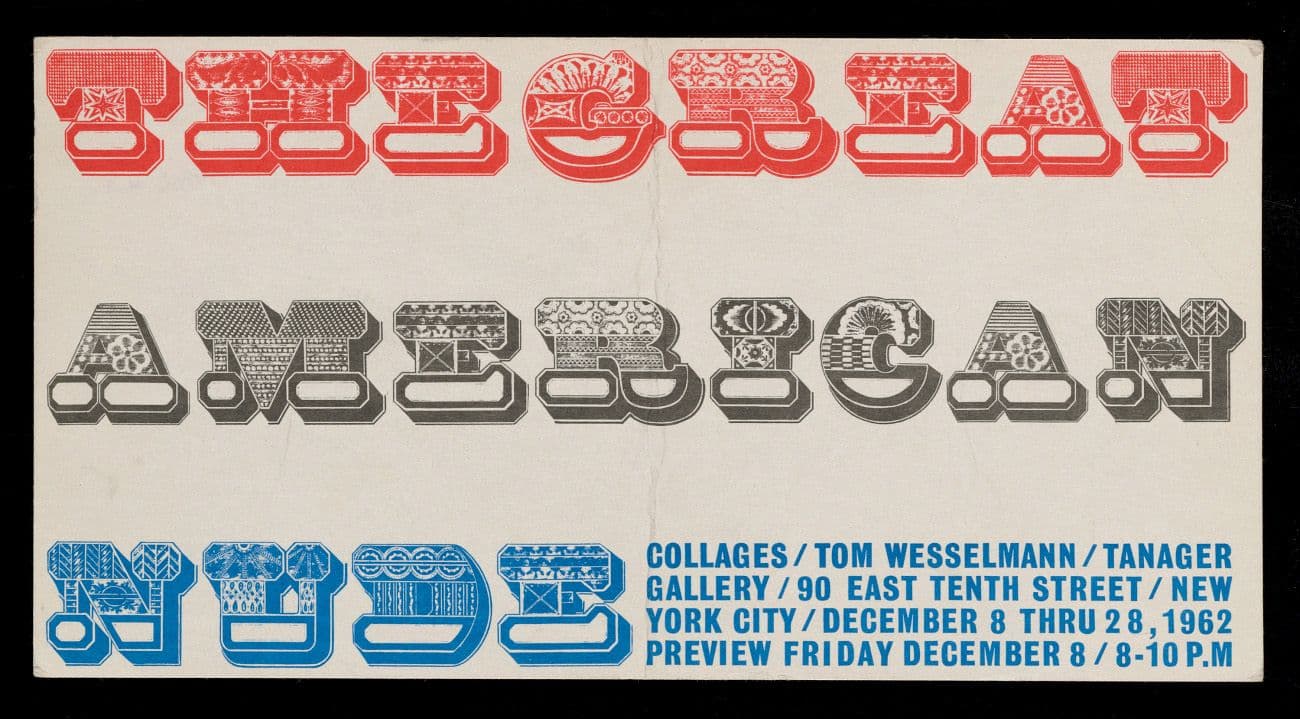
While Dine was hitting the ground running in New York, Burton and Emily Hall Tremaine were changing the direction of their collecting in a radical way, moving from abstract expressionism to nascent art movements with temporary names such as neo-realism, neo-Dada, and (eventually) pop. They purchased Three Flags by Jasper Johns in 1959 and Device Circle in 1960. They visited Claes Oldenburg’s Ray Gun store in New York City not long after it opened in 1961. Getting lost on the way, they ended up walking through the neighborhood, which helped them realize that Oldenburg’s inspiration was coming from the world immediately around him, from the Seven-UP sign to the pies displayed in the window of a restaurant. From Tom Wesselmann, they acquired three Great American Nude paintings (along with six other works); and from Andy Warhol, eighteen works, including representations of ubiquitous items of daily life such as green stamps and soup cans. To the Tremaines, it was all refreshing, including the crazy lifestyle and the seize-the-day mentality of the artists. It was no surprise that when heart-shaped sunglasses became the rage, Emily sported a pair.
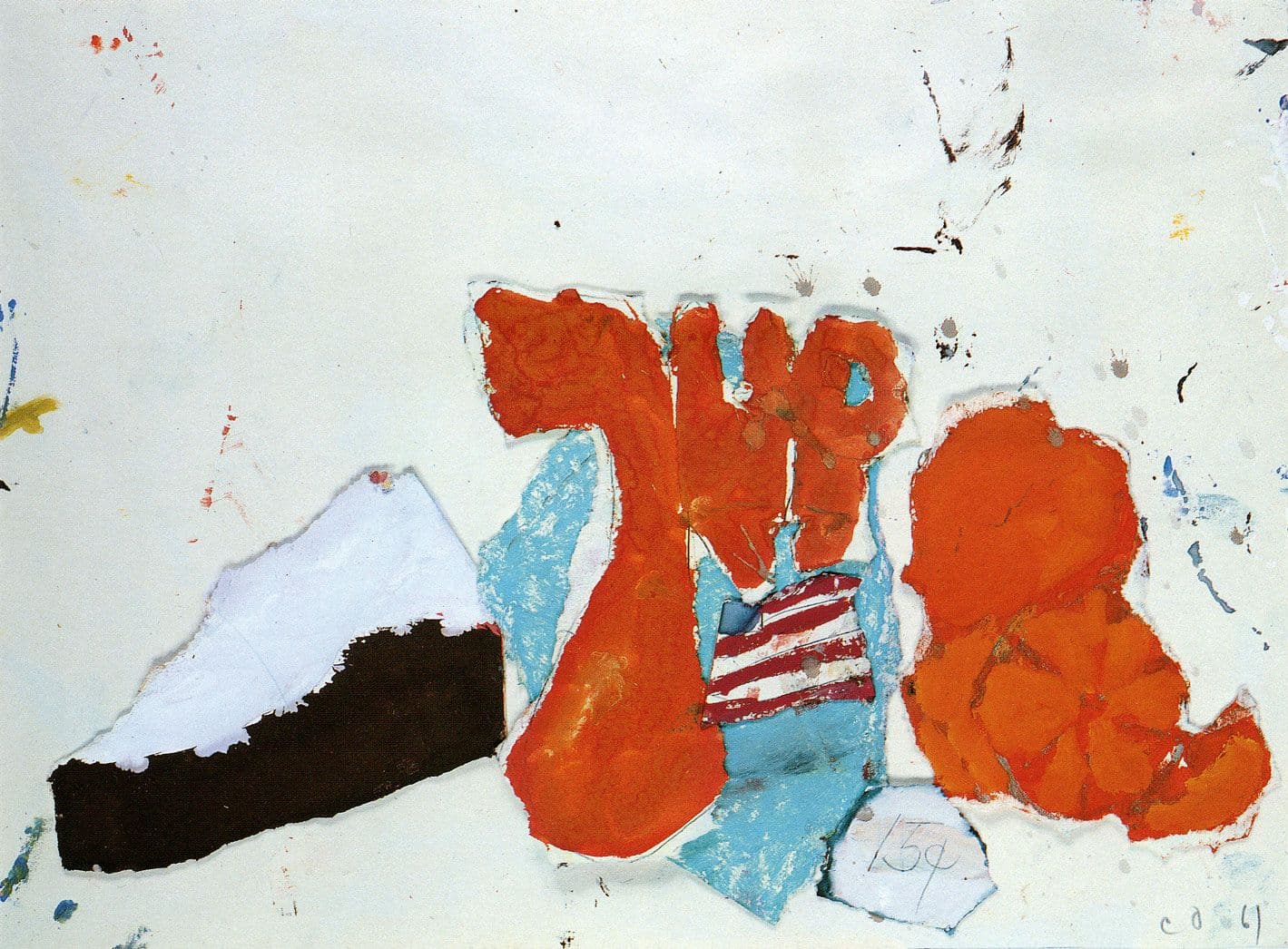
Claes Oldenburg, Studies for Store Objects – Pie, 7-Up, Flag, Oranges, Fifteen Cents, Year of Christie’s sale: 1988, © 1988 Christie’s Images Limited
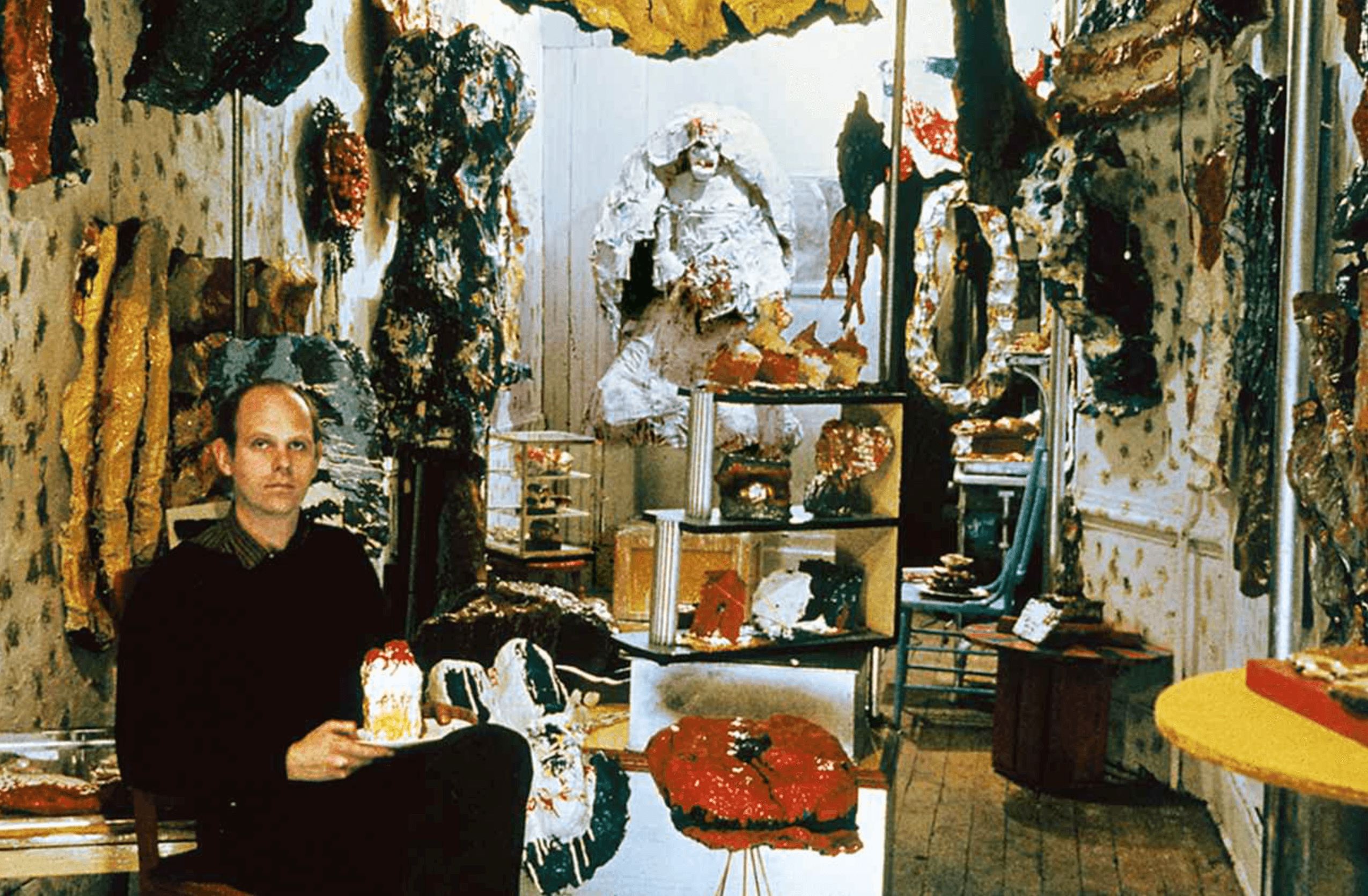
Claes Oldenburg, The Store, 1961, Public Domain
On arriving in New York City, Dine realized that although he had much to learn from the abstract expressionists, the art world was in the process of reshaping itself. “Listen, the world changed in a way that I didn’t expect,” said Dine. “I thought Kline and de Kooning were going to become Picasso and Matisse in America, and instead, it went another direction—conceptual art, etc.” From his perspective, he took what he could get from abstract expressionism. “I learned a lot and I went forward with what was inevitable in my intention.”
"Listen, the world changed in a way that I didn't expect. I thought Kline and de Kooning were going to become Picasso and Matisse in America. And instead…it went another direction. Conceptual art, etc. Full philosophy."
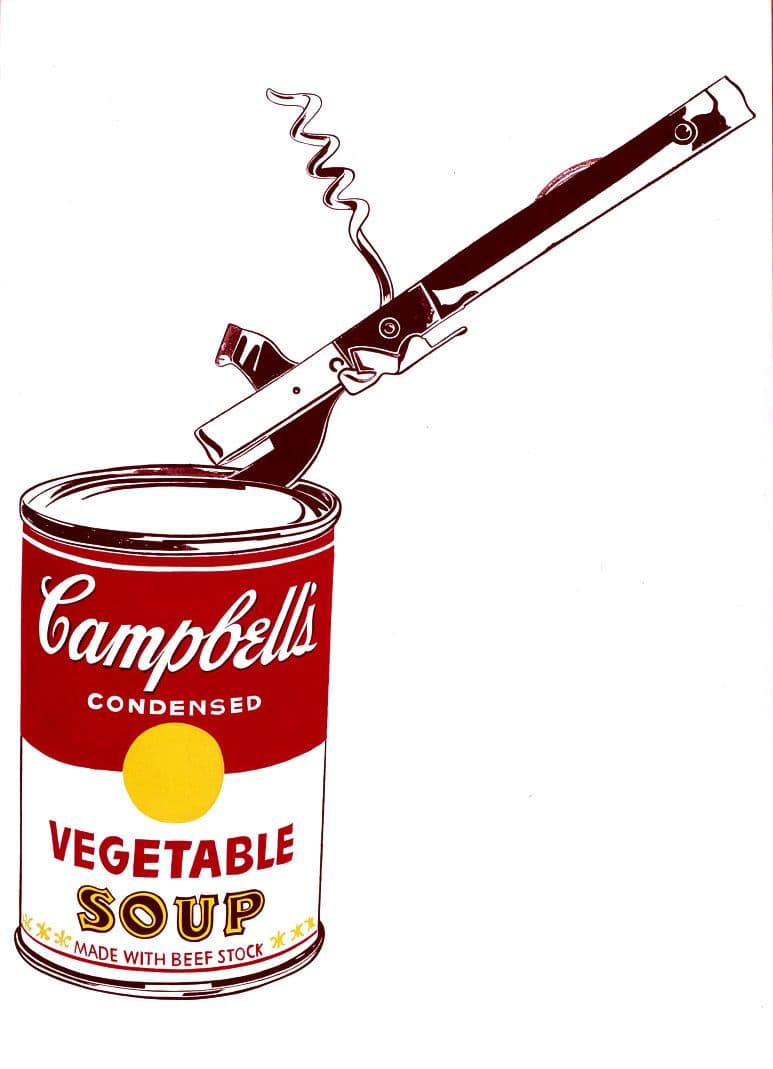
Andy Warhol, Campbell's Soup Can With Can Opener, 1962, Emily Hall Tremaine papers, circa 1890-2004, Archives of American Art, Smithsonian Institution. © Andy Warhol Foundation for the Visual Arts / Artists Rights Society (ARS), New York
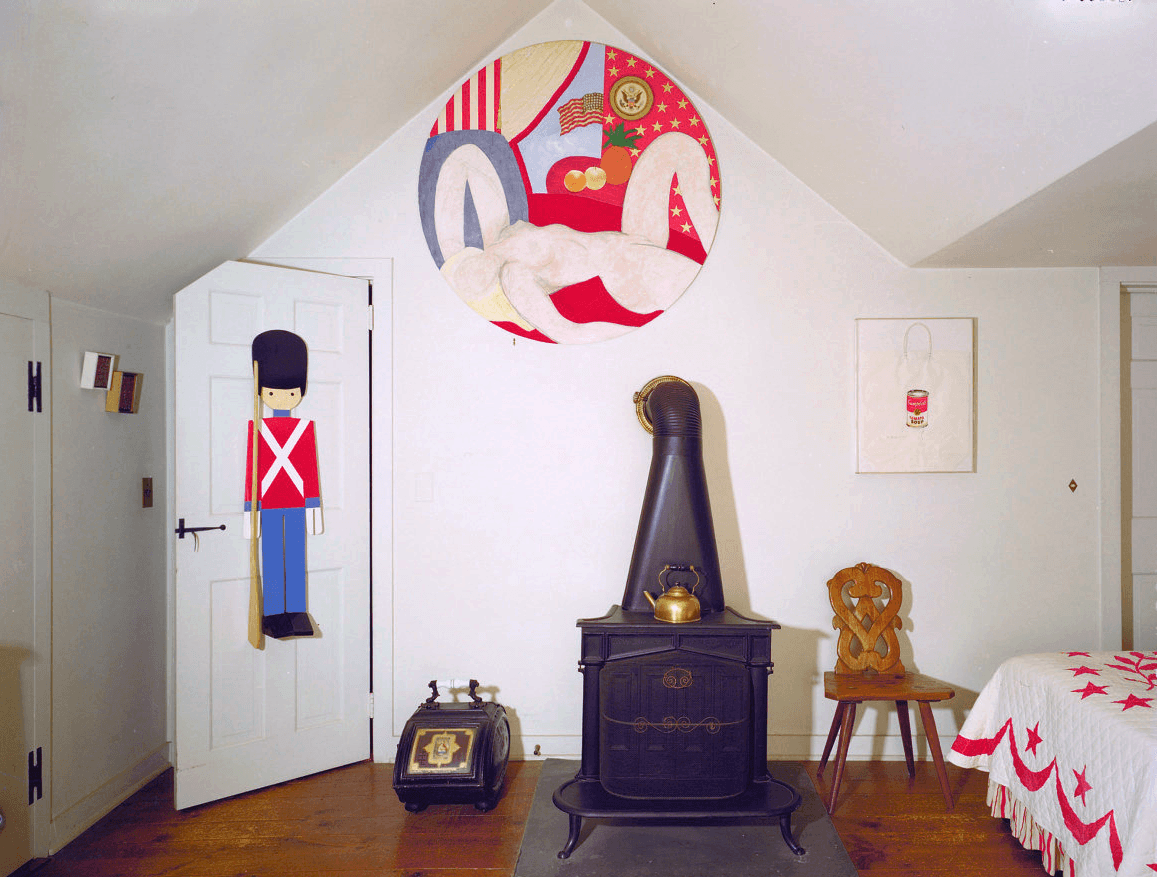
Tom Wesselmann, Great American Nude, in the Tremaines' Madison, CT bedroom with miniatures by door. Photo: Adam Bartos; Emily Hall Tremaine papers, circa 1890-2004, Archives of American Art, Smithsonian Institution. © Artists Rights Society (ARS), New York
Dine immediately became involved in the art scene, helping to establish the Judson Gallery located in the basement of Judson Memorial Church in Greenwich Village. There he produced with his friends, among them Tom Wesselmann and Claes Oldenburg, events that would come to be called “happenings.” One of the earliest happenings had a double title: “The House,” which Dine created, and “The Street,” which Oldenburg created. They had gone out into the winter streets of the Bowery and gathered detritus, creating from it, as Dine put it, “one big collage” in which the artists themselves were components. Yet as forward-thinking as the happenings were, Dine felt that his true calling was canvas and paint. “That made me a bit of an outsider in the face of what came at that time and afterwards.” It was all a bit confusing from Dine’s perspective, “I would have been quite pleased to have been a pop artist; I was very involved with pop art and with those guys. But let’s face it. I wasn’t one. I used some popular imagery, objects more than anything else. But I wasn’t glorifying commercialism, nothing like that.” (See the website jimdine.com)
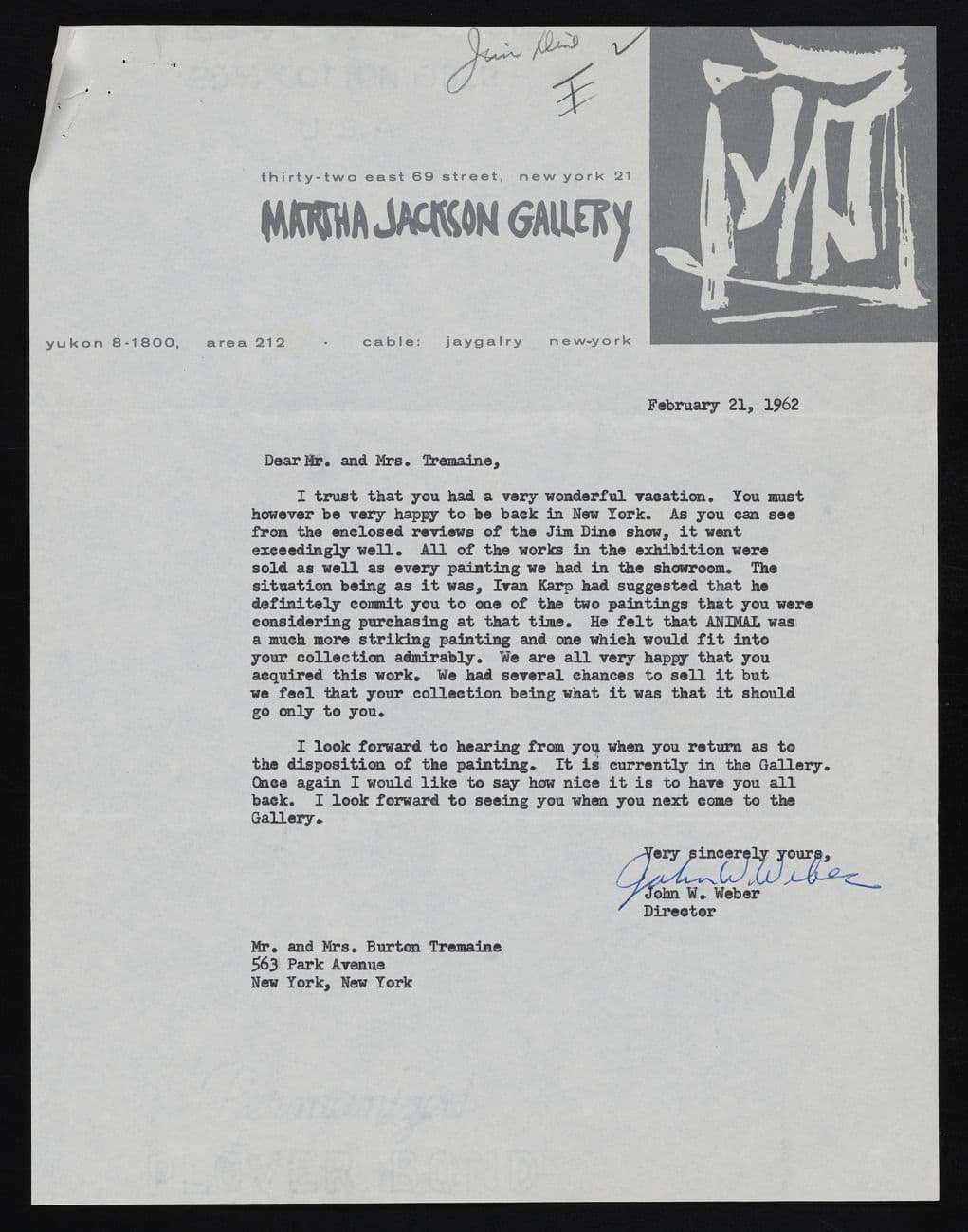
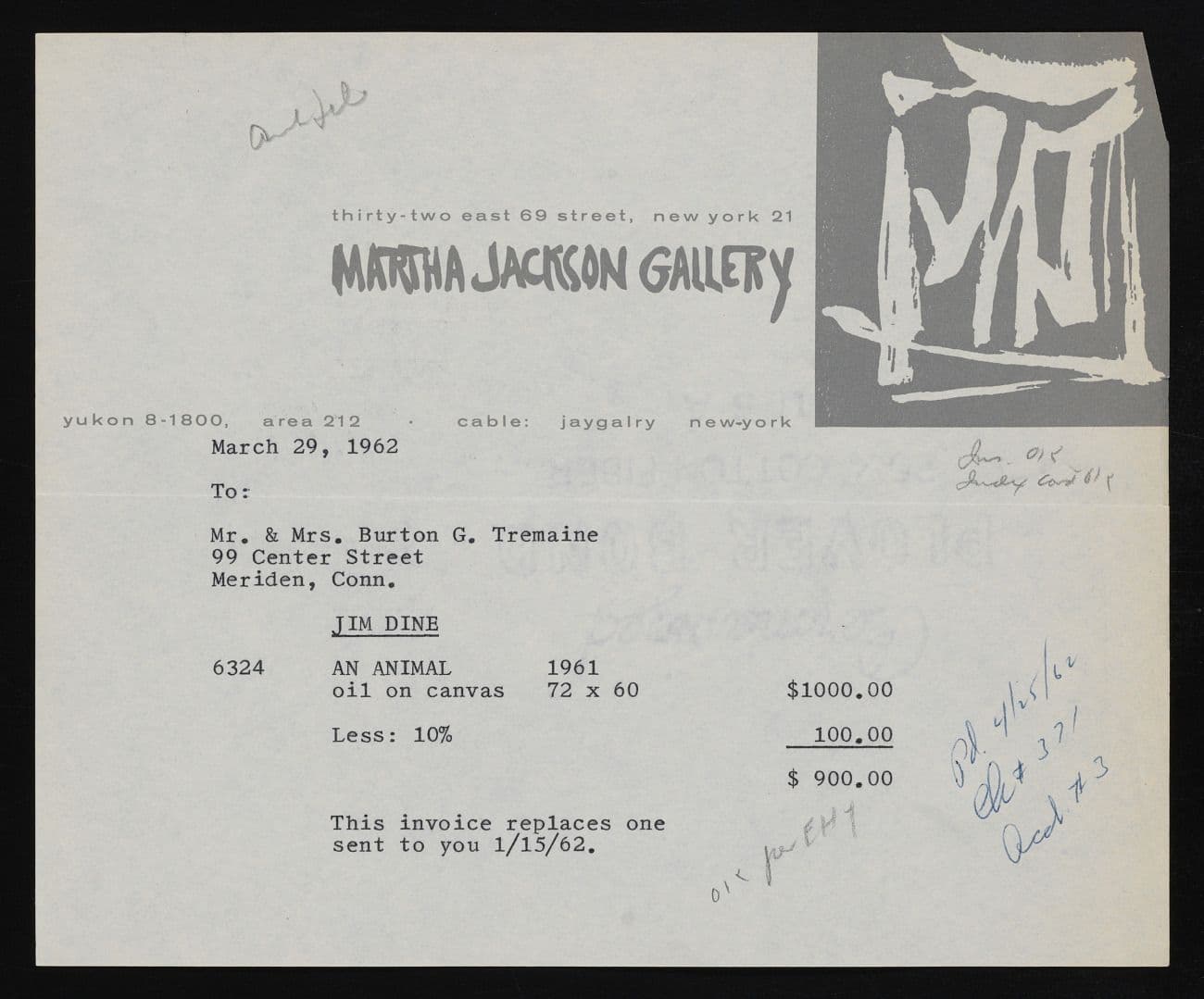
Letter for An Animal by Jim Dine from Emily Hall Tremaine's artist files for Jim Dine, Emily Hall Tremaine papers, circa 1890-2004, Archives of American Art, Smithsonian Institution
The Tremaines were aware of Dine’s involvement in the happenings taking place in and around Greenwich Village, but it was his exhibition at the Reuben Gallery in 1960 that brought him to their attention. The Reuben Gallery was on the third-floor of a run-down building on Fourth Street. That exhibition was followed by a larger and very successful exhibition at the Martha Jackson Gallery in 1962, which was located at East 69th Street. Culturally, the two galleries were a world apart. While the exhibition was ongoing, the Tremaines were away but had seen a preview and had expressed interest in acquiring the painting titled “Animal,” which incorporated actual fur. John Weber, the director of the Martha Jackson Gallery, wrote to the Tremaines on February 21, 1962, just after the exhibition closed to ask them to commit to purchasing “Animal,” which had been recommended to them by Ivan Karp, a respected art consultant and friend. Weber wrote, “[Karp] felt “Animal” was a much more striking painting and one which would fit into your collection admirably. We had several chances to sell it but we feel that your collection being what it was that it should go only to you.” Weber was implying that placement of “Animal” in the Tremaine collection would be mutually beneficial, giving Dine’s career a boost while expanding the collection in a new direction. Agreeing with Karp’s suggestion, the Tremaines purchased it and hung it in their Park Avenue apartment where it remained for 24 years. In 1986, after the Tremaines had made the decision to sell the collection, it was sold through the Pace Gallery to the National Gallery in Canberra, Australia. According to Dine, when a work went to a museum, it provided a lift to his spirits. “It meant more people will see it,” he remarked.
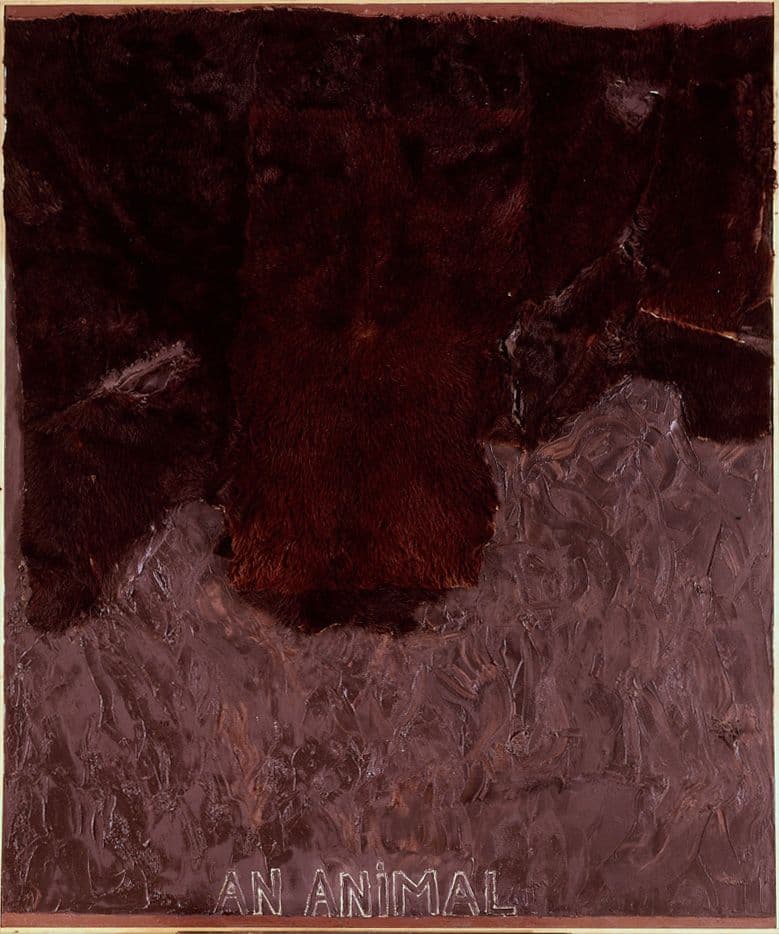
Jim Dine, An Animal, 1962, Emily Hall Tremaine papers, circa 1890-2004, Archives of American Art, Smithsonian Institution. © Artists Rights Society (ARS), New York
Besides the fur, the painting had the word “Animal” painted along the bottom. The art critic Lawrence Alloway contrasted it to the works of René Magritte who also used written words in his paintings, but while Magritte’s use was intentionally disorienting, Dine “presents his image with a maximum unmistakability combined with an absolutely accurate one-word description…Whereas the Surrealist sought mystery, Dine calmly shows it to be unavoidable.” Dine recalls one humorous event with the painting, “Because it had real fur, it had moths and it had to be fumigated!”
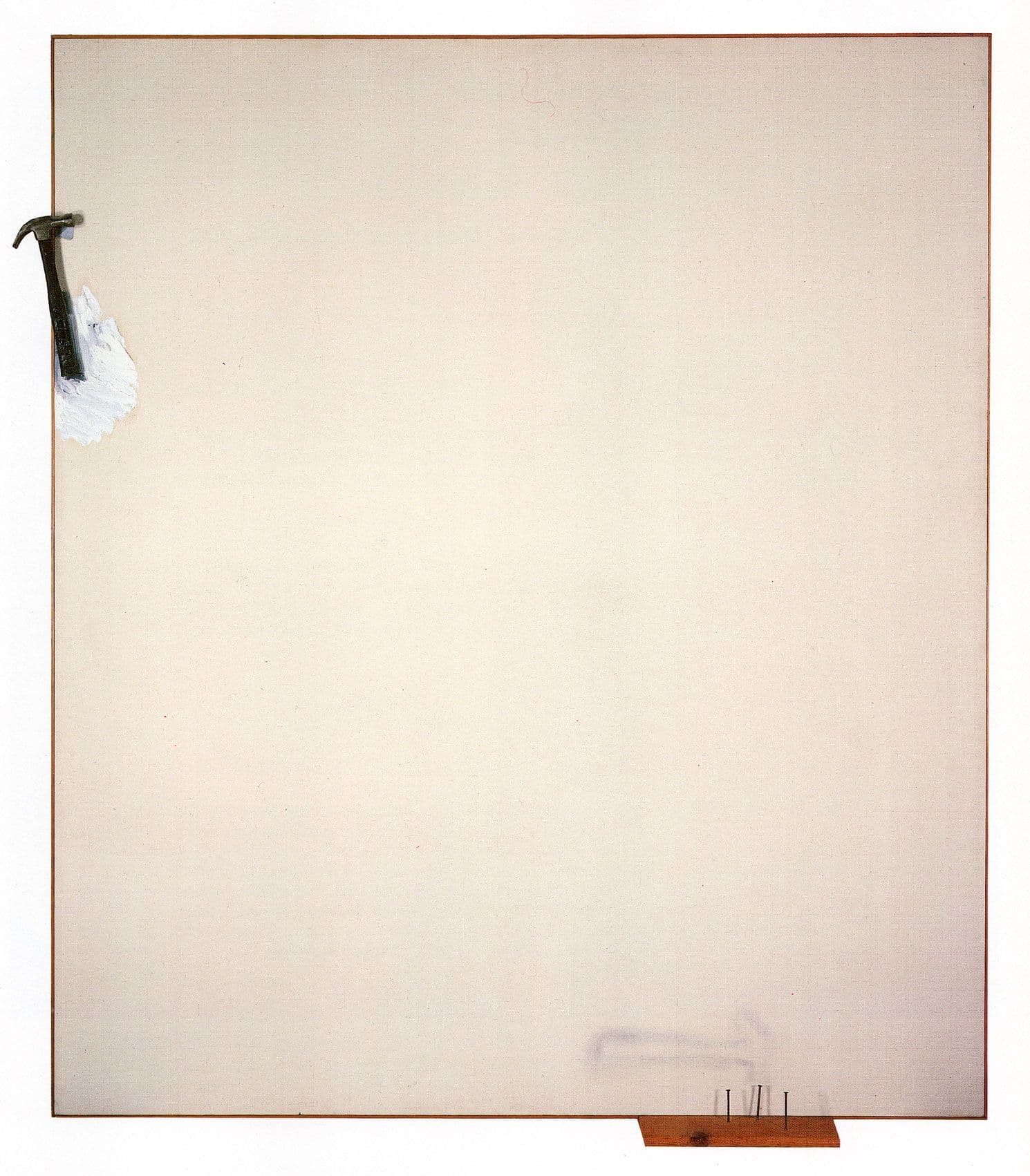
Jim Dine, The Hammer Acts, Year of Christie’s sale: 1988, © 1988 Christie’s Images Limited, © Artists Rights Society (ARS), New York
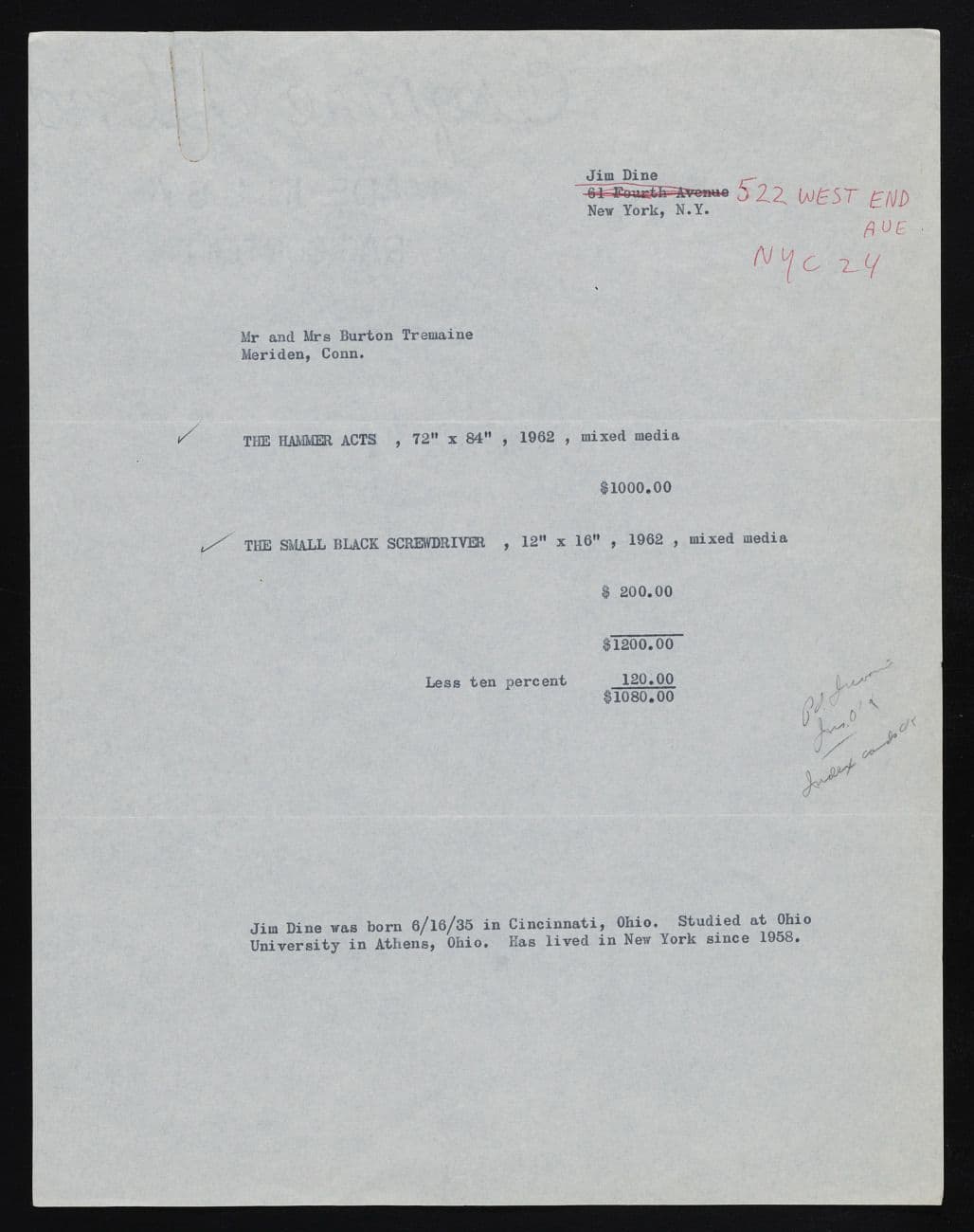
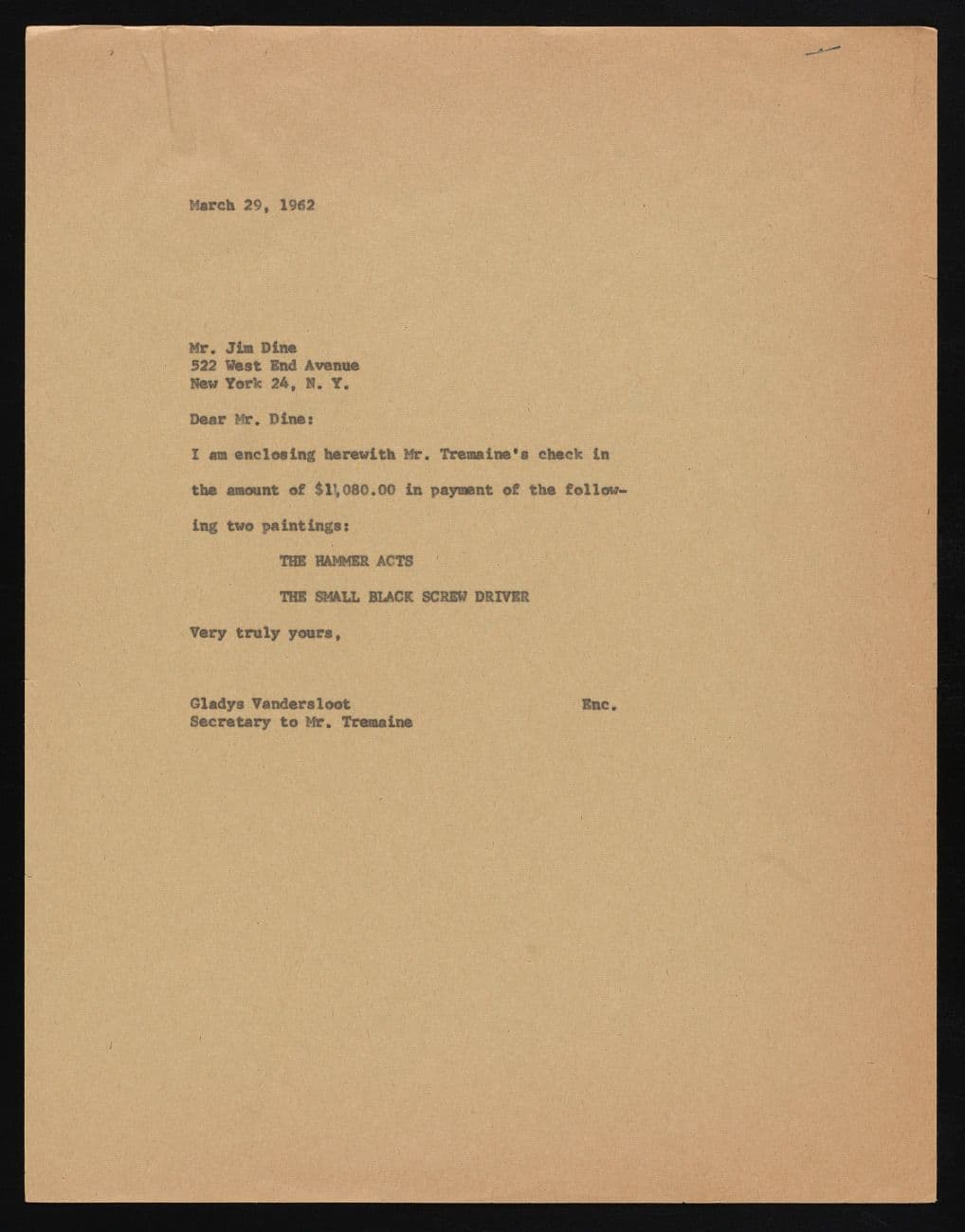
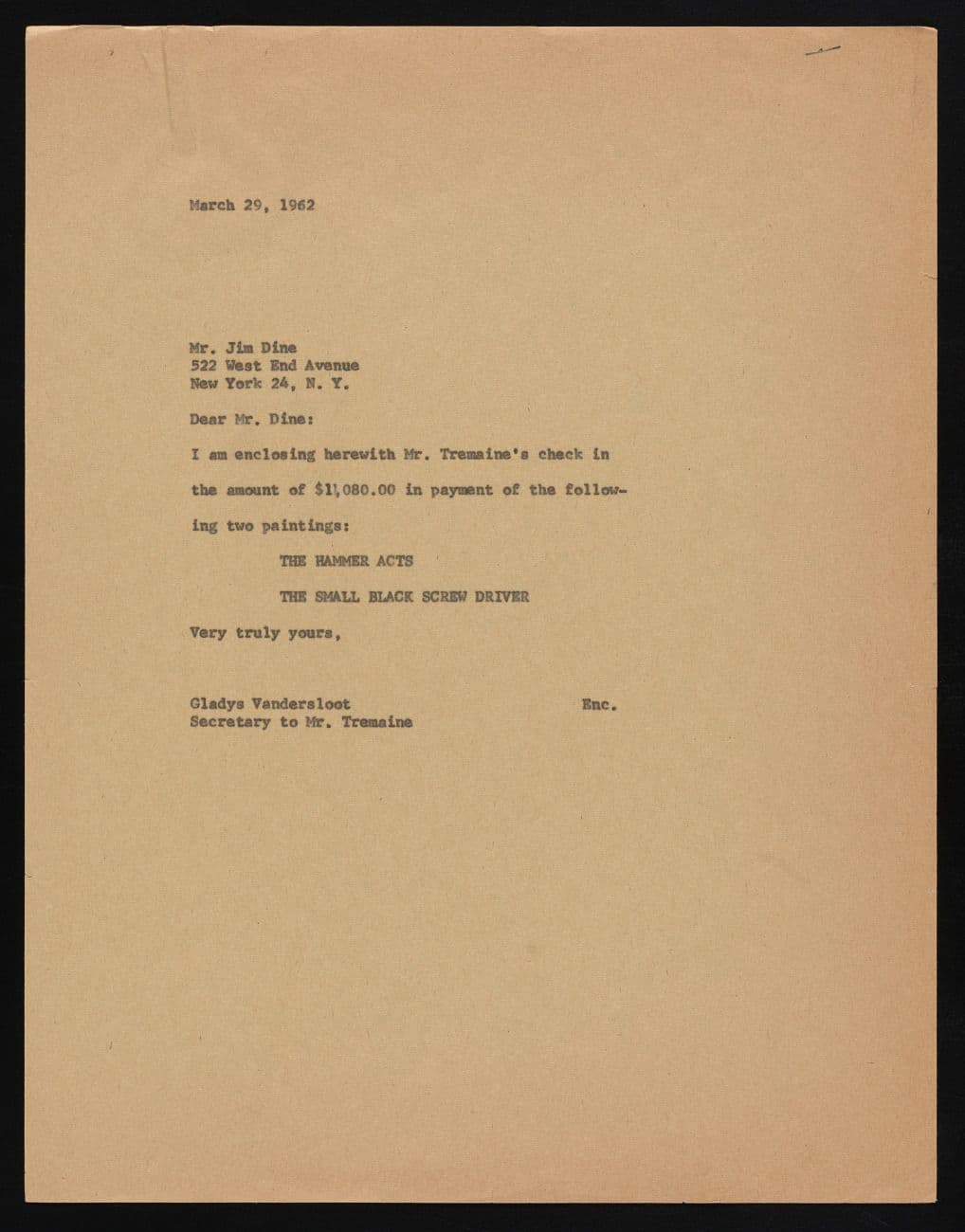
Dine left the Martha Jackson Gallery shortly after the exhibition and was in the process of moving to the Sidney Janis Gallery. It was during this interim period that the Tremaines purchased three works directly from him: “The Hammer Acts,” “Crescent Wrench,” and “Small Black Screwdriver.” A painting titled “A Little Scissors and a Little Screwdriver,”only 5 ½” x 5 ½,” also joined the collection. It may have been a gift from Dine, possibly for Emily’s miniature art collection.“The Hammer Acts,” 72” x 84,” shows an actual hammer mounted high on the left side, while at the bottom is a board with a row of nails. Above the board is painted a shadow of the hammer. The shadow is both the past and a premonition of the future, as if Dine were exploring the nature of time and the act itself – the hammering of the nails. Dine explained “That painting was about time, But it was really about my joy at being able to make it. I was trying to depict it.”
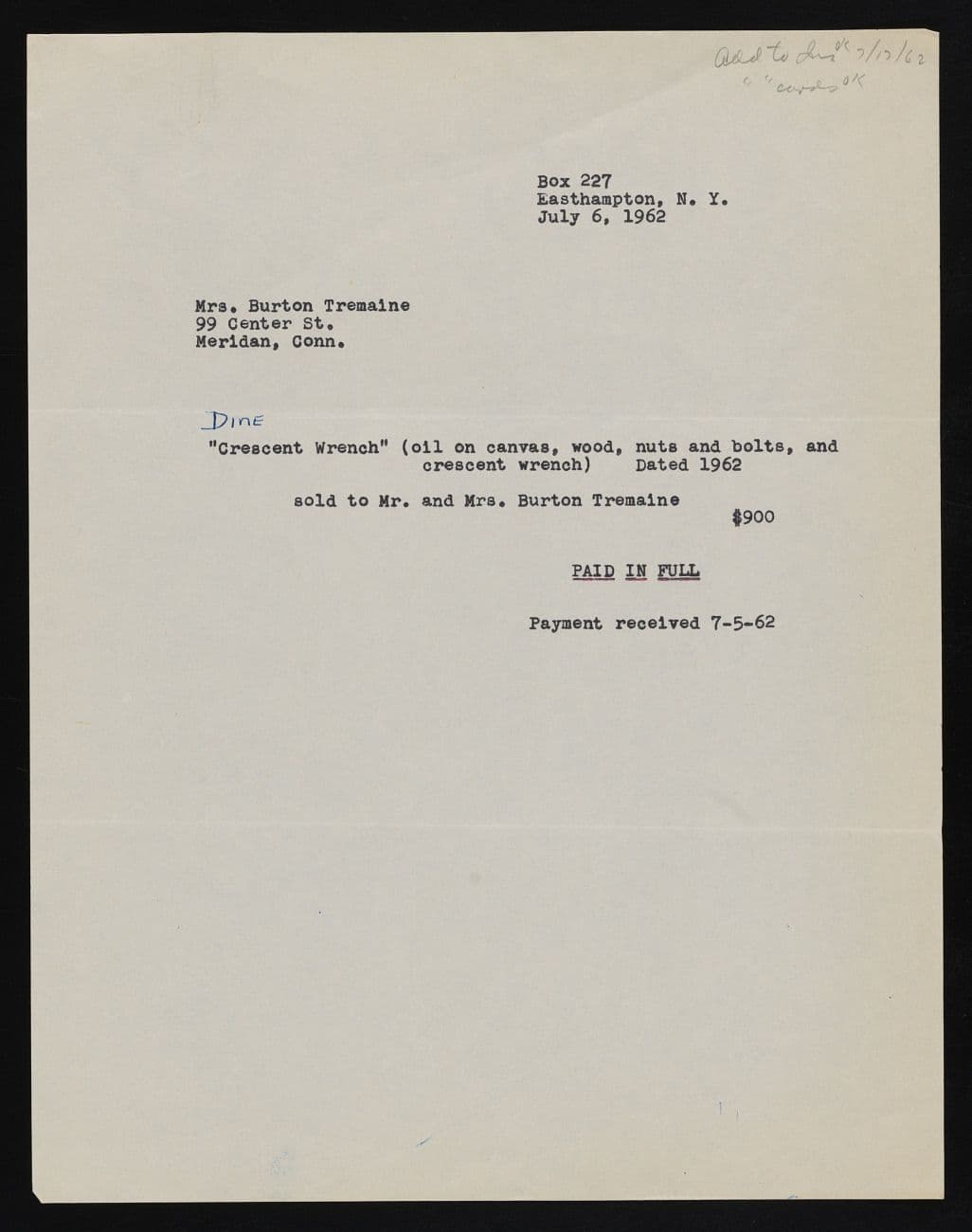
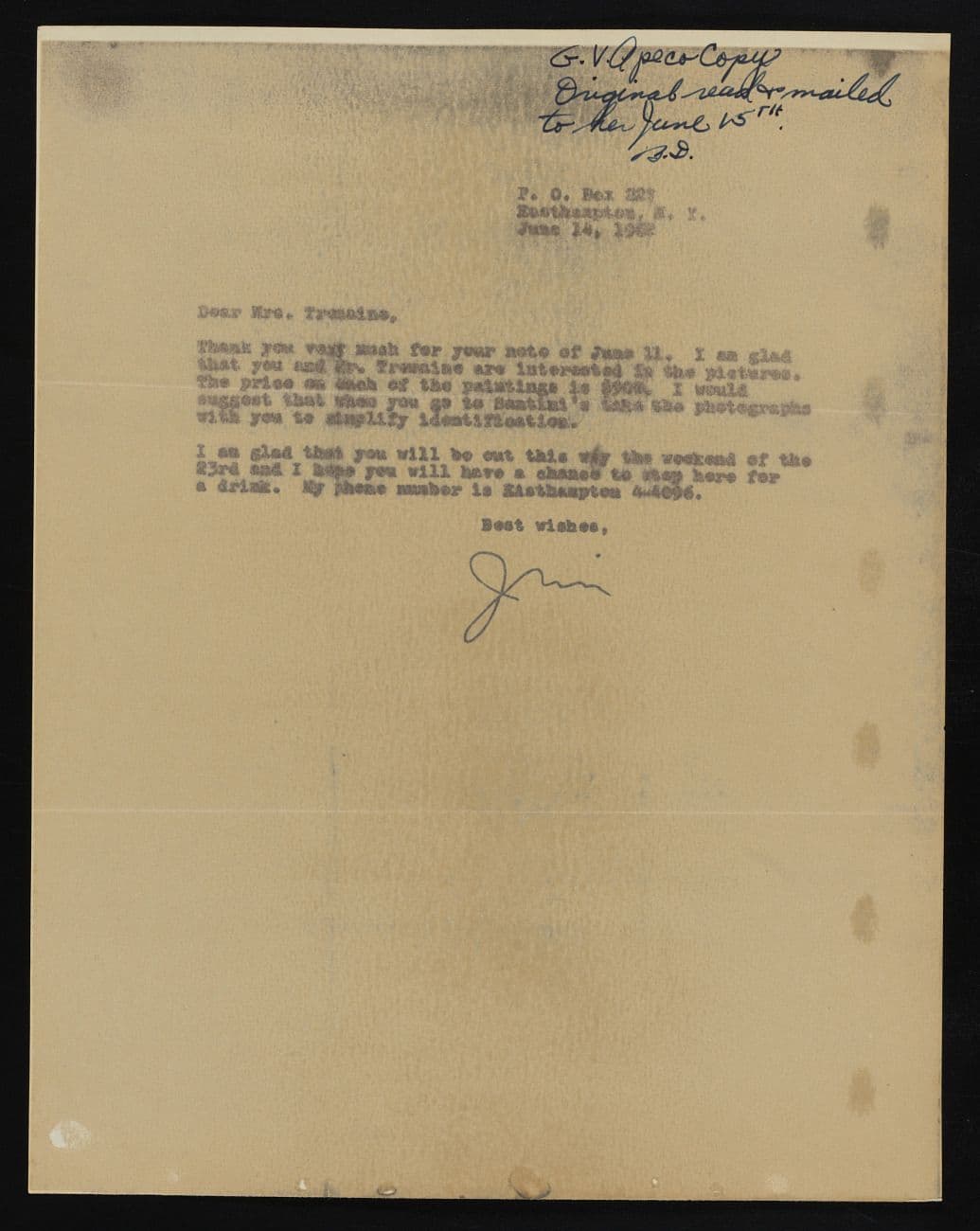
Apparently after the Martha Jackson exhibition, the Tremaines had contacted Dine to see if they could visit him in Easthampton, where he was living at the time. On June 14, 1962, he replied via postcard, “I am glad you will be out this way the weekend of the 23rd and I hope you will have a chance to stop here for a drink.” For some reason, the Tremaines did not go to Easthampton but instead visited him in his studio in New York City, which was a common practice because Emily liked to see what an artist was actively working on—not only what had been completed. They brought with them Charles Crocker, a young art collector from California and a member of the International Council of MoMA as were the Tremaines. The Tremaines and Crocker both bought works. On July 3, 1962, the secretary to the Tremaines wrote to Dine asking for a receipt for “Crescent Wrench,” which cost $900. To Dine, “Crescent Wrench” was a very important painting. “I was terribly pleased that they bought “Crescent Wrench” because it was a kind of magical painting for me.” He considered it a fuller, more involved work than “The Hammer Acts.”
“And I was terribly pleased that they bought the Crescent Wrench, because as I said, it was a kind of magical painting for me.”
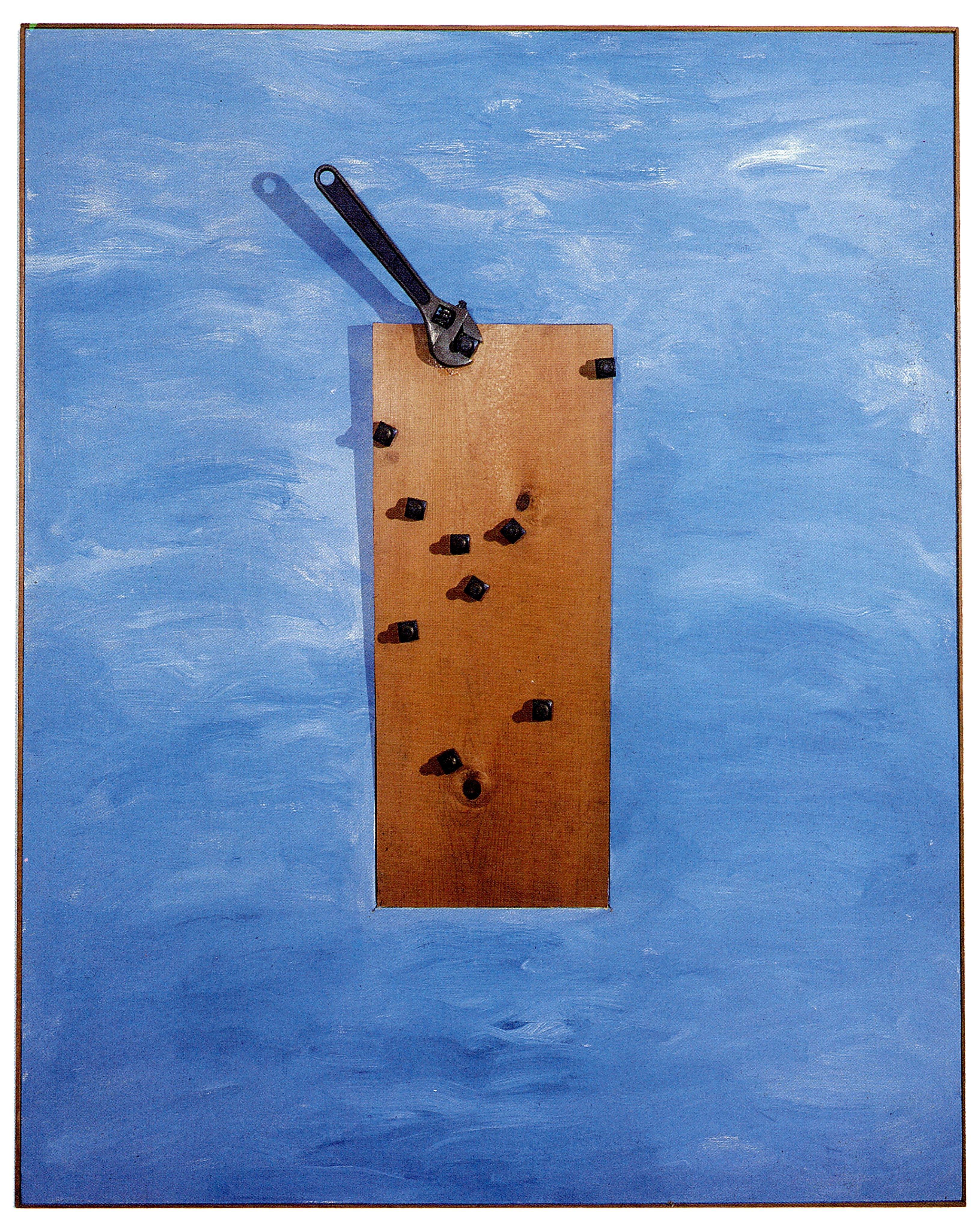
Crescent Wrench by Jim Dine, The Tremaine Collection: 20th Century Masters: The Spirit of Modernism, Hartford, Conn: Wadsworth Atheneum, © Artists Rights Society (ARS), New York
Both paintings were shown in the major exhibition of the Tremaine collection at the Wadsworth Atheneum in 1984. The catalog, titled The Tremaine Collection: 20th Century Masters included the following text on Dine’s paintings, “These early assemblages are also a natural evolution of Dine’s own previous experiments with constructed environments and happenings. In the works, Dine arranged actual everyday objects as if staging a play. The tools become protagonists, in this case positioned on a proscenium—the central wooden board—which extends out from the canvas and projects into our space. The wrench, angled upward, firmly clamped on a bolt, seems to defy gravity. At the same time, the entire panel appears to float against an expansive sky. One imagines the crescent wrench as the moon, and the bolts as a starry constellation, an ethereal context for such an earthbound form” (pg 95). However, in the interview with Kathleen Housley, when he was asked about the bolts being like stars, Dine was emphatic, “And I don’t mean just bolts. It was bolts!”
Dine’s second encounter with Emily did not go as well as the studio visit. After having sold her “Crescent Wrench,” he and his wife had to deliver the painting, which was a large 60” x 48,” made more cumbersome by the real crescent wrench and the real bolts attached to a wooden rectangle that angled out from the canvas. “And so the date was set and I brought my then wife Nancy with me to help me,” said Dine. “We schlepped the painting up to her fancy apartment. We were asked to go up the servant’s entrance which I really didn’t like, nor did my wife. When we got there, we placed the painting, I don’t recall hanging it, and then Emily sat down and had a fabulous lunch. But we weren’t invited to that. We watched her eat. I remember it vividly. It was like cold steak and salad or something. But we were very much the help.”
Dine was not the only young artist put off by the Tremaines. According to Samual Adams Green, a young friend of the Tremaines, the artists often needed a go-between. As quoted in Collector on the Cusp (pg. 170), Green said, “I was a good liaison officer between the artists and the Tremaines because the artists were somewhat scared of them for two reasons: they were patrons, and they lived on Park Avenue, and served hors d’oeuvres. They didn’t know what to wear or how to behave. So I would tell them to relax and not to wear their motorcycle boots, sort of smooth everybody. A little bit of diplomacy was needed.”
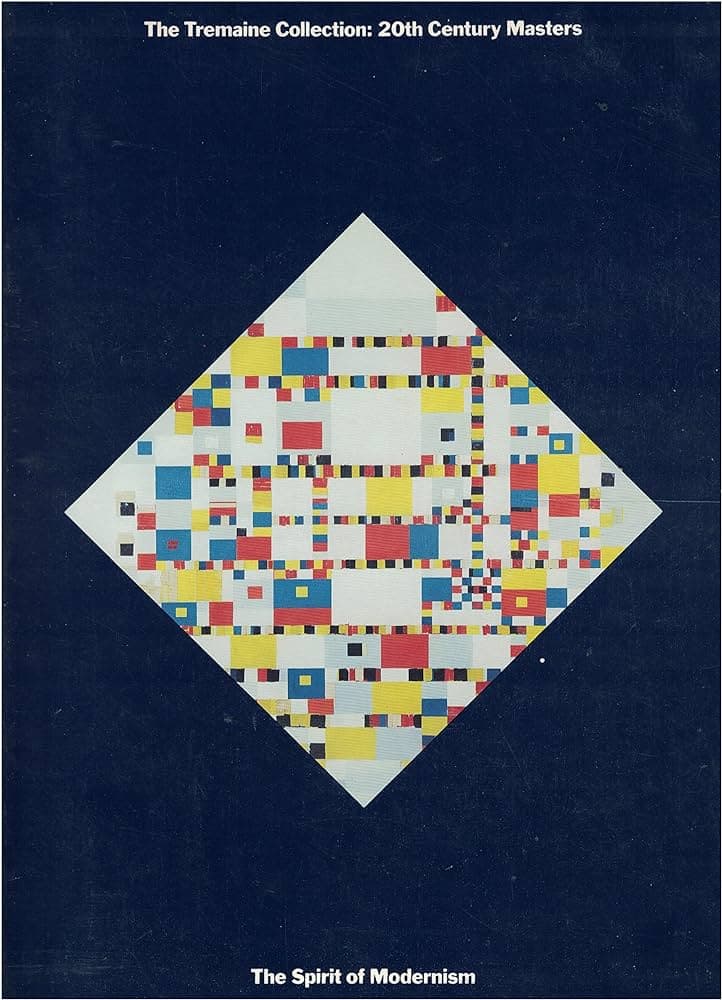
The Tremaine Collection 20th Century Masters, The Spirit of Modernism exhibition catalog, 1984.
From the Archives
From the Archives
The other negative was that Dine’s major success at the Martha Jackson Gallery, located uptown, led to friction with other artists with whom he had been close, which caused him much anxiety. “It was a double-edged sword because a lot of my friends were still downtown. There was a lot of professional jealousy. But what I gained was a start in my life as an artist and it has been extraordinary. So I was very young. I got success rather early. And like anybody’s career, it’s up and down.”
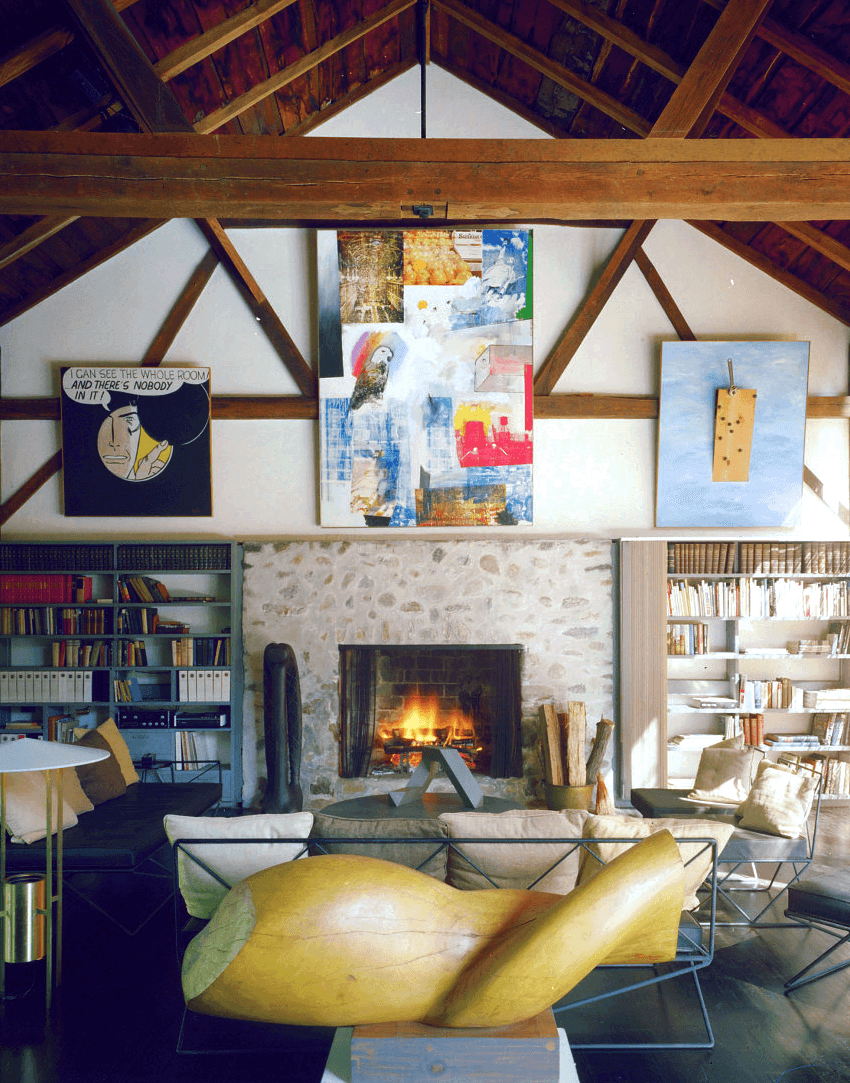
Robert Rauschenberg's Windward (center) in Tremaine barn at the Madison house, circa 1984. To the left, Lichtenstein's I Can See the Whole Room... and to the right, Crescent Wrench by Jim Dine. Photo: Adam Bartos; Emily Hall Tremaine papers, circa 1890-2004, Archives of American Art, Smithsonian Institution. © Robert Rauschenberg Foundation / Artists Rights Society (ARS), New York
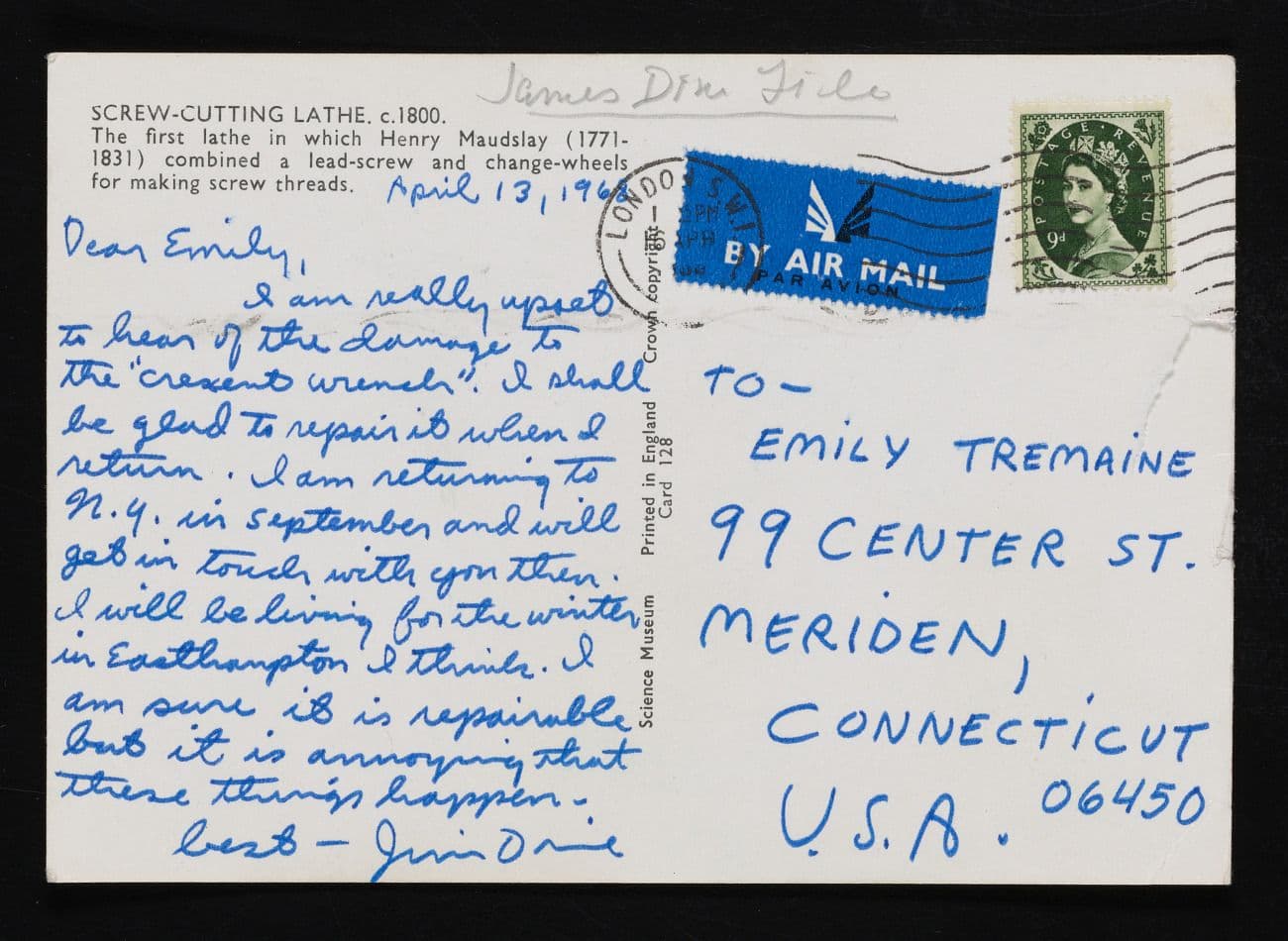
It might have provided Dine some solace to know that “Crescent Wrench” did not remain in New York but was prominently displayed in the old barn designed by Philip Johnson at the Tremaine estate in Madison, Connecticut. It was next to Robert Rauschenberg’s “Windward” (1963) which was over the massive stone fireplace. On the other side was Roy Lichtenstein’s “I Can See the Whole Room and There’s Nobody in It!” (1961)—a remarkable trifecta of early 1960s arts. In 1968, “Crescent Wrench” was damaged and the Tremaines contacted Dine, then living in London, about whether he could repair it. Dine wrote to Emily on April 13, 1968, “I am really upset to hear of the damage to Crescent Wrench. I shall be glad to repair it when I return.” Dine did not recall how it had been damaged but thought it possible that the wrench had fallen off. The painting remained in the collection until 1987 when it was sold by Larry Gagosian—with wrench firmly attached.
The last work by Dine that was acquired by a member of the Tremaine family was the large sculpture, King Parrot. Dorothy Tremaine Hildt, Burton’s daughter, purchased it in 1995. After the death of her son, Kenneth Bryant Wick, Jr., she donated it in his memory to the Society of the Four Arts, Palm Beach, Florida, where it is on display in the sculpture garden.
According to Dine, sculpture gave him a “much bigger breadth of vision.” By “bigger,” Dine meant it literally. The version of King Parrot that the Hildts placed next to their pool was seven feet tall and was made of painted bronze that weighed 1,400 lbs. He also meant “bigger” as a reference to the smaller sculpture-like quality of his early works including “The Hammer Acts” and “Crescent Wrench.” About all his works over the years, he said simply, “I’m still me.”
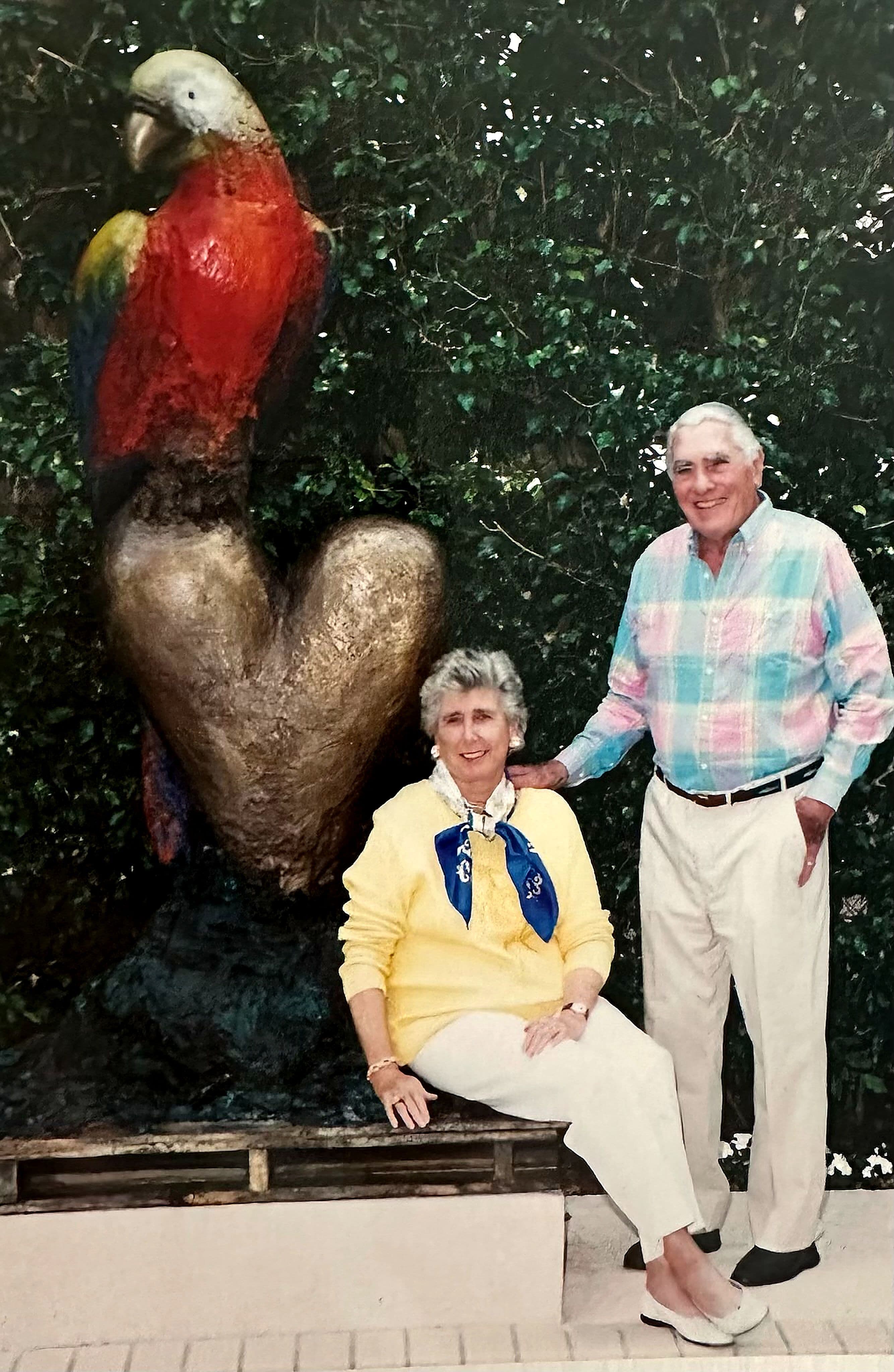
King Parrot by Jim Dine on display at the home of Dorothy Tremaine Hildt and John Hildt in Palm Beach, FL. Photo by Cleighton DePetro, © Artists Rights Society (ARS), New York
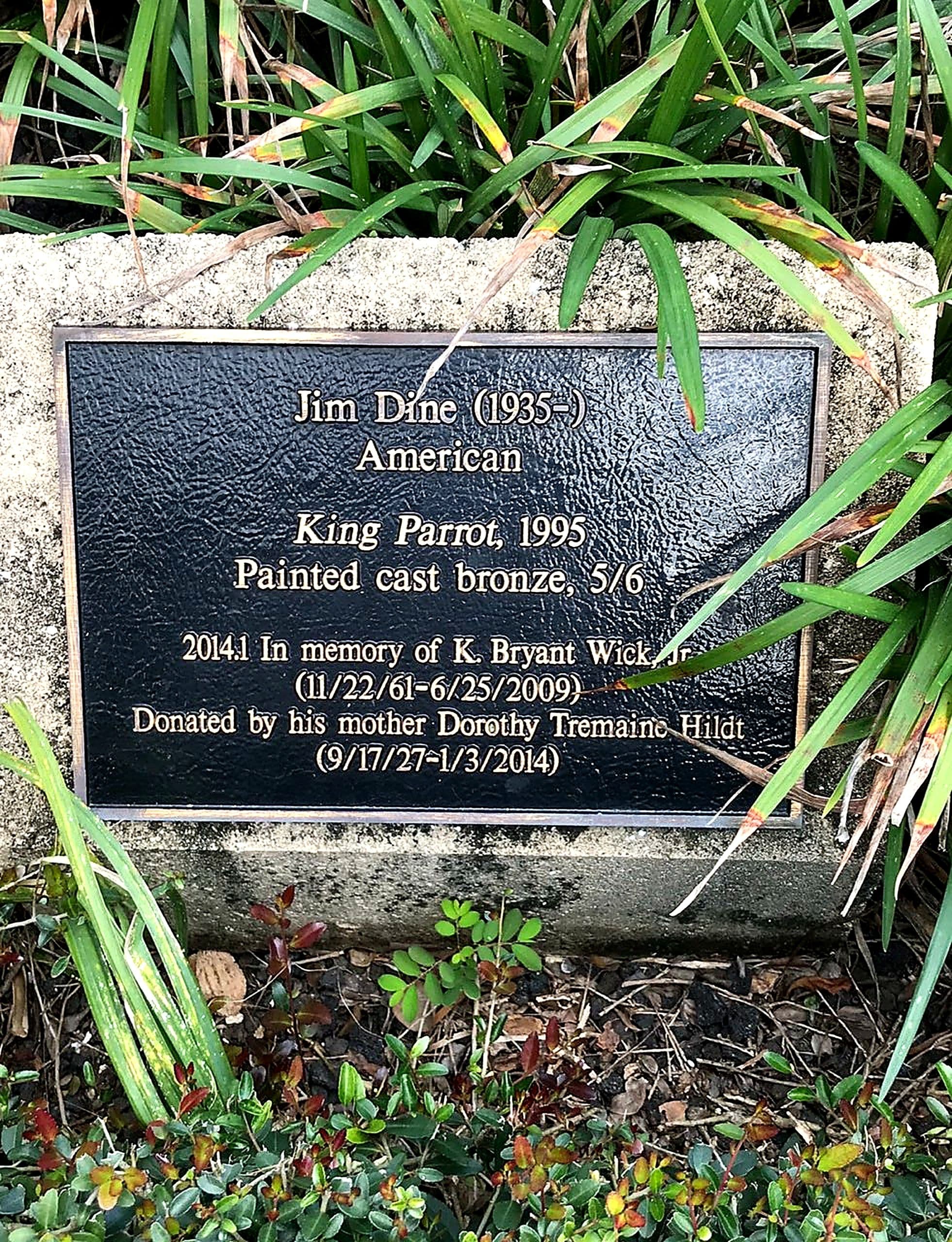
Plaque for donation of King Parrot by Jim Dine on display at The Society of the Four Arts, Palm Beach, FL. Photo by Cleighton DePetro, © Artists Rights Society (ARS), New York
"It was the beginning, and it was a…really excellent time to be in New York. And the world was very different. Just the art world. The world was very different. Much more innocent, much easier. Art wasn't just assets."
“I‘ve had a great life in art. And I keep on working. I work like hell,” he said. “Now I’m 91 and I’m working like crazy. So it was a beginning and it was a really excellent time to be in New York. And the world was very different. Just the art world, the world was very different: much more innocent, much easier. Art wasn’t just assets.” Dine is still listening to Thoreau’s different drummer. Thoreau’s quote ends, “Let him step to the music which he hears, however measured or far away. It promotes individualism, nonconformity, and following one’s own path in life.” That is just what Dine has done.
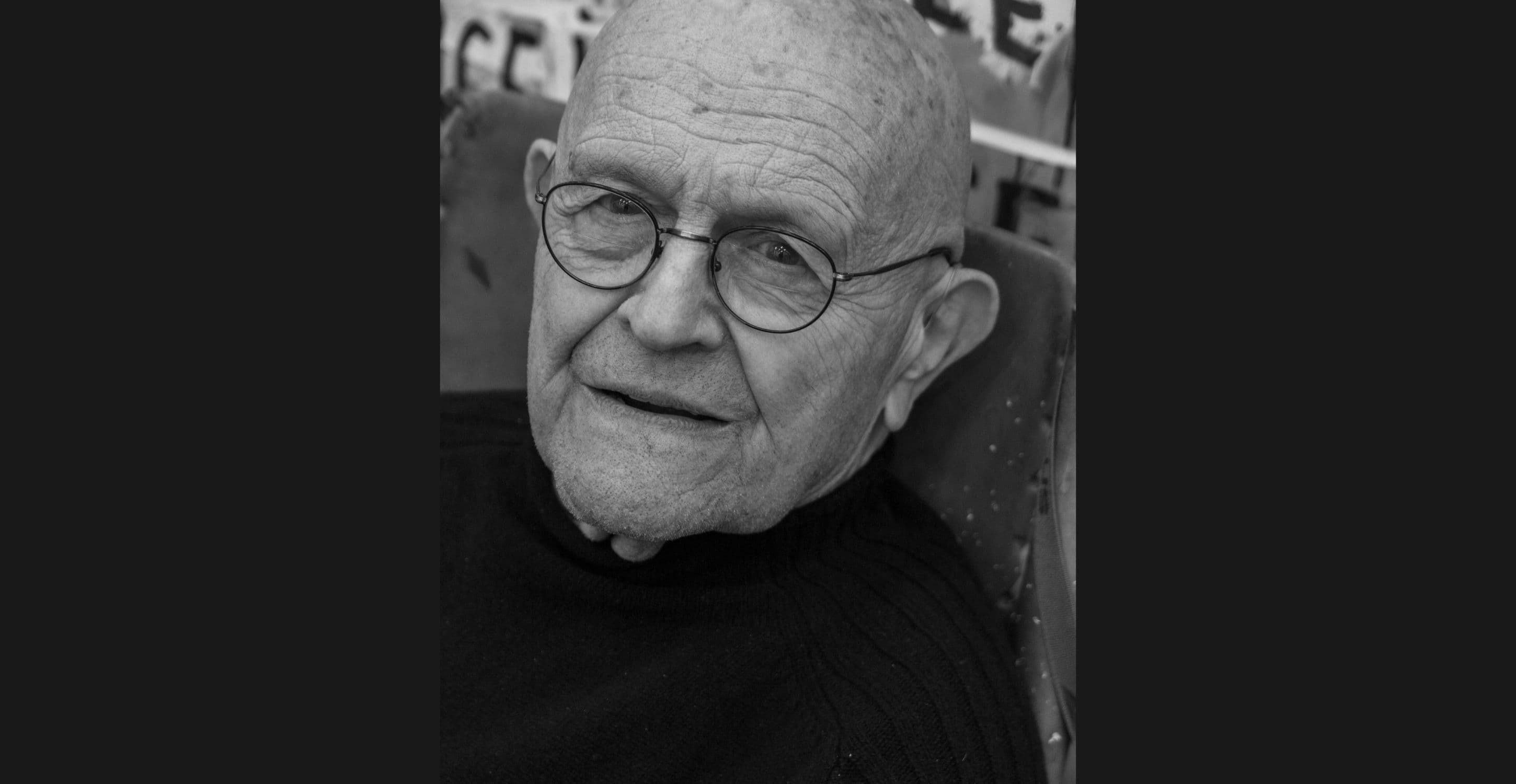
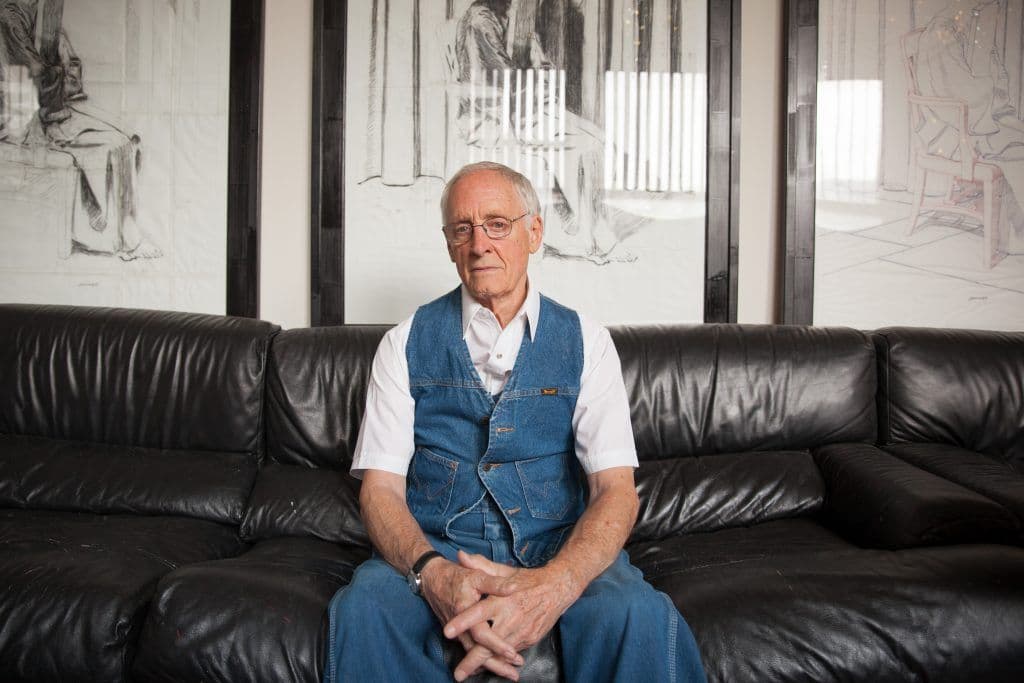
Kathleen L. Housley is the author of eleven acclaimed books, ranging from women’s history to modern art. She has written for numerous national journals and has published articles on women artists and collectors in Woman's Art Journal. She is the author of Emily Hall Tremaine: Collector on the Cusp and Tranquil Power: The Art and Life of Perle Fine. Cover image: Portrait of Jim Dine by Diana Michener, photo taken in February of 2026.
Explore More Stories
Creating Impact
The Emily Hall Tremaine Foundation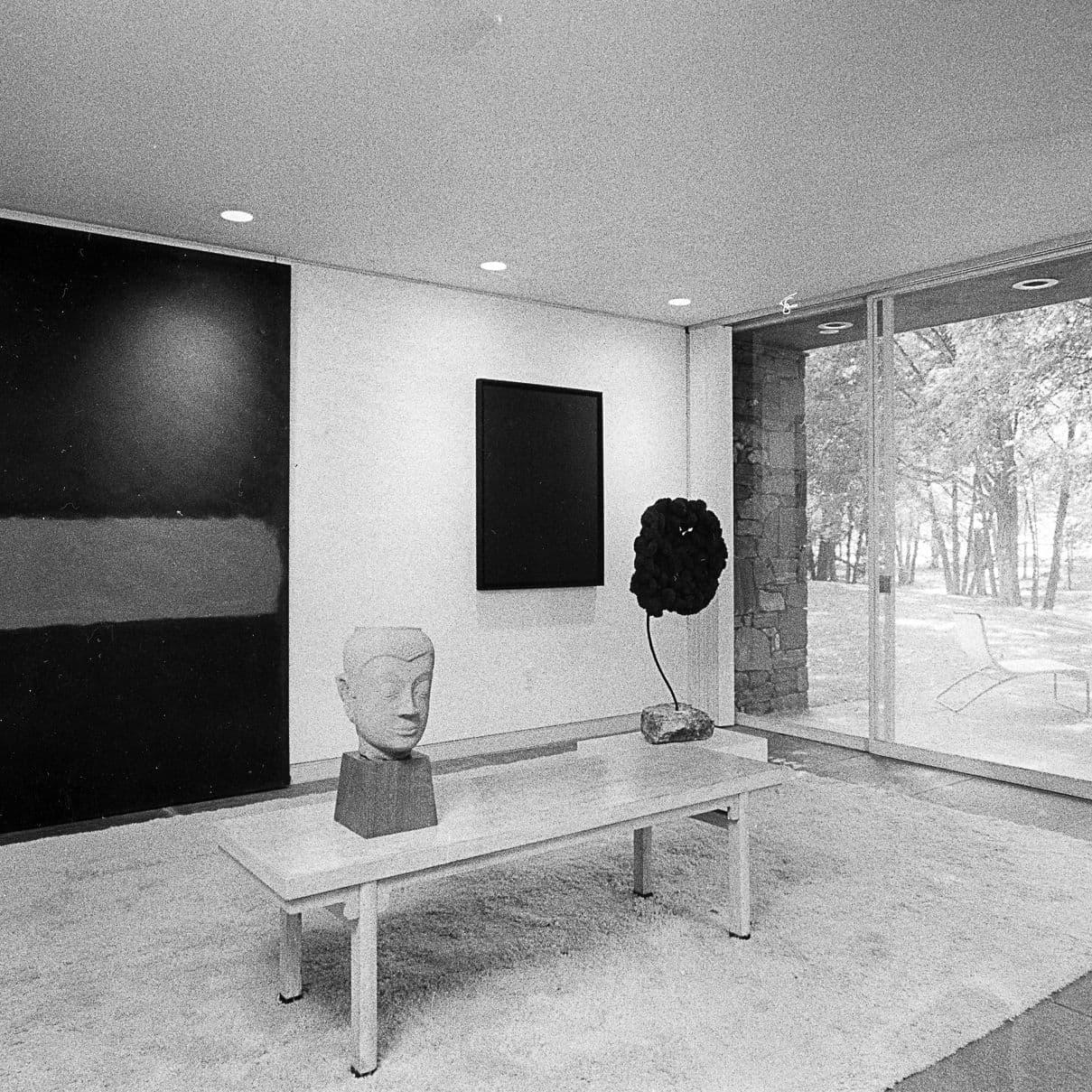
Established in 1987 by Emily Hall Tremaine, the foundation seeks and funds innovative projects that advance solutions to basic and enduring problems. With an overall emphasis on education, principally in the United States, it contributes in three major areas: the Arts, Environment, and Learning Differences.