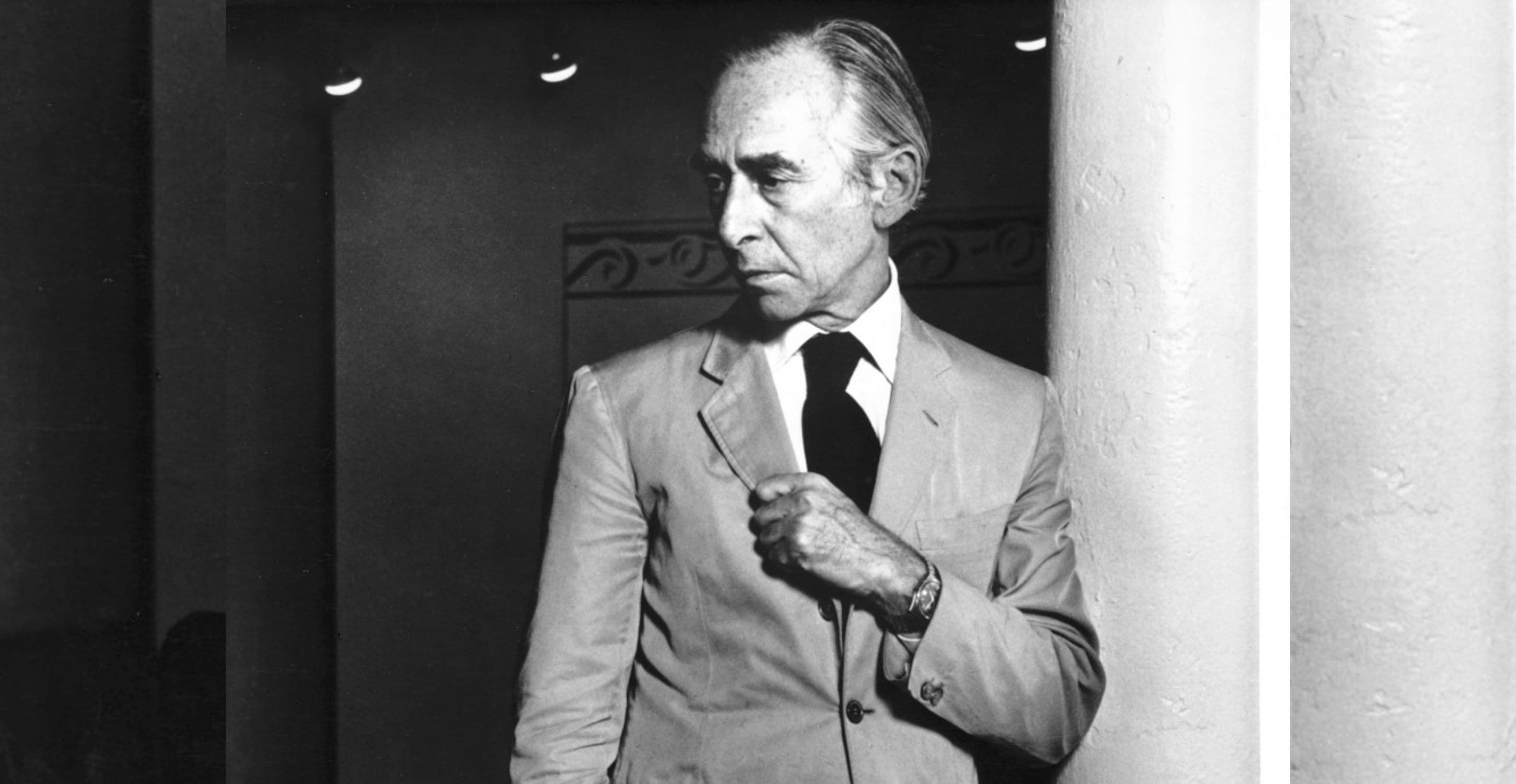
Story
A Strange Consensus:
Leo Castelli and Emily Hall Tremaine
Written by Kathleen L. Housley for the Castelli Gallery blog.
Leo Castelli once said that there were two essential traits that he looked for in emerging artists: vigor and imagination. Emily Hall Tremaine would have agreed, but she would have added one more, what she called “prophetic vision.” Those traits were manifest in Three Flags by Jasper Johns, Luis Miguel Domínguin by Frank Stella, and Windward by Robert Rauschenberg, which were acquired by the Tremaines through Castelli in the early days of his gallery. Paradoxically, the words vigor, imagination and vision pertain to Castelli and the Tremaines as well. Castelli was referring to Emily Hall Tremaine when he said in his interview with Paul Cummings for Archives of American Art (Smithsonian) that the strongest motivation for collecting art is “real understanding sometimes unconscious understanding of what the painting is about, what the painting is. I think that is the standard motivation for anybody, even people who really buy very wisely with sort of the idea in mind to set up an important collection with the inclusion of everything that counts—very careful collecting.”
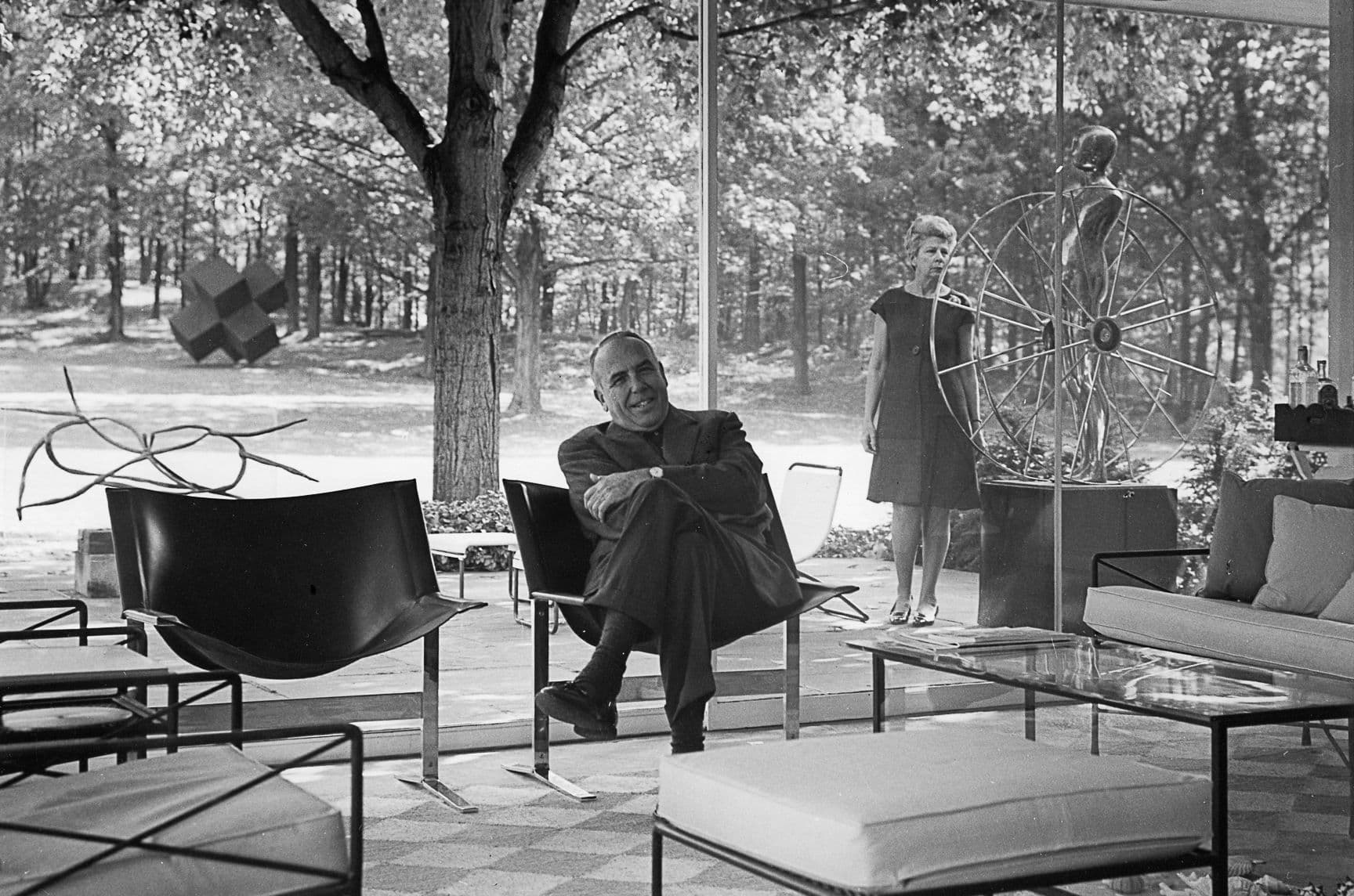
Burton G. Tremaine and Emily Hall Tremaine at their Madison, Connecticut house. Photo courtesy of the Tremaine family. Sculpture pictured at left is Water Ballet by Mary Callery. Sculpture in background is Salem #7 by Antoni Milkowski. Sculpture at right is Falling Man Series: Wheelman by Ernest Trova.
Castelli was the principal art dealer for Emily and her husband Burton for over two decades. Prior to the opening of his gallery in 1957 on 77th Street, the Tremaines acquired art through several New York dealers who focused mainly on abstract expressionism, among them Sidney Janis from whom they purchased paintings by Jackson Pollock and Willem de Kooning, and Betty Parsons from whom they purchased paintings by Mark Rothko. These works joined an already impressive collection that included Picasso, Mondrian,Delauney, Braque, Giacometti, and other twentieth century masters that the Tremaines had acquired beginning in the 1930s. On visiting their collection, Castelli was impressed by its historic importance. “They continued to buy work of the Europeans, but then they came to realize that all the action was here.”
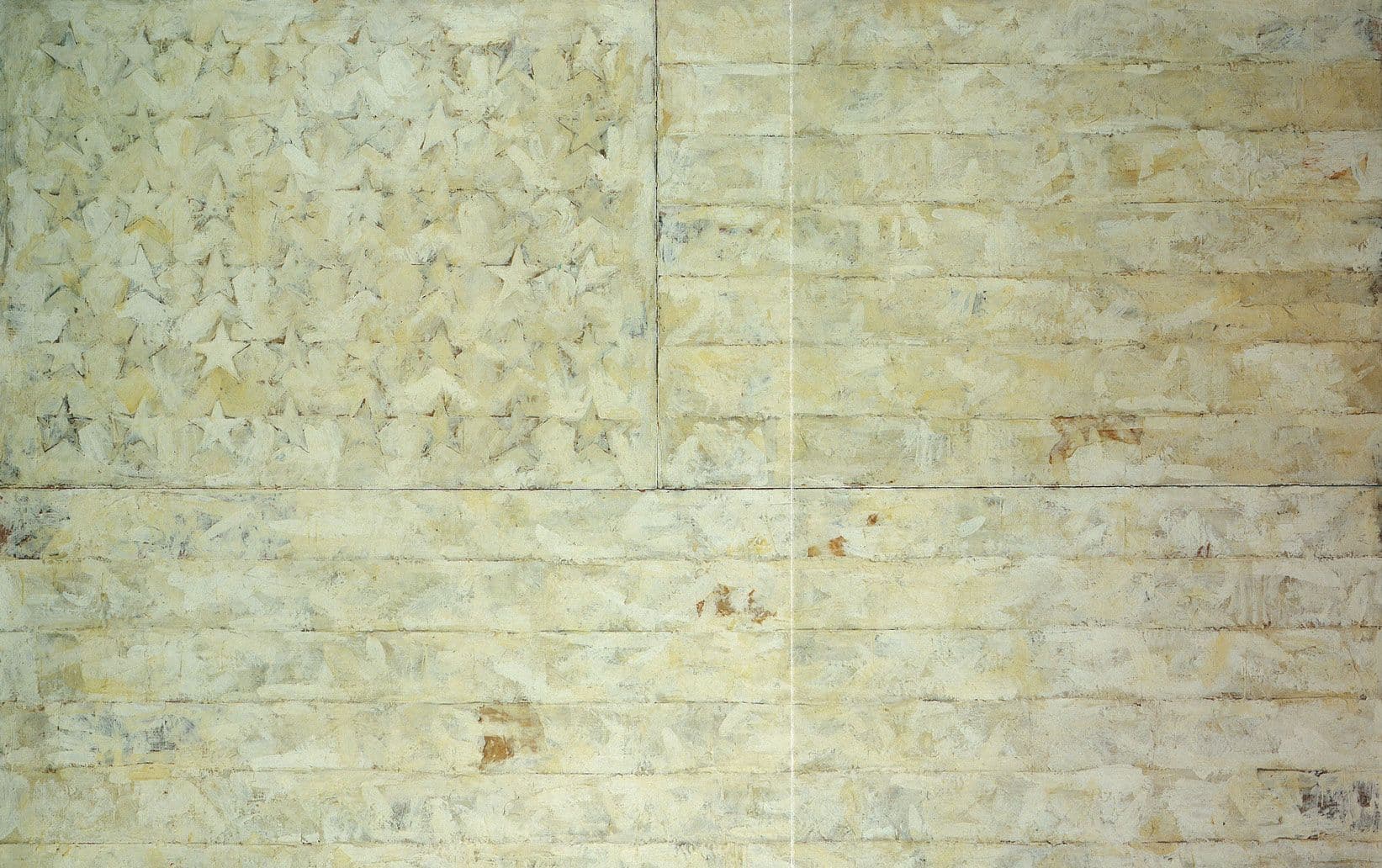
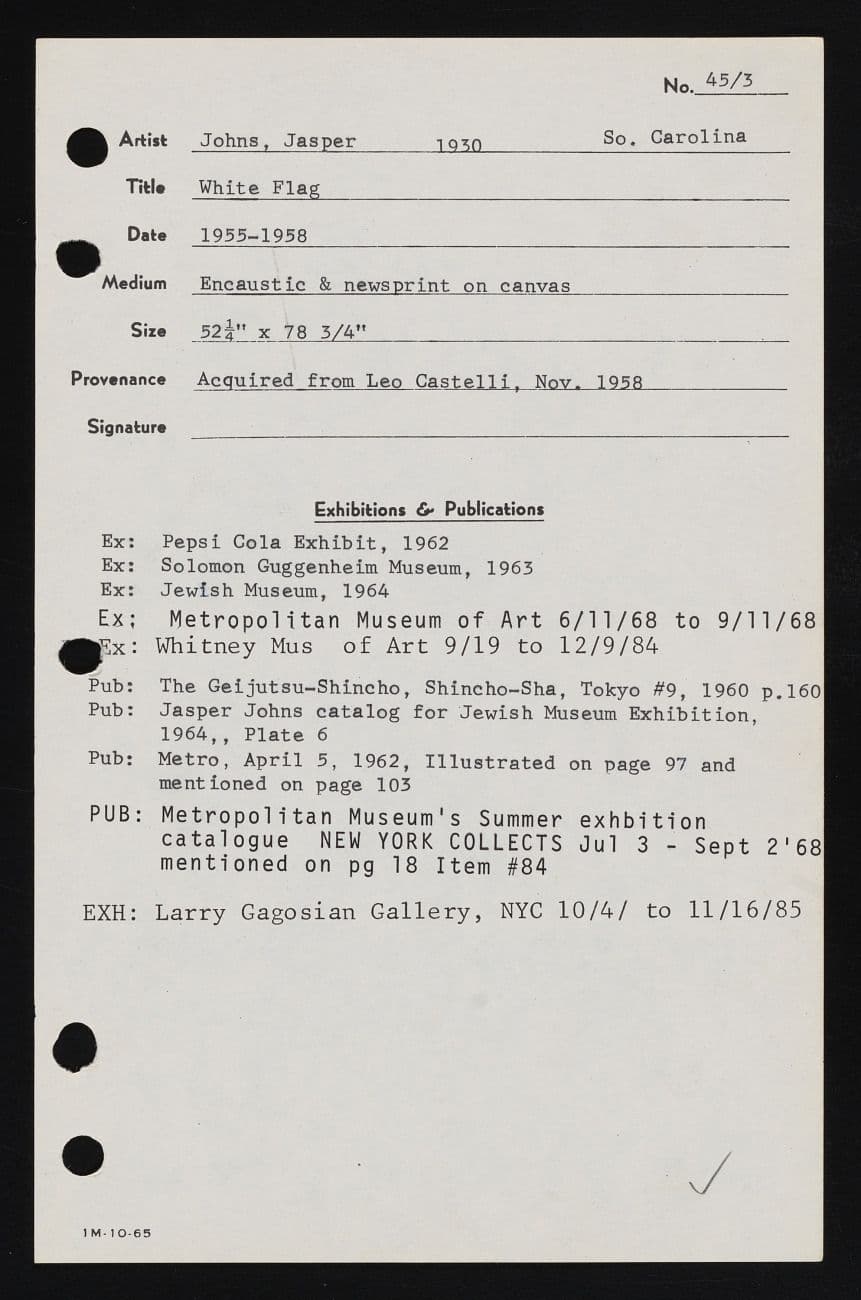
Jasper Johns, White Flag 1955, Year of Christie’s sale: 1988, ©1988 Christie’s Images Limited, © Jasper Johns / Licensed by VAGA at Artists Rights Society (ARS), NY
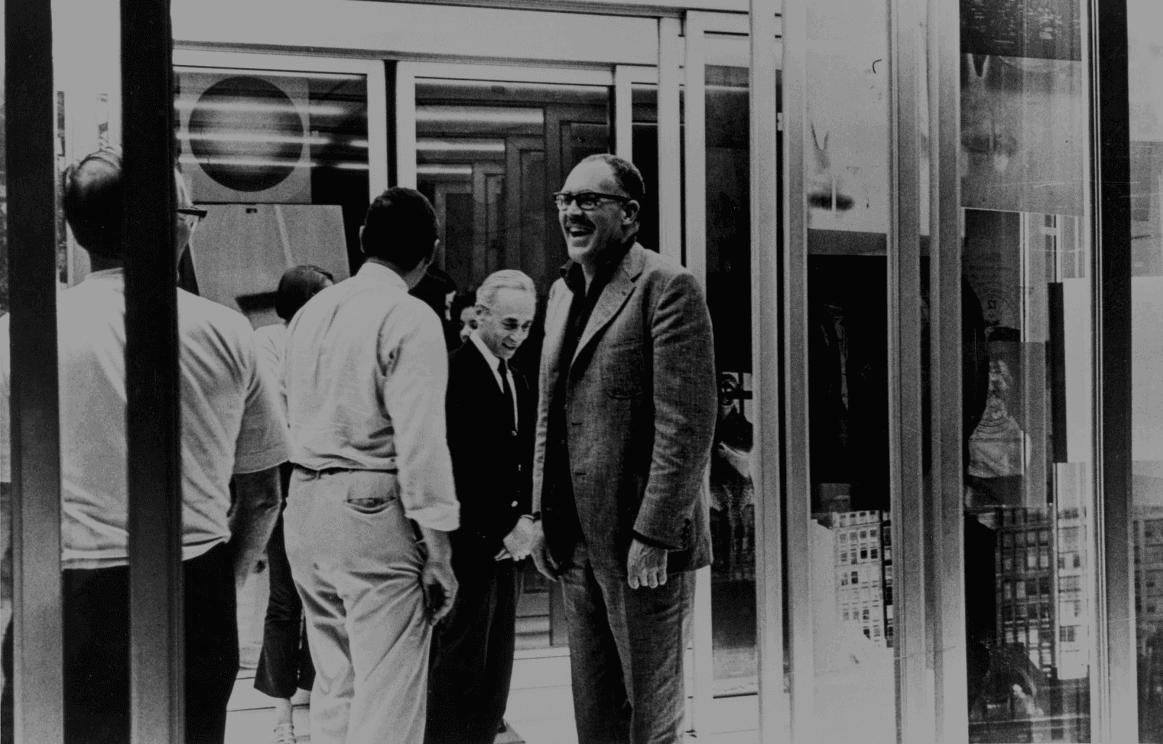
Leo Castelli (center) with Jasper Johns (right), Leo Castelli Gallery records, circa 1880-2000, bulk 1957-1999, Archives of American Art, Smithsonian Institution
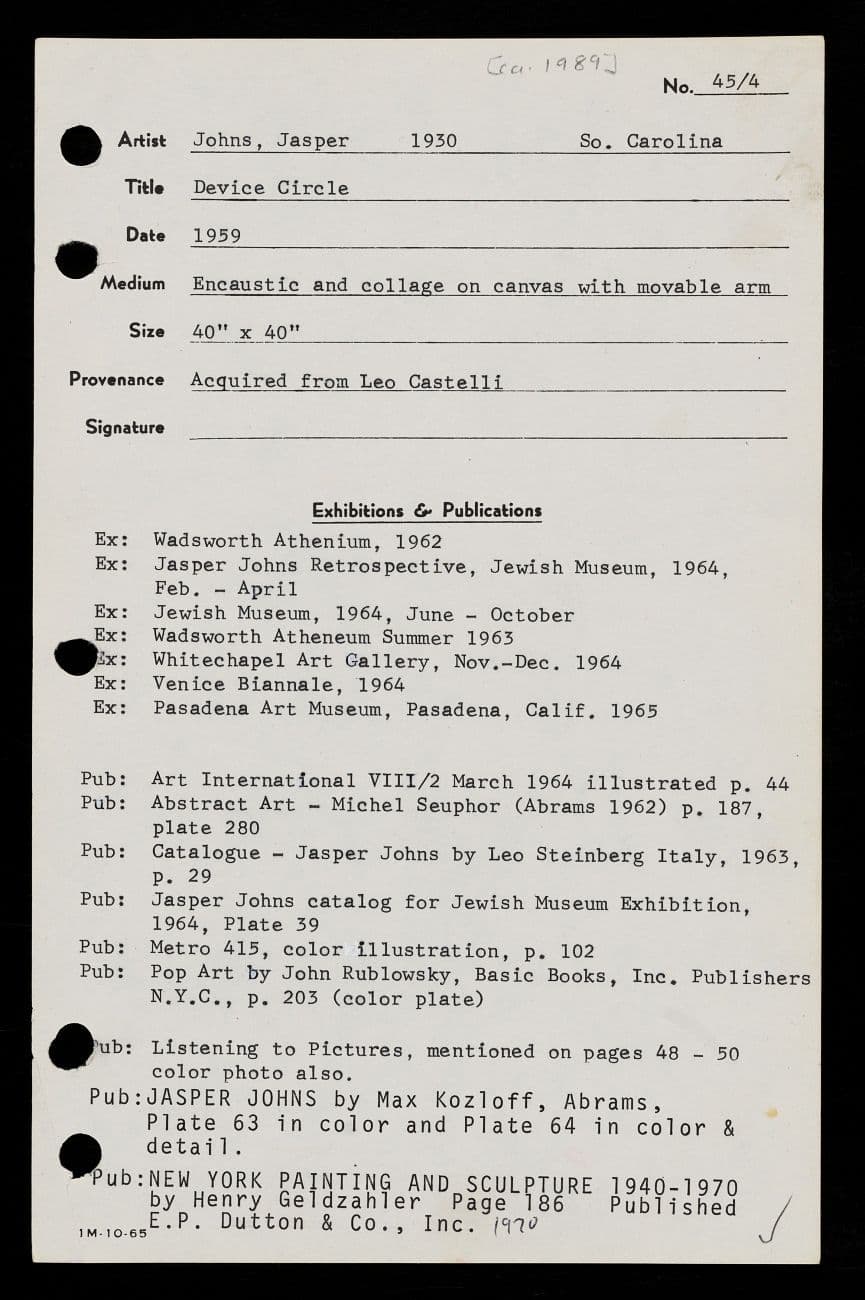
In 1958, Castelli exhibited the art of an unknown artist named Jasper Johns whose work portended an exhilarating new direction. Castelli also convinced Robert Rauschenberg to join his gallery. It was at this point that the connection, indeed friendship, between the Tremaines and Castelli took off because Emily sensed a sea-change in the art world. According to Johns, the first paintings of his that the Tremaines purchased were Tangoand White Flag. “Castelli told them that Tango was the only thing available after my show, which was true,” said Johns in an 1997 interview with Kathleen Housley. “I remember they didn’t believe him and subsequently came to my studio.” When Emily saw Three Flags , she arranged to buy it through Castelli. Emily said, “I sensed immediately upon seeing Three Flags that it was a great new invention.” Two years later in 1960, Device Circle joined the collection.
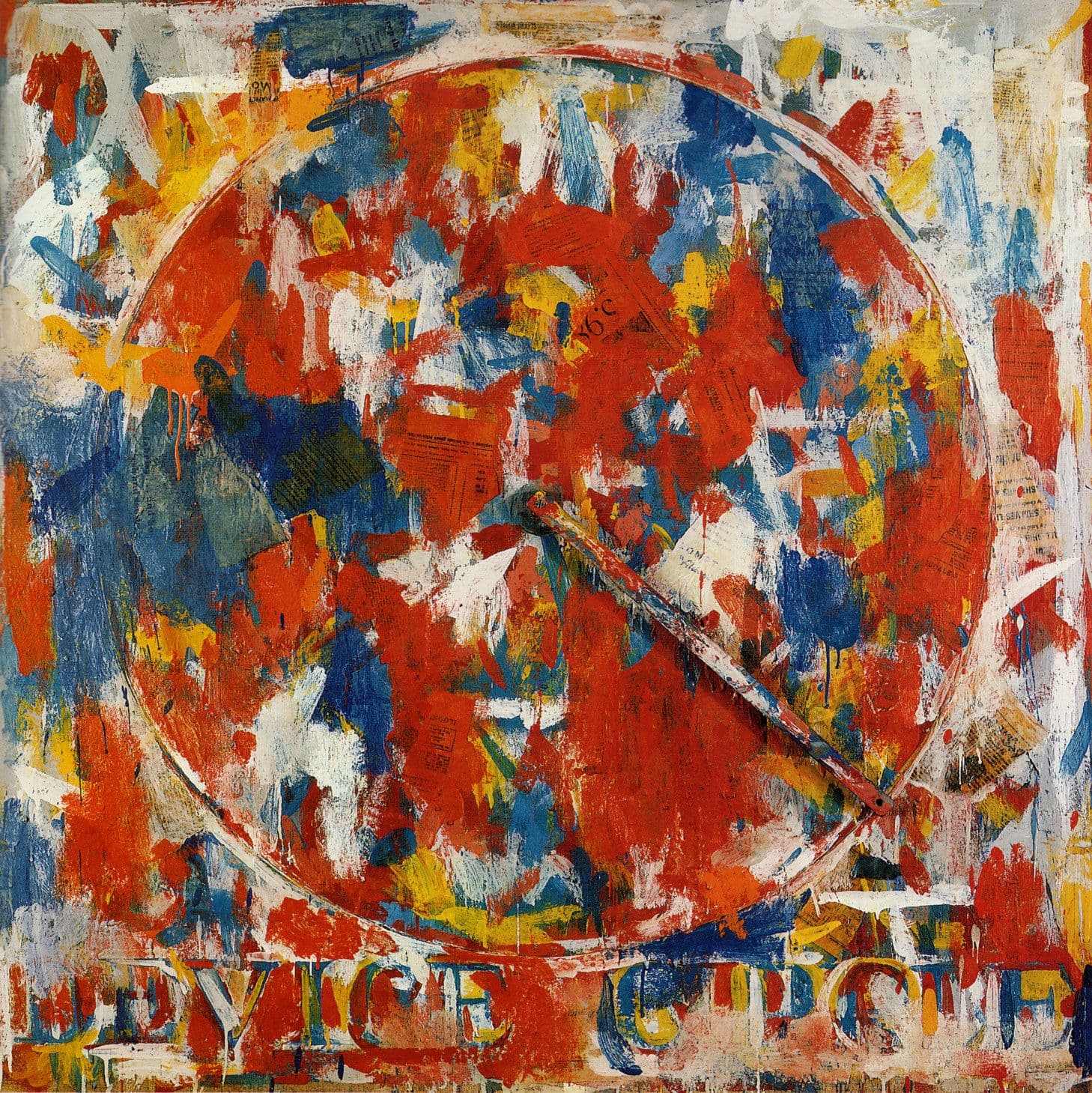
Jasper Johns, Device Circle, Year of Christie’s sale: 1991, © 1991 Christie’s Images Limited, © Jasper Johns / Licensed by VAGA at Artists Rights Society (ARS), NY
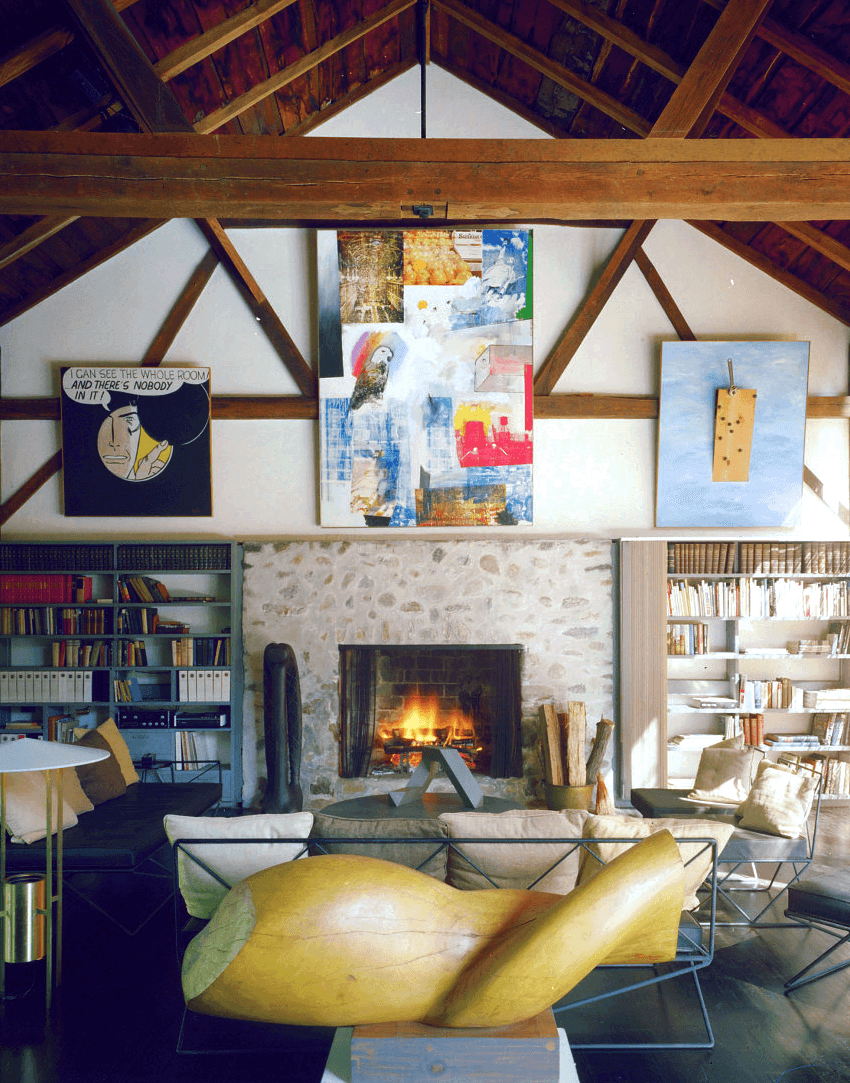
The Tremaines acquired Windward by Robert Rauschenberg through Leo Castelli in 1963. It was displayed over the fireplace in their barn in Madison, CT. Philip Johnson had redesigned the barn to provide the best possible space and lighting for large paintings and sculpture. Photograph by Adam Bartos, April, 1984, reprinted with permission.
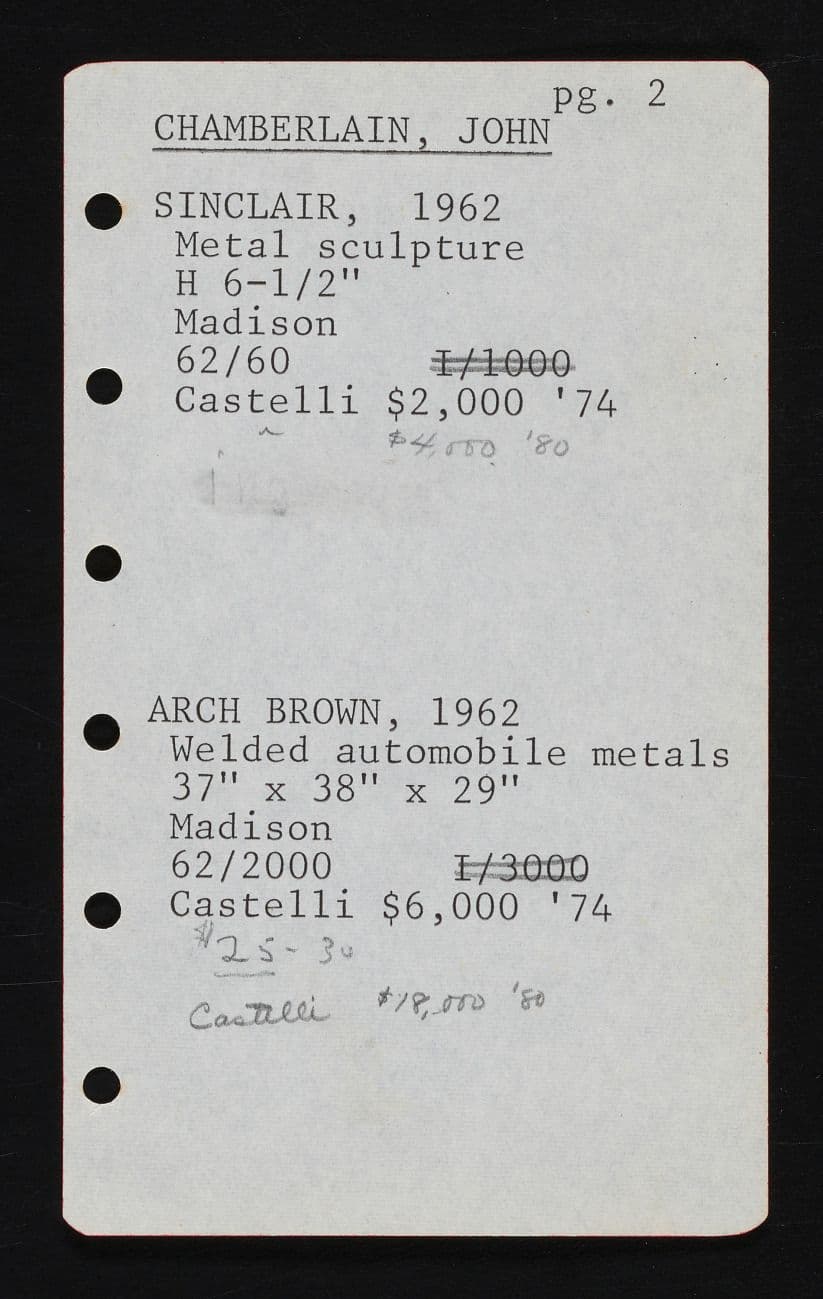
The Tremaines also zeroed in on Rauschenberg. Construction, a small sculpture made from painted scrap wood, was the first work they acquired through Castelli. Then in 1963, Rauschenberg’s massive Windward found its spot over the fieldstone fireplace in the Tremaines’ spectacular barn in Madison, Connecticut. The barn had been redesigned by Philip Johnson to showcase their collection, especially the larger works such as Windward, which was 96 x 70 inches. It had a soaring ceiling and large glass windows overlooking a sculpture garden where John Chamberlain’s Arch Brownwas sited, also purchased through Castelli. The name was ironic because there was neither an arch nor any brown; instead, there were crushed auto parts in red, yellow, blue, and gray.
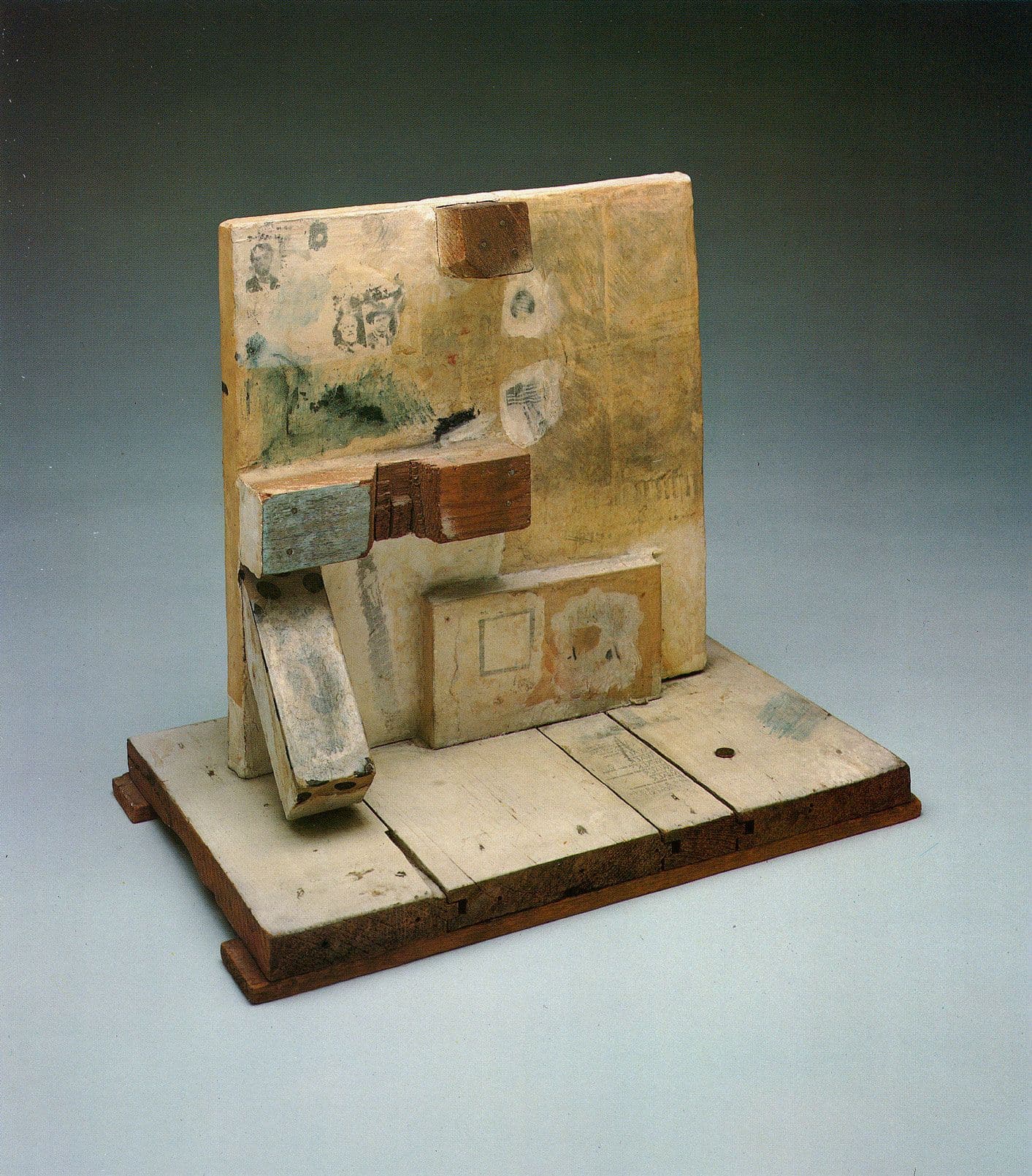
Robert Rauschenberg, Untitled (Construction), Year of Christie’s sale: 1988, ©1988 Christie’s Images Limited, © Robert Rauschenberg Foundation / Artists Rights Society (ARS), New York
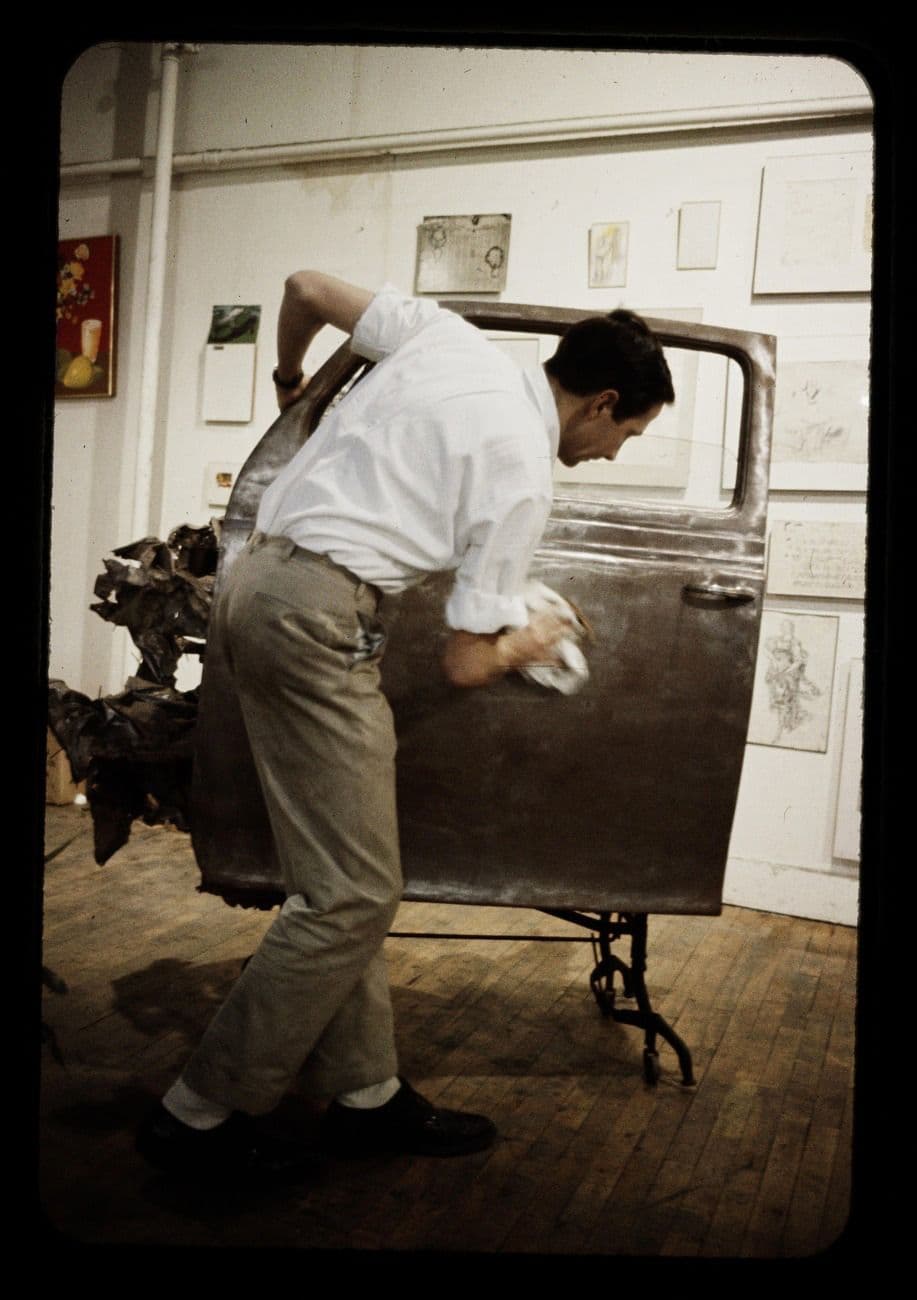
Robert Rauschenberg, circa 1960, Leo Castelli Gallery records, circa 1880-2000, bulk 1957-1999, Archives of American Art, Smithsonian Institution
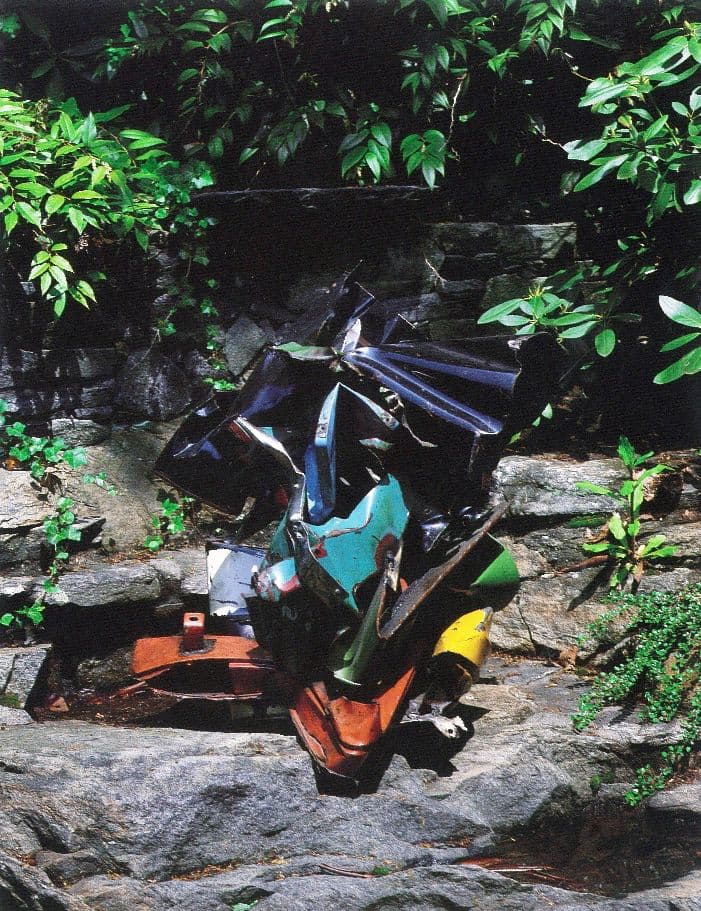
Arch Brown by John Chamberlain, pictured outside the Tremaines' home in Madison, Connecticut. Photo courtesy of the Tremaine family. From Enwoven. © Artists Rights Society (ARS), New York
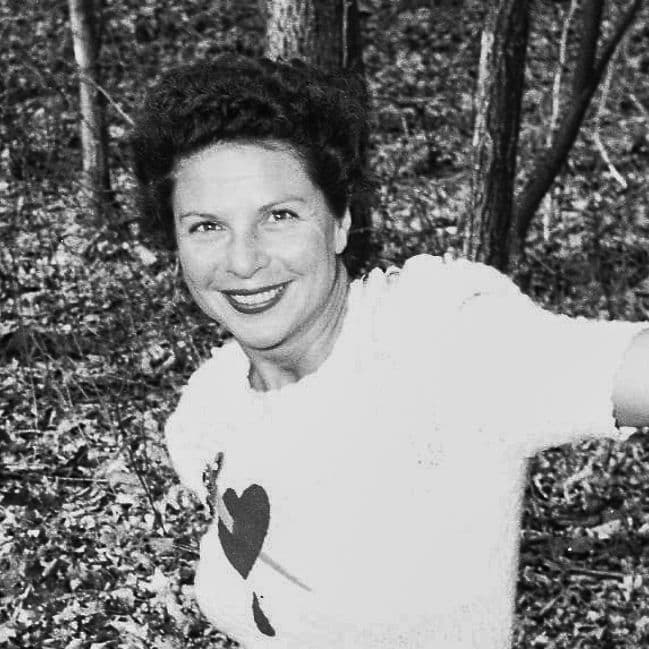
Family photo of Emily Hall Tremaine
Castelli recalled that Emily was very reserved, but she was wonderful to talk to because of her taste and understanding. “I just went along and agreed with what she was doing. She was very happy about her choices. It’s not that she would discuss them. It was she who initiated the choices and made her decisions. In the 1960’s there were some galleries like mine that had ‘the right stuff,’ and that’s where she found them.”
The interwoven roles of the art dealer and the collector were explored in a 1994 interview with Suzi Gablik who asked Castelli if an unknown artist gained an advantage by having an exhibition in a well-known gallery. Drawing on his association with the Tremaines, Castelli replied, “The gallery certainly plays an important role. But then there is a strange consensus that also occurs. Let’s say that I show Jasper for the first time when he is totally unknown, but immediately there are two or three other people who catch on, critics like Bob Rosenblum, or collectors like the Tremaines. So whether [the artists are] at my gallery or at an unknown gallery, they will develop. They will develop better, of course, in a gallery that takes good care of them. But the gallery only takes the initial step, then immediately a consensus develops around any artist who is really important. That’s been my experience with all the artists that I had.”
From the Archives
From the Archives
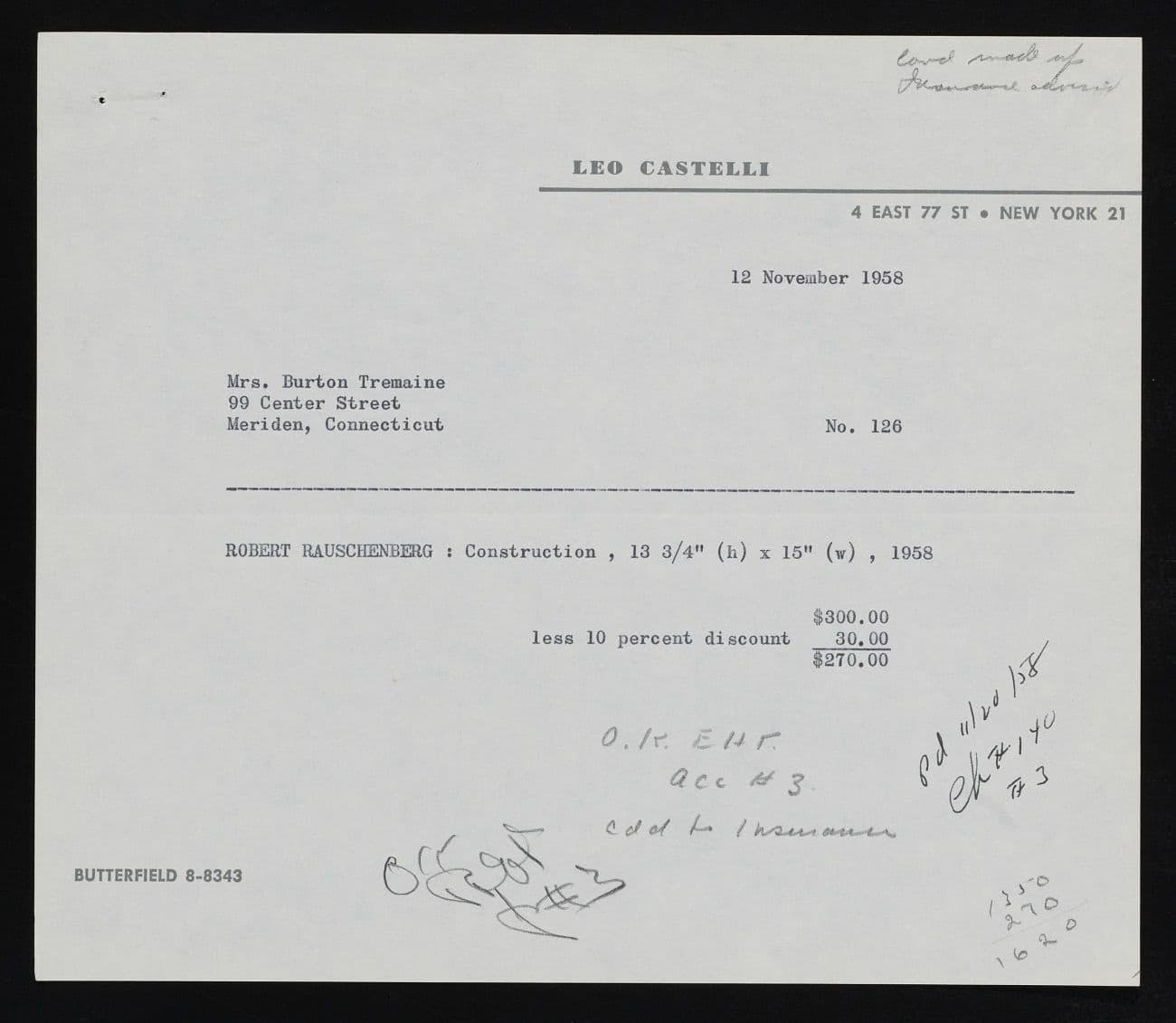
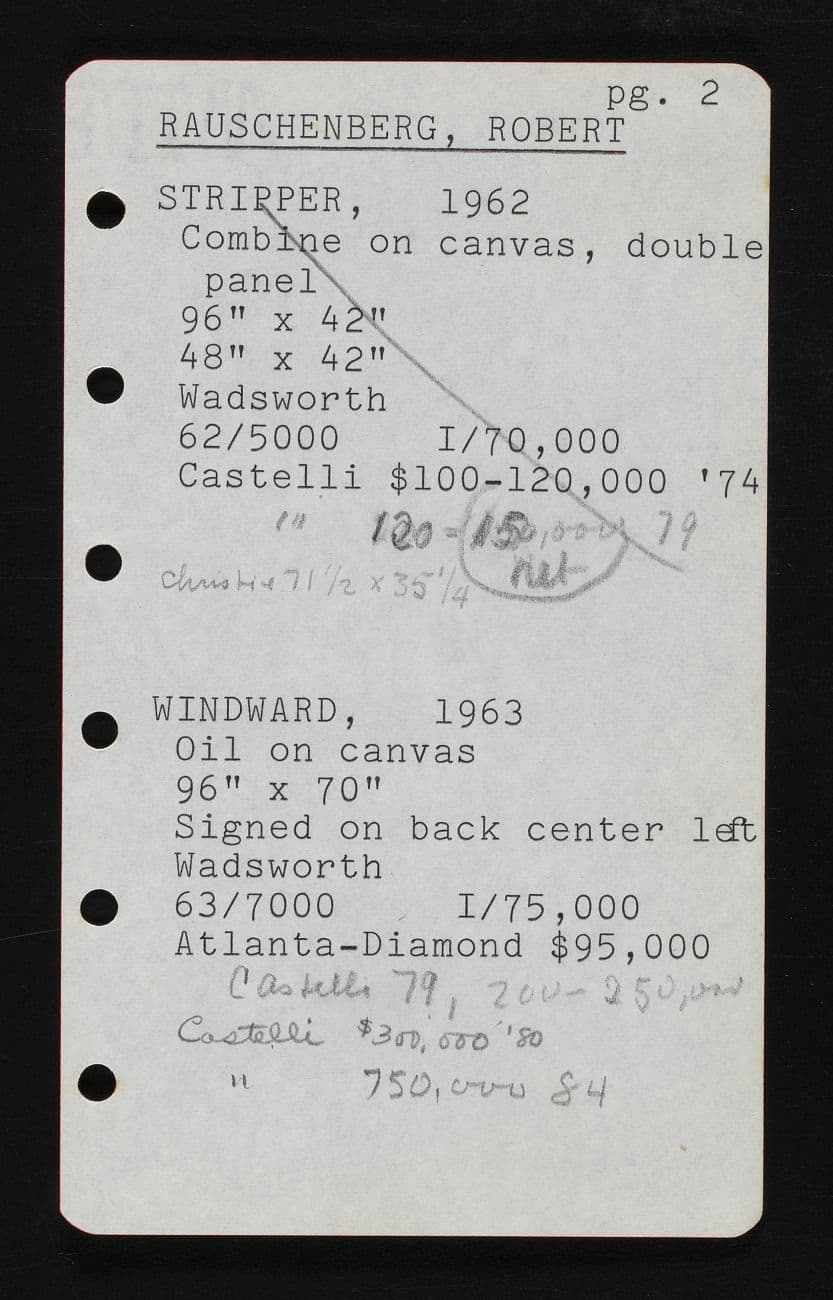
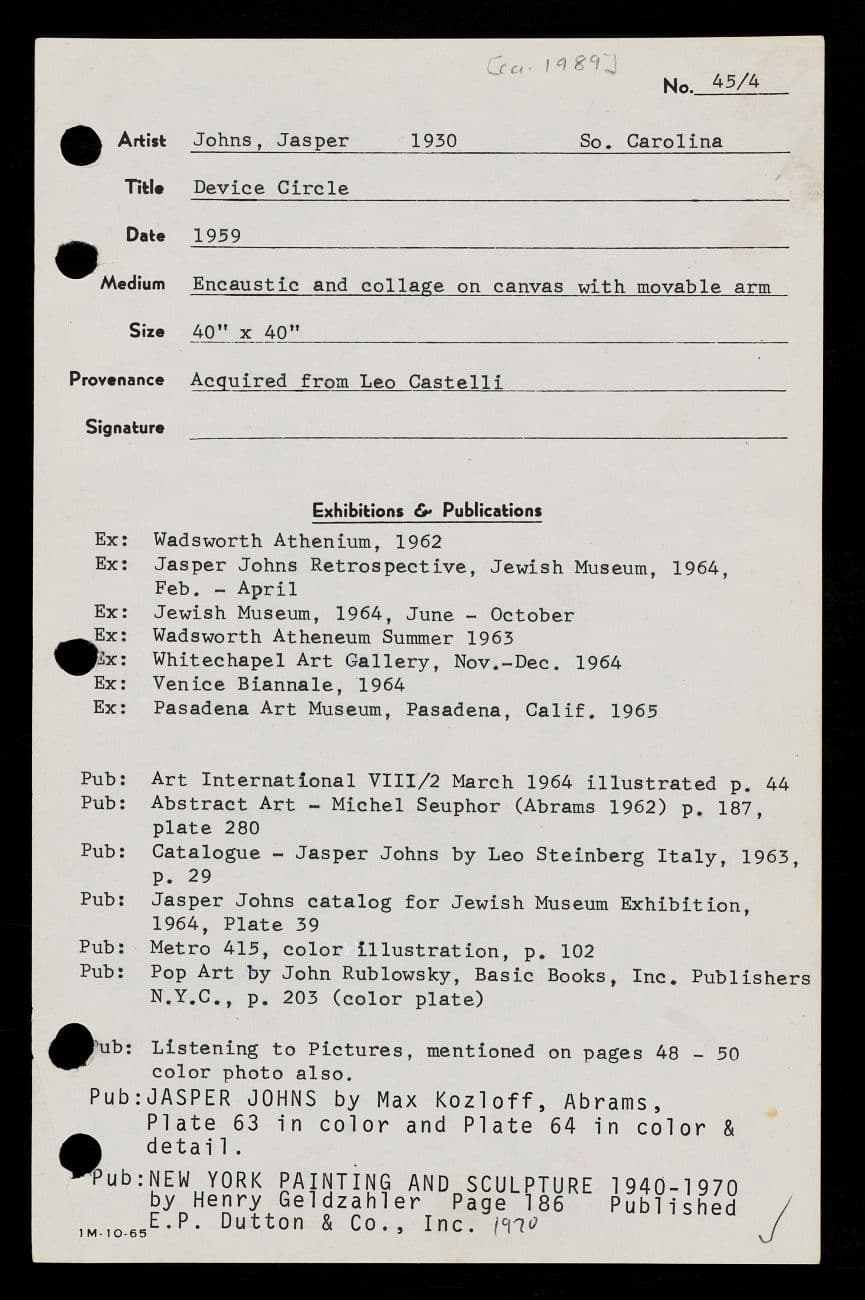
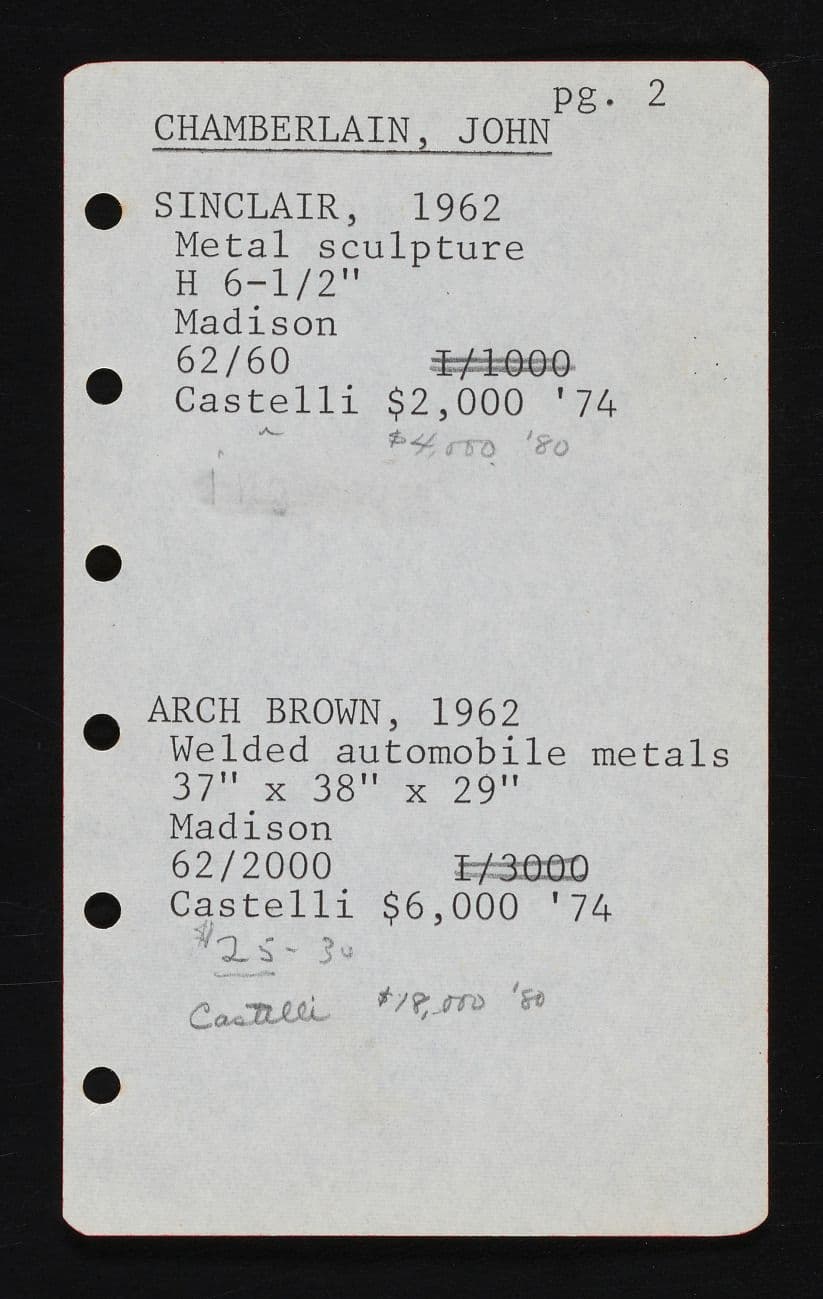
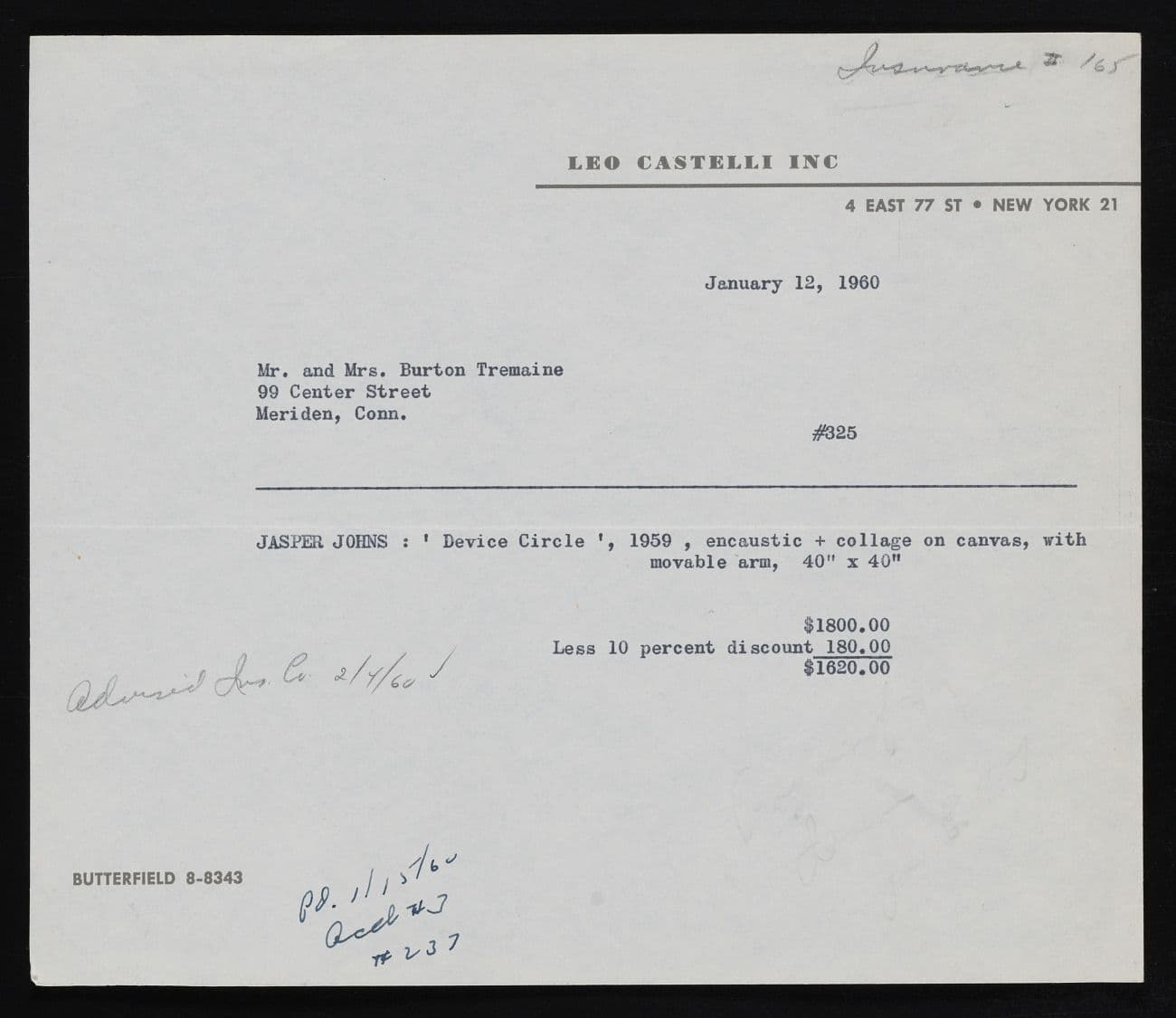
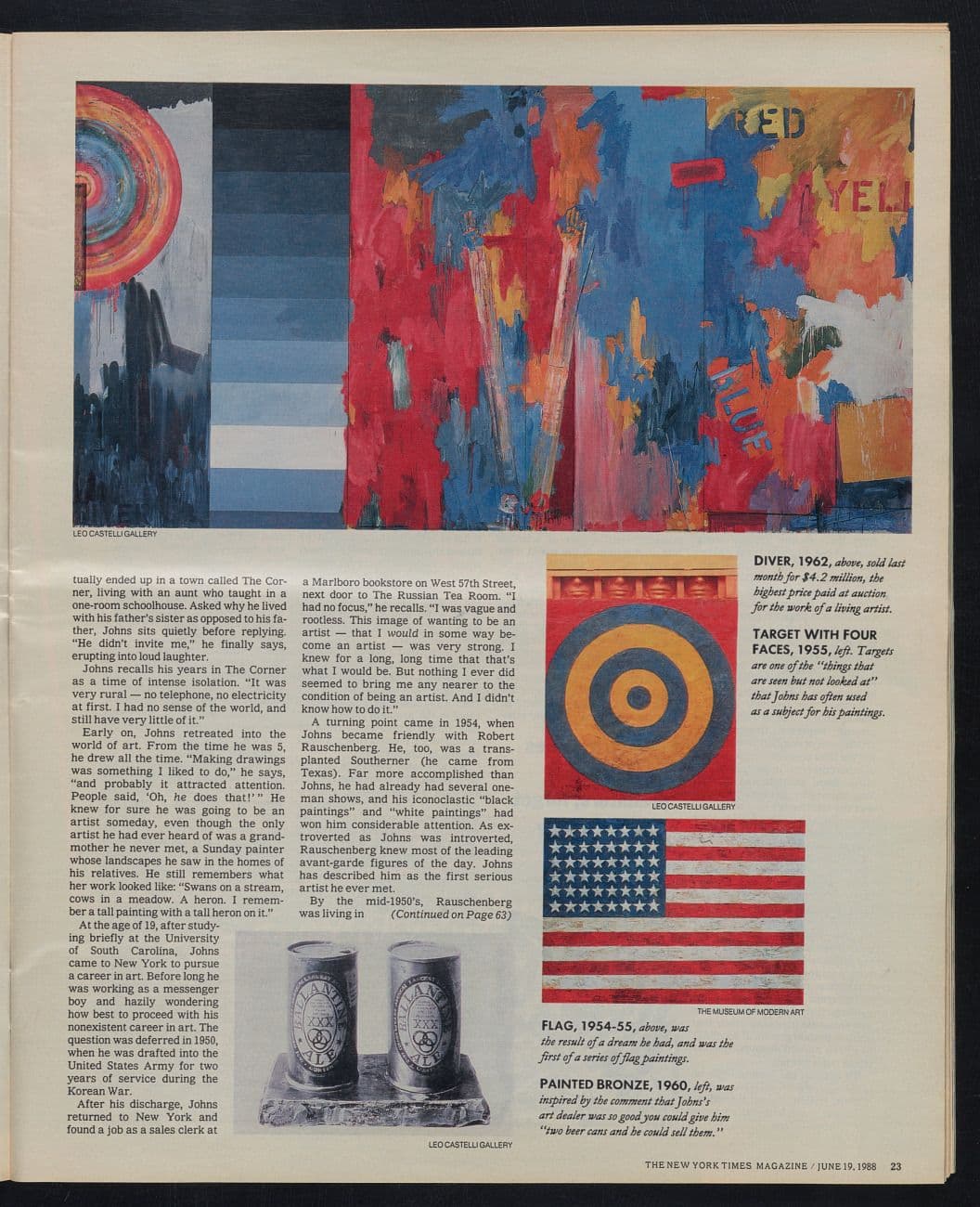
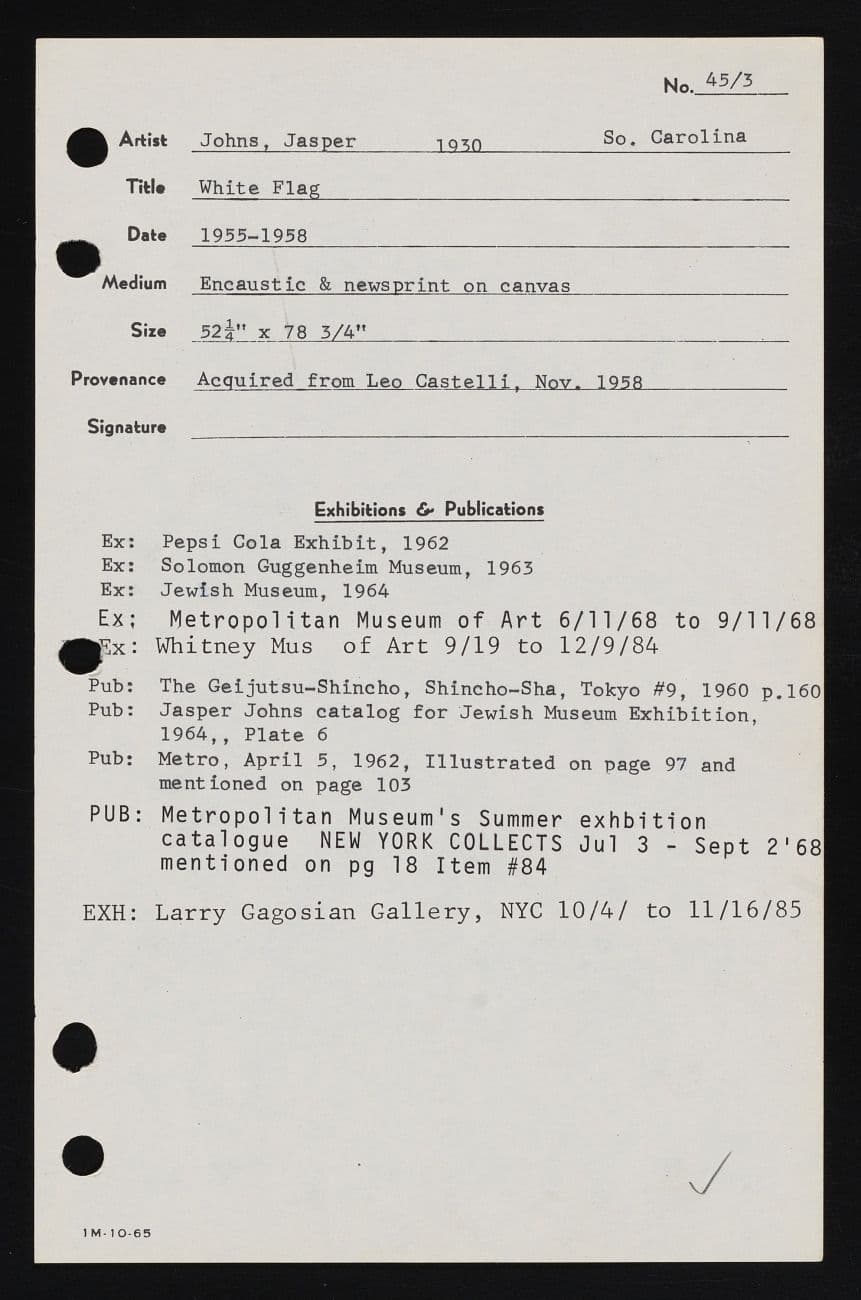
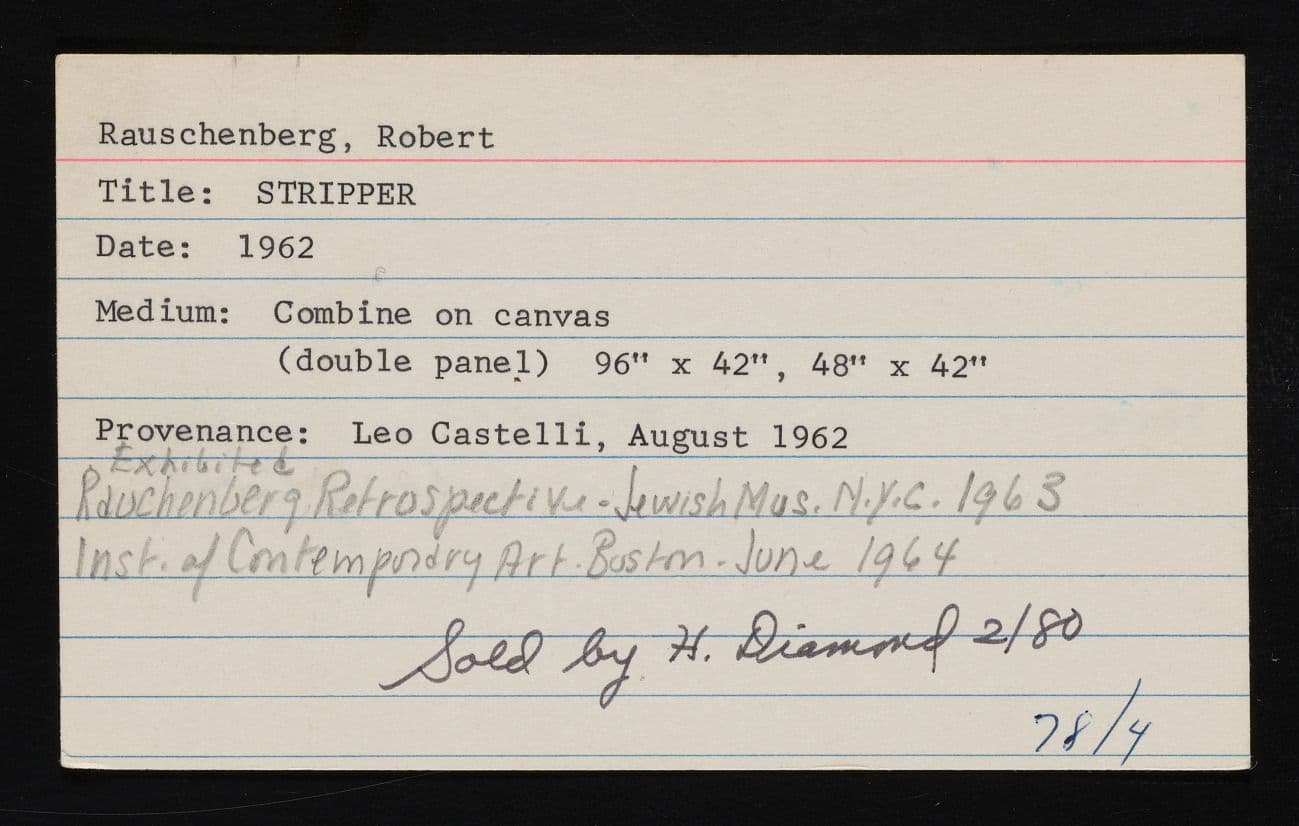
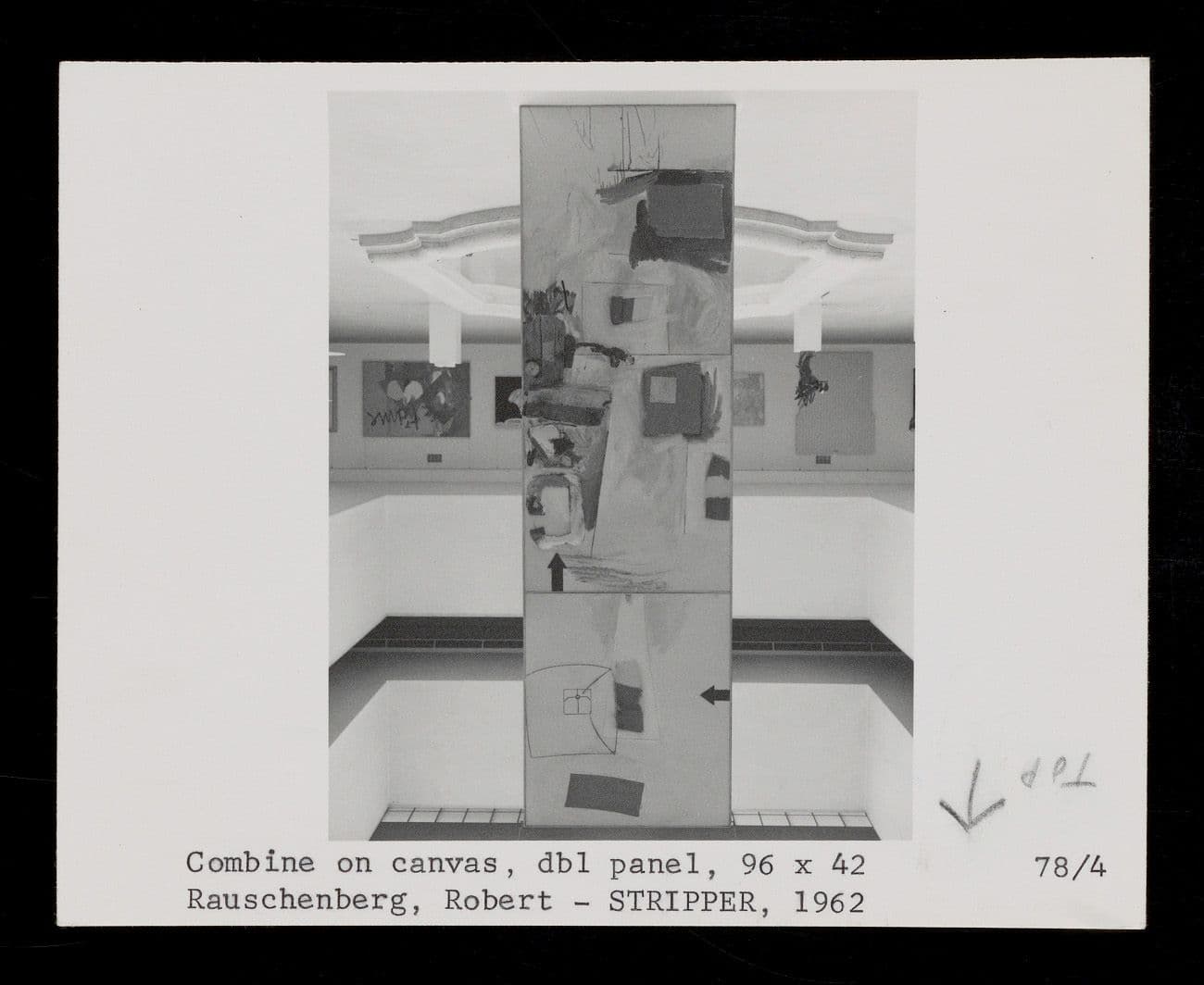
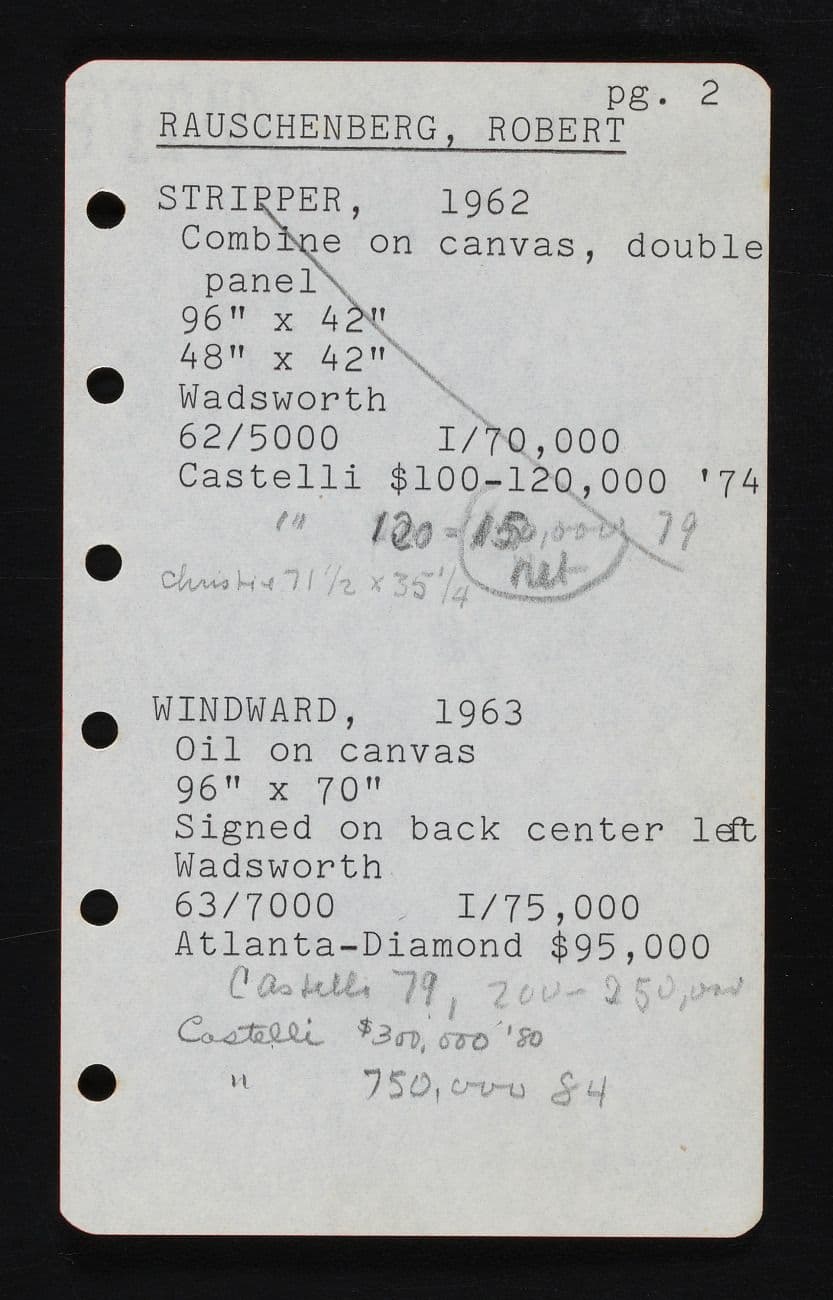
If there were any unusual difficulties between the Tremaines and Castelli they were related to Robert Scull, a prominent collector who was passionate about the art of Jasper Johns and who competed fiercely with them for new paintings, putting Castelli in a tough situation. Another difficulty arose from the fact that Castelli was a primary dealer, not a secondary dealer, meaning that he usually did not resell paintings. Therefore, when the Tremaines decided to sell Three Flags in 1980, they turned to Arnold Glimcher of the Pace Gallery who handled the sale to the Whitney Museum of American Art for $1,000,000. The same issue arose when the Tremaines, now in their 70s and 80s, were considering what would happen to the collection after they died. Deciding to sell the collection and to use the sale of Emily’s portion to endow a foundation, they turned to Larry Gagosian.
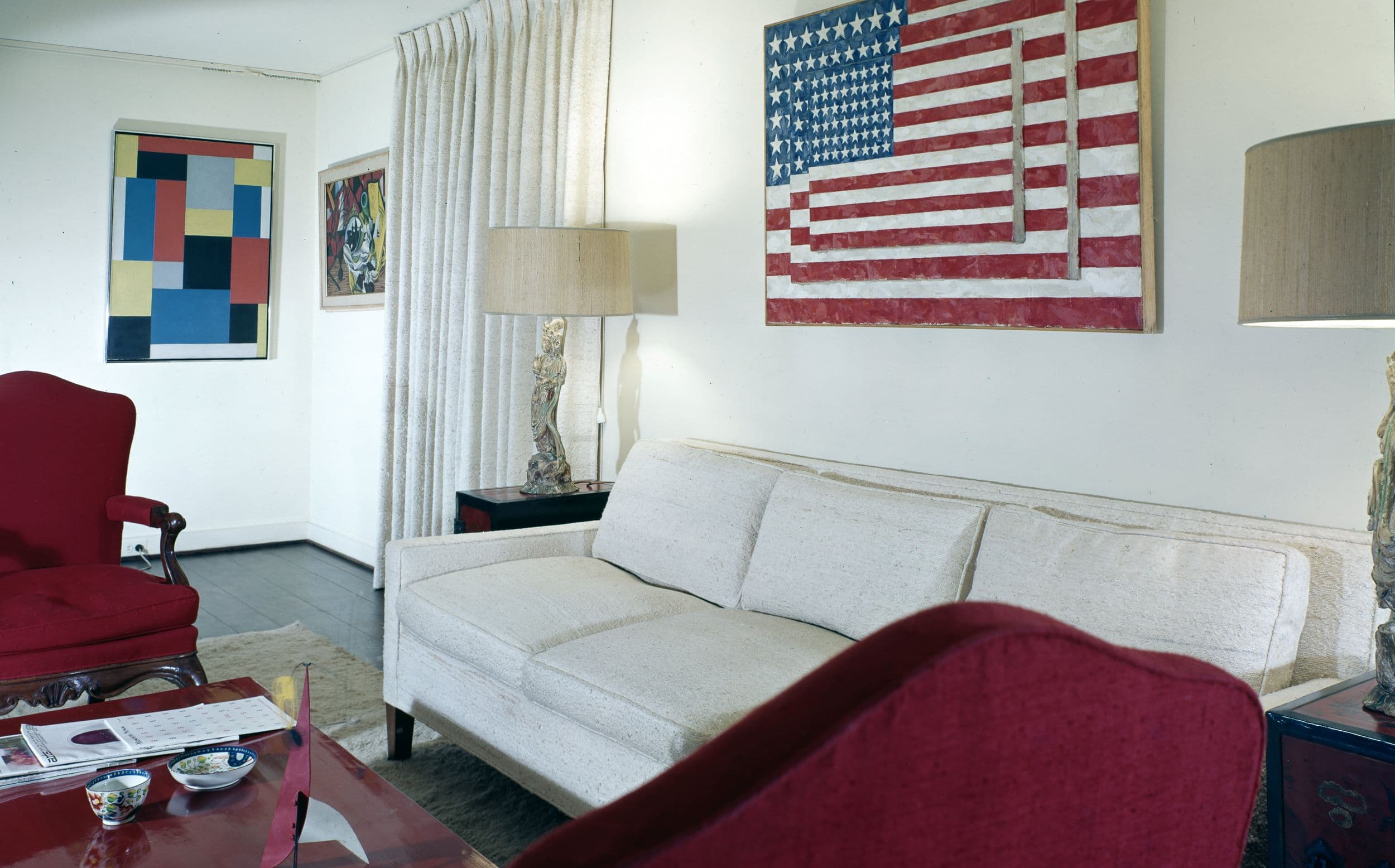
The Tremaine home with Three Flags by Jasper Johns on the far right. Photo courtesy of the Tremaine family. © Jasper Johns / Licensed by VAGA at Artists Rights Society (ARS), NY; 🅮 Composition XX by Theo van Doesburg on far left; Poires et raisins sur une table by Juan Gris in the center, © Artists Rights Society (ARS), New York
Yet the Tremaines and Castelli remained friends who looked back with nostalgia at the period of abstract expressionism followed by the creative explosion of the 1960s. “It was just unbeatable,” Castelli recalled wistfully. All of them were appreciative of what they had experienced. In her interview with Paul Cummings for Archives of American Art, Tremaine said, “It’s an enormous joy to come into this apartment and be so tired I can barely drag my feet. The beauty and vitality that greet me is just pure joy. I love it, and I guess that’s enough to ask of anything, isn’t it? … After half a century, collecting, for us, increasingly becomes a quest for the sublime.”
[In recognition of the positive relationship between the Tremaines and Leo Castelli, this essay is posted simultaneously on both the Castelli Gallery and Tremaine Collection websites.]
Kathleen L. Housley is the author of eleven acclaimed books, ranging from women’s history to modern art. She has written for numerous national journals and has published articles on women artists and collectors in Woman's Art Journal. She is the author of Emily Hall Tremaine: Collector on the Cusp and Tranquil Power: The Art and Life of Perle Fine. Cover image: Leo Castelli at the Castelli Gallery, 420 West Broadway, 1978 Photo: J. Woodson; Leo Castelli Gallery records, circa 1880-2000, Archives of American Art, Smithsonian Institution
Explore More Stories


Creating Impact
The Emily Hall Tremaine Foundation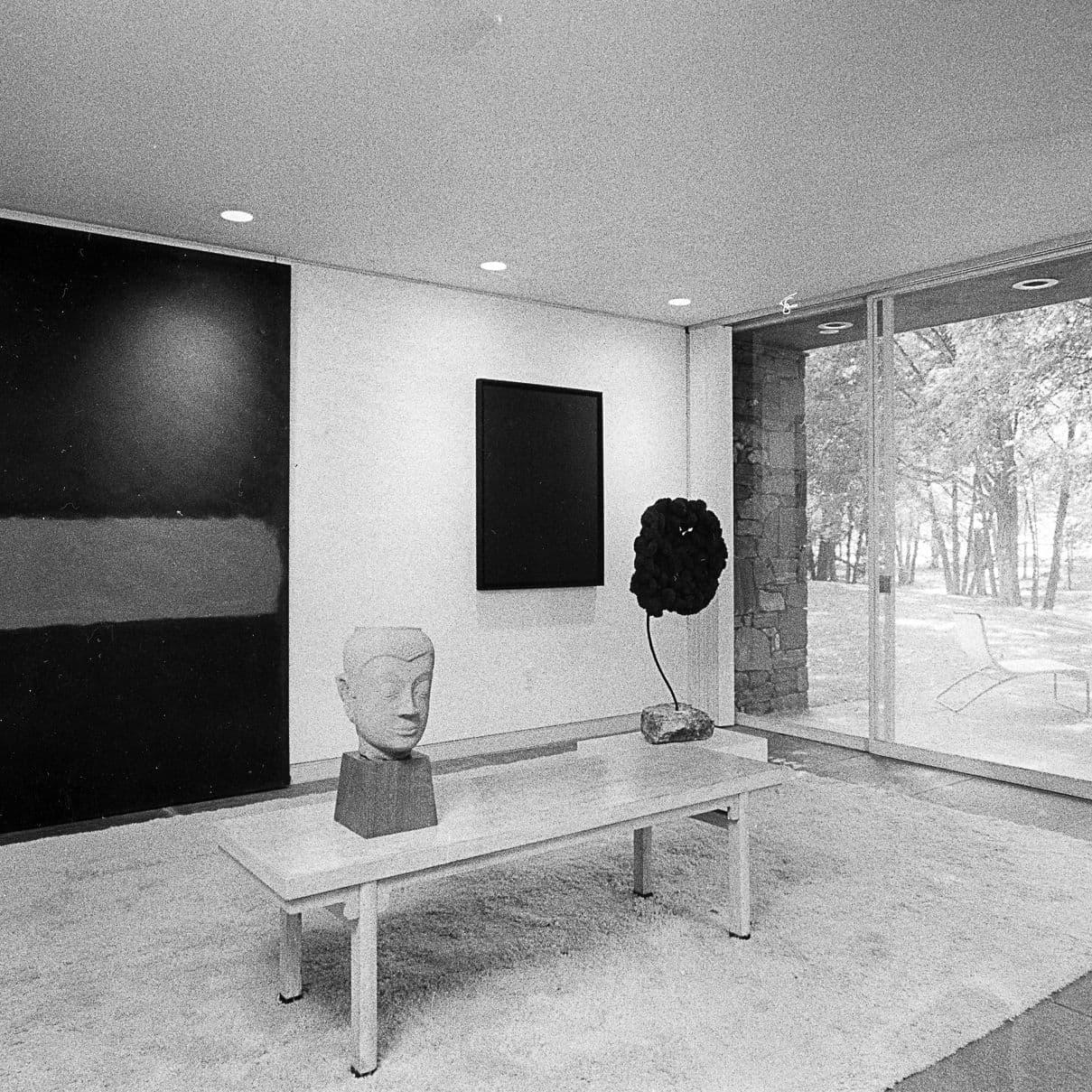
Established in 1987 by Emily Hall Tremaine, the foundation seeks and funds innovative projects that advance solutions to basic and enduring problems. With an overall emphasis on education, principally in the United States, it contributes in three major areas: the Arts, Environment, and Learning Differences.